![PortStrategy[GreenPort]](https://www.portstrategy.com/wp-content/uploads/2026/09/PortStrategyGreenPort.svg)





Southeast Asia awash with possibilities
Some – but not all – of the region’s potential will live up to its promise, writes Stevie Knight
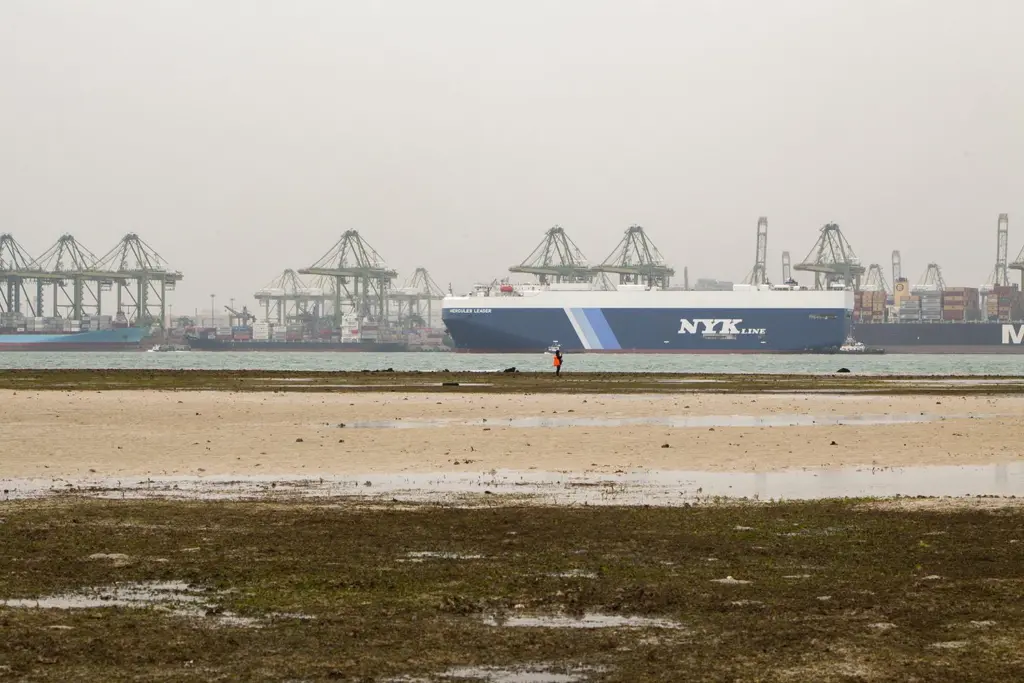
After a couple of years successfully challenging Singapore’s dominance, the tide may have turned against Malaysia’s Port Klang along with the prospects for its $51bn Carey Island megaproject.
With the shuffling of THE Alliance and the Ocean Alliance, “Singapore stole China Cosco Shipping, CMA CGM and UASC”, explains David Wignall of Wignall Associates. Together, those losses led to a 9% drop in volumes for Port Klang to 9.02m teu. Given that, there have been – strenuously denied – rumours that the city-and-port project has been shelved. What can’t be denied, however, is that Port Klang’s biggest operator, Westports, has gained approvals for a more digestible alternative: 10 terminals that would double its own capacity to 30m teu for a mere $2.5bn.
Interestingly, Singapore’s PSA claw-back centres on a change of strategy, says Mr Wignall: “It’s put together a dedicated joint venture for CMA CGM – and subsidiary APL – with four berths at Pasir Panjang” – something that Port Klang just couldn’t do. Cosco’s ports arm is also gaining a third berth with PSA. “An equity stake is a good way to lock lines in – much harder to get out of than a mere contract,” notes Mr Wignall. The strategy seems to be working as Singapore’s throughput grew 9% to reach 33.35m teu last year.
Shared solution
But a dedicated terminal might not be the whole answer. Maersk should be solidly ensconced in Port of Tanjung Pelapas (PTP) through sister company APM Terminals, but figures suggest it is running just as much transhipment through Singapore. So, while PTP might think it’s on its way to the big time, this may not work out… after all, why invest heavily in its related terminal at PTP when Singapore’s Tuas expansion will give Maersk incremental growth without the hassle or the cost.
Turning to other contenders for Singapore’s regional crown, Mr Wignall gives the $1.9bn Melaka Gateway short shrift: “The truth is that these big new glorious transhipment terminals are not going to happen – there’s no room in the market.”
By contrast, Sapangar Bay, in the State of Sabah, East Malaysia (Borneo Island), is a very different proposition, says BMT’s Mark Yong. Originally conceived as a domestic port, it has been languishing with an 80/20 import-export imbalance that loads the return journey on to shipping costs. However, the government has recognised it’s in a good spot, therefore, a little intra-ASEAN transhipment could bring in those extra boxes reduce the cost of logistics and spur on development. So it is putting up $260m to boost Sapangar Bay’s current handling capacity of 500,000 teu to 1.25m teu by 2026.
But challenges remain: “So far, the traditional hubs have been based further west, so it needs a change of mindset from shippers,” says Dr Yong, although he adds that “relaxing of cabotage regulations, economies of scale, access to nearby market and customer service considerations” are all pretty strong drivers.
Indonesia’s story
Although Indonesia’s 5%-plus economic growth is now pulling in the cargo volumes, its logistics costs account for over a quarter of the nation’s gross domestic product. Linking up this sprawling, 4,000 kilometres long archipelago has become a national priority. However, there has some jockeying for position and Indonesia’s development honey pot comes with a few bees.
Take North Sumatra’s Kuala Tanjung: developed as a domestic hub with a trickle of transhipment, it was to take over from neighbour Belawan. It has had a rather soft start: the 500,000 teu first phase was due to begin operations this spring, although there have been some delays in the second phase which should put capacity up to 2m teu. Also, concession negotiations with the Port of Rotterdam have been bumpy.
But now Belawan too is expanding, so rather than stepping into the wings it’s going to provide competition for Kuala Tanjung – before demand has firmed up.
Despite its efforts to sort out this pair, DP World has been disappointed by the terms of renewal on its own 2.1m teu terminal in Surabaya, Indonesia’s second largest port. It seems that the state-owned ports group Pelindo III offered the same terms as sister IPC (formerly Pelindo II) had for Hutchison in Jakarta (eased by a long contract), but Surabaya, way out Southeast, cannot make the figures work on that basis. Snubbed, DP World is walking out, leaving the state business to take over, which could have been Pelindo III’s game-plan all along.
Clearing backlogs
Congestion in Indonesia’s capital, Jakarta, is legendary and so too are delays at the city’s Tanjung Priok facility which handles half the country’s exports; a couple of years ago dwell times averaged five to six days, a month for some cargo. Prudent snipping of red tape and threats by the president brought this down to around three days, but it’s still an uphill struggle to keep cargo moving. The solution is seen in the Kalibaru (New Priok) project. Its first phase, completed in 2016, added 1.5m teu and gained direct calls from North Asia and Oceania, but the overall plan is more ambitious with
Kalibaru aiming for an eventual 19.5m teu capacity.
However, the new Patimban development is only 130 kilometres away. This is being supported by a $1bn loan from Japan, says Dr Yong. Patimban aims to serve West Java’s concentrated automotive sector which includes household names such as Toyota, Nissan and Honda. Around two-thirds of the region’s output is, therefore, expected to go through Patimban and it is also looking at taking over a third of Jakarta city’s total box traffic.
So, as Dr Yong explains, there’s a clash of interests: “IPC spent all this money to enhance Kalibaru, then suddenly there’s another port being built in close proximity. They’d rather not see it happen as they stand to lose market share… But it’s being driven hard by a lot of Japanese businesses, so it appears to be going ahead.”
By contrast, the greenfield Kijing port has none of these competition concerns – though it may have others. Right at the heart of Indonesia, this multipurpose project in West Kalimantan on Borneo Island aims to take development further than the limited IPC facilities at Pontianak, 70 kilometres away, could ever do. It will focus on crude palm oil and bauxite, with a capacity of 8.3m tonnes of liquid and 15m tonnes of dry bulk, plus container flow for 2.5m teu. However, it’s aimed at helping mobilise West Kalimantan’s economy, a significant challenge. Despite this, Dr Yong is buoyant: “No matter how you look at it, the projections are for growth, both in and out.”
CHEAP GOODS DRIVE PORT VOLUMES
Close ties exist between Cambodia, Thailand and Vietnam’s ports, but there is still a hint of competition.
For example, Japanese and Thai interests have often gone hand-in-hand since many Japanese goods are manufactured in Thailand, but both have become interested in Cambodia’s even cheaper costs.
So, while the country’s infrastructure has suffered from the war years, Sihanoukville’s multipurpose facility is underway and a new container terminal is to be built with a $209m loan from Japan. This should skim a little cargo from Phnom Penh’s river port, while cargo transiting east via Ho Chi Minh or Cat Lai just a couple of hundred kilometres away in Vietnam might also stick.
However, there is a fly in the ointment: Cambodia’s healthy 7% growth means that along with skills, wages are inexorably rising, and manufacturing could yet lose out to Myanmar or Vietnam.
Certainly, Vietnam is looking up. Initially, its well-advertised potential and record-breaking foreign investment choked Cai Mep Thi Vai port complex with too much capacity too soon and terminals fell together into the doldrums.
However, volumes have started to pick up: in 2017 the total throughput at Cai Mep International Terminal was 1.337m teu while Cai Lan International Container Terminal, which had been forced to rely on bulk handling to survive, handled over three times its predicted container traffic. Admittedly this was from a low threshold of around 20,000 teu but it’s gearing up for more containers this year, says BMT’s Mark Yong. Other terminals also saw growth, albeit mostly in bulk, but the outlook is promising.
Related Articles
 CONCESSIONS & INVESTMENTS
 CONTAINER & CARGO HANDLING
 TERMINAL OPERATIONS