![PortStrategy[GreenPort]](https://www.portstrategy.com/wp-content/uploads/2026/09/PortStrategyGreenPort.svg)






To liberalise or not to liberalise?
Nazery Khalid weighs up the merits of a liberalised port tariff regime in Malaysia
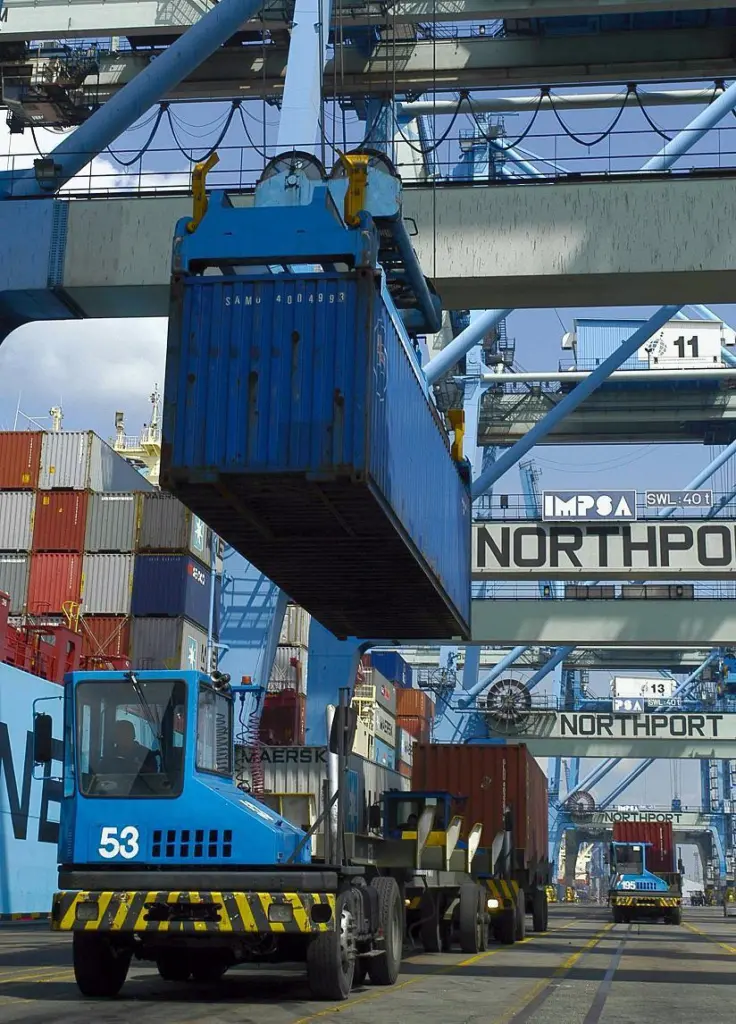
Any discussion on whether port tariff in Malaysia should or should not be liberalised must take into account the various advantages and disadvantages, and the potential threats and opportunities faced by port operators in an ever-changing and increasingly competitive business environment.
It is difficult to say with certainty whether a liberalised tariff regime will benefit Malaysian ports as their business direction, performance and the decision by shipping lines to call at the ports are determined by a multitude of complicated factors.
The decision of users as to which port to use does not lie in the tariff structure and economic reasons alone; they are influenced by various subjective and intangible factors such as personal preference and bias, familiarity and level of comfort of patronage, satisfaction towards the service provided, and policies dictating port usage such as load centering and hubbing.
And competition among regional and global ports is increasingly fierce, hence terminal operators in Malaysia have to continue to lower their operating costs, increase their efficiency and boost their productivity; using a tariff structure is just one strategy to lift business.
While there is no doubt that terminal operators need to adjust their tariffs to reflect operational costs and to provide an impetus to expand their capacity and provide better services, tariff should not be treated as the only tool in the shed to improve business performance.
At the end of the day, factors such as productivity, operational efficiency and the availability of ample facilities and capacity are the ones that attract port users and keep them coming back. Tariffs are easy to hike but not to lower, and rescinding the decision to lower tariffs would reflect poorly on the port operator as it would give the impression of the inability to match supply capacity with demand for port services.
Likewise, ‘tariff tampering’ and unilateral price fixing may affect the goodwill of port users as they need a high degree of predictability in the cost of doing business to enable them to plan their resources properly.
To avoid this undesirable situation, the management of ports should use tariff adjustment judiciously. They need to carefully assess their tariff structures in proportion to their investment and level of service and match their charges with the volume of business generated by different customers.
Tariff should never be viewed or used in isolation from other factors that contribute to business performance and operational efficiency of ports. Indeed, tariff revision should be seen in the overall context of improving efficiency and not just as a boost the bottom-line of port operators.
An increase in overall efficiency combined with an upward revision of tariff will ensure that hard-earned goodwill from port users is preserved, their patronage is retained and new business is generated in a fiercely competitive industry where loyalty is not a known virtue.
One thing is clear: the fact that local ports are prospering and recording higher throughput year after year stands testimony to the efficiency of the present tariff structure in Malaysia. That said, the door should not be closed to other means designed to further boost profitability and enhance competitiveness within acceptable means.
Allowing ports to determine their tariff rates will set them free to compete openly on a level playing field. This willingness to compete augurs well with Malaysia’s national aspiration to create globally competitive companies in the maritime sector, especially among ports which operate in a highly competitive and global marketplace.
There is not much wrong with the current system of fixing tariff of ports in Malaysia, but in a fast-moving industry like ports, time is of the essence.
Perhaps a more pragmatic, flexible and more reactive decision-making process is required to enable any changes in tariffs be made in good time. Allowing port operators to negotiate directly with their customers as to what tariff rates to agree on, based on services provided and patronage, will augur well with keeping both parties focusing solely on commercial aspects in deciding the issue.
This market-driven, commercially-oriented and consultative approach will contribute to the honing of the entrepreneurial spirit among port operators and generation of more business resulting from greater level of competitiveness. With such port operators, it would not harm Malaysia’s ambition to become a regional shipping hub and a globally competitive maritime nation.
Nazery Khalid is a senior fellow at the Maritime Institute of Malaysia.
Related Articles
 CONCESSIONS & INVESTMENTS
 CONTAINER & CARGO HANDLING
 TERMINAL OPERATIONS