



Defending seafarers
Six months in and the impact of the ILO’s Maritime Labour Convention has been restrained. Felicity Landon reports
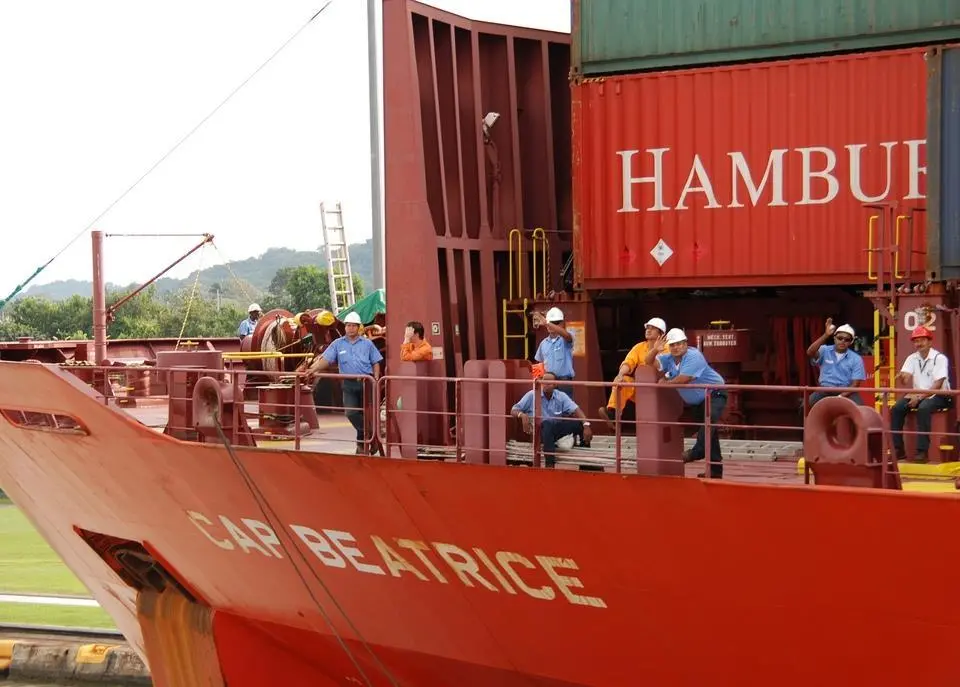
When Port State Control officer Alan Thomson went onboard the Panama-flagged Donald Duckling at the Port of Tyne last November, he found that the crew hadn’t been paid, the fridges didn’t work, there was no food on board, and there was no money to buy food either.
He had been expecting problems – the vessel had previously been detained in Gibraltar for 120 days, there were reports of it breaking down mid-voyage and the crew fishing over the side for food, and it had been detained again in Las Palmas for non-payment of wages, lack of food onboard and problems with safety equipment.
With the Maritime Labour Convention in force since August 20, 2013 and the welfare of seafarers at the heart of the MLC requirements, one might assume that Mr Thomson’s form-filling and what happened next would be straightforward. Not a bit of it – because of the technicalities of ratification, the MLC doesn’t become law in the UK until August 7 this year, 12 months after the UK formally ratified the convention. Only on August 20, 2014, it will become enforceable everywhere.
Interestingly, the vessel had been given a clean bill of health on MLC issues in Las Palmas by an inspector on behalf of Panama, which has already adopted MLC into law. “I find that quite amazing, considering the vessel was already in detention for MLC issues,” says Mr Thomson, who is surveyor in charge, Maritime & Coastguard Agency (MCA) on the Tyne.
Bad news
He describes the Donald Duckling saga as ‘of nightmarish proportions all round’. Owned by the TMT Group of Taiwan, chartered by European Metal Recycling, flagged in Panama, classed by Japan’s ClassNK, and with a crew of 18 from Romania, India and the Philippines, it sounds like the classic ‘bad news’ shipping story we have all heard before.
In fact, says Mr Thomson, 96% of the requirements of MLC were previously covered in separate ILO conventions; until August 7 the UK continues to inspect for ILO compliance in this way, but it can’t actually record deficiencies under MLC.
The Donald Duckling developed into a stalemate; TMT had filed for Chapter 11 bankruptcy protection, reportedly owing $800m, and there was little response from Panama, says Mr Thomson.
Technicalities about the precise definition of abandonment left the crew in limbo.
The Port of Tyne provided a lay-by berth and power supplies and worked with the Mission to Seafarers and other local charities which were providing food and clean drinking water for the crew.
Chain of responsibility
“This is exactly what the MLC was supposed to combat – it lays out who is responsible for what, and the shipowner is responsible for paying crew wages, meeting contractual obligations, providing adequate accommodation, light, heating, food and water. Clearly if you have not got fuel for your engines, you can’t run the engines, therefore there is no heating or lighting,” says Mr Thomson.
Representatives of the ITF (International Transport Workers’ Federation) also insisted that the vessel was abandoned but, at the eleventh hour, some (not all) of the crews’ owed wages arrived. “That meant one of the abandonment criteria under ILO was not ticked and technically the vessel wasn’t abandoned. That definition is going to change under MLC.”
Under MLC provisions, the vessel would be been defined as abandoned and it would then fall to the flag state – in this case Panama – to deal with repatriation of the crew. However, after two-and-a-half months no action had been taken.
DFDS Seaways offered the Romanian crew a free ferry crossing to Amsterdam, from where they made their way home. Eventually, the remaining crew were repatriated by the ITF, paying out of its funds.
Dead space
As Alan Thomson puts it, the last thing a port wants is a ‘dead ship’ on its hands. At the time of writing, the vessel was still in port. A spokeswoman for the Port of Tyne said: “The cargo vessel Donald Duckling remains detained by the MCA – and the ship is currently under arrest by its charterers, EMR. The ship is unmanned and to minimise the impact on commercial shipping and maintain the vessel’s security, it is berthed at the former McNulty Offshore Quay at South Shields.”
Despite all of this and despite his own obvious frustration over the situation, Mr Thomson says: “MLC is an excellent piece of legislation which will greatly help seafarers in the future. We are all feeling our way and it is still in its infancy.”
What’s clear is that had MLC already been law in the UK, the Donald Duckling situation could have been dealt with more decisively – for example, by the UK forcing the issue by repatriating the crew and then sending the bill to Panama.
Because of the year’s space between ratification and entry into force, there are some significant port states for whom MLC is not yet in force, says the ITF. “We are looking forward to the concentrated inspection regimes planned for later this year and next year by Paris MoU [Memorandum of Understanding on Port State Control] and Tokyo MoU,” says Jon Whitlow, secretary of the ITF seafarers’ section.
“We are constantly monitoring how the MLC is working and so far it’s living up to expectations,” he says. “It is proving a valuable tool for safeguarding seafarers’ rights, conditions and right to be paid. We are continuing to strive to get it in use as widely as possible, and are pushing for it to be ratified and effectively implemented by as many countries as possible.”
Crew counts
The ITF says the main issues for MLC detention so far are non-payment of wages for several months, inadequate provisioning and refusal to repatriate given breach of contract by the owner.
“All of these are serious issues, not matters of paperwork. There have not been obvious improvements yet but realistically it is still early for such a change to be visible,” says Mr Whitlow. “We don’t expect it to happen overnight. On the positive side, flag states are at least replying to complaints – even if they don’t take proper action, and port states are detaining on occasion. We continue to be frustrated over Panama’s refusal to take responsibility for vessels flying its flag.”
Pat Dolby, inspection operations manager at the MCA, says: “Generally, as has always been the case, if the ship is substandard in other areas, it will also be substandard in areas of crew health and welfare.”
The MLC is basically bringing together all maritime ILO conventions under one ‘super’ convention, he says. “We have always looked at ILO issues during PSC inspections under existing ILO conventions.
“The main change is that now there is an actual statutory certificate issued for MLC compliance – previously no ILO certification was issued – and there are more areas for detention of a ship for non-compliance, notably non-payment of wages, employment agreements and crew accommodation.”
Related Articles
 BULK HANDLING
 BULK HANDLING
 BULK HANDLING