![PortStrategy[GreenPort]](https://www.portstrategy.com/wp-content/uploads/2026/09/PortStrategyGreenPort.svg)






Doing more with less
ValenciaPort Foundations Jonas Mendes Constante and Miguel Llop talk technology
According to a report by the consulting firm McKinsey & Co, across Europe as a whole, infrastructure congestion costs 1% of GDP and globally, $400bn a year could be saved by making more of existing infrastructure through improved demand management and maintenance.
Digitalisation is one way of creating value for private and public stakeholders involved in the logistic port sector and can be achieved through various initiatives. These include eGovernment and the creation of administrative single windows; smart port logistics and its implementation through port community systems; intelligent transport systems oriented to interact and communicate with users and infrastructures; and the use of data generated through the Internet of Things.
For ports interested in these approaches there are two important benchmark ports to look to: Santos and Hamburg.
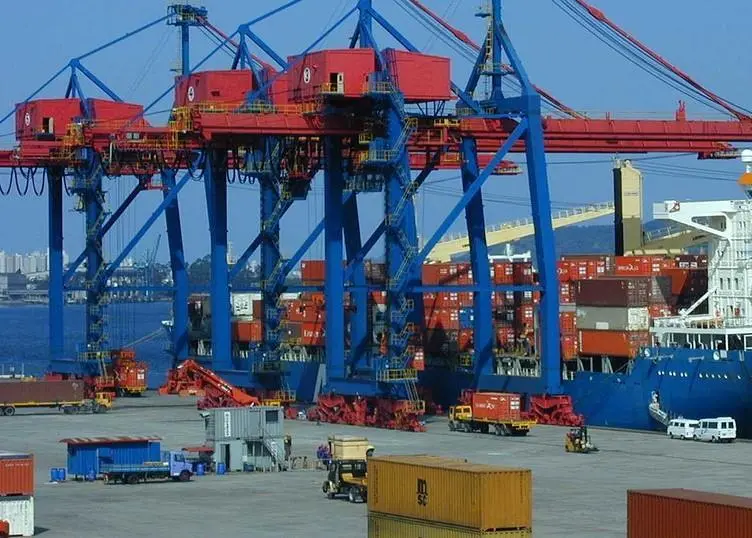
In order to avoid extreme queuing of trucks in the city and roads accessing the port – especially during the peak runoff of agricultural crops – Brazil’s Secretariat of Ports (SEP) started working on a smart port logistics system in the Port of Santos in 2014, known as Portolog.
Portolog aims to synchronise the arrival of ships and cargo in terminals, schedule and accredit vehicles and consequently use the full capacity of port access. Once deployed, Portolog will be interconnected with the paperless port system and the VTMIS to enable the monitoring of vessels in the navigation channel and anchorage areas in the Port.
The port estimates that it will save $200m from the combination of reduced truck waiting times, reduced transport times and costs, and lower truck parking fees. This represents a 10% saving in transport costs. Of course, there are tangential benefits that are not included in that saving, such as lower CO2 emissions, less accidents and reductions in cargo thefts.
Hamburg’s experience
Another benchmark worth reviewing are the solutions being implemented by the Port Authority of Hamburg. Its ‘smartPORT’ programme aims to better manage existing infrastructure, reduce traffic-related emissions and establish an intelligent infrastructure to optimise the flow of information to manage trade flows efficiently.
Smart port technologies can encompass Bluetooth, hotspots or WLAN, cloud computing, mobile end devices, Internet of Things and Big Data. In Hamburg, a smart intermodal port traffic centre will interlink the various modes of transport and make traffic flows for water, rail and road more efficient. This centre will process all traffic information collected in the Port of Hamburg and distribute it to all users. Transport users and decision makers will then be able to respond to relevant traffic information in real time, enabling them to choose the fastest and most favourable mode of transport to get their goods to their final destination.
Data on major traffic flows and their potential development will be captured automatically, to be processed and distributed to users. To achieve that, traffic detectors installed throughout the port will automatically capture traffic volumes at strategically significant locations.
Recent launches of Internet of Things’ initiatives by shipping companies and logistics operators are also significant, but the examples of Santos and Hamburg demonstrate how the whole port and shipping industry are moving towards a completely new innovative environment, that will put more pressure on the port competitiveness.
The International Data Corporation expects the Internet of Things market in Europe to expand in value by over 20% per year between 2013 and 2020, with Internet of Things-related revenues in the EU28 reaching more than €1.2 tr in 2020.
This article was contributed by Jonas Mendes Constante, a senior strategy consultant in the ValenciaPort Foundation, and Miguel Llop, director of information technology in the same company.
Related Articles
 BULK HANDLING
 BULK HANDLING
 BULK HANDLING