![PortStrategy[GreenPort]](https://www.portstrategy.com/wp-content/uploads/2026/09/PortStrategyGreenPort.svg)





Know your enemy
Competition isnt just around the corner in an interconnected Europe. Felicity Landon reports.
The saying goes, ‘Keep your friends close, but your enemies closer. But how do ports operating in today’s highly volatile market work out who their ‘enemies’, or competitors, actually are?
With shipping line alliances, trading patterns, transhipment preferences and ship sizes evolving at dizzying speed, a port’s fiercest competitor is not necessarily that close. It could be a port in another region altogether.
The nature of competition in the European container port sector was recently analysed in a Porteconomics study by academics Peter de Langen and Theo Notteboom, who concluded: “Container port competition is becoming ever more complex and intense, not only between ports of the same range or multi-port gateway region but also between ranges and multi-port gateway regions.”
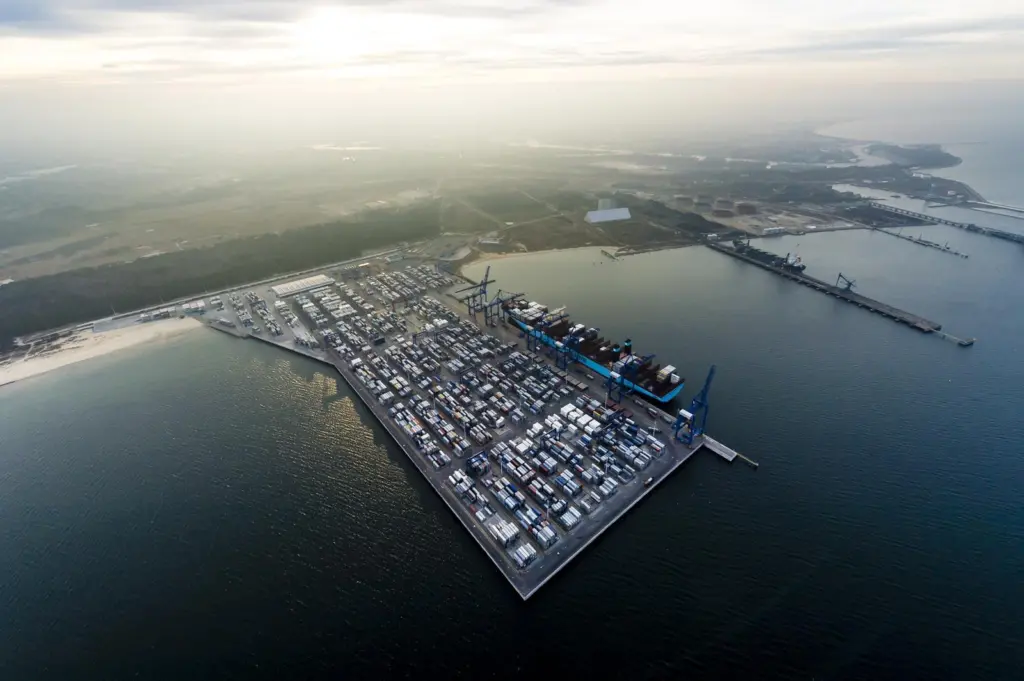
DCT Gdansk is a case in point. The Hamburg-Le Havre range is a well-accepted reference, but DCT describes itself as ‘the most eastern facility in the Gdansk-Le Havre range’. Maciek Kwiatkowski, president of DCT’s management board, has said that with terminal’s T2 expansion now underway, DCT will be “able to effectively compete with the Northern European container ports’ services”. Gdansk has made no secret of its ambitions to snatch container volumes from Hamburg in particular.
“Gdansk is looking to see how far into central Europe they can go,” says Dean Davison, principal consultant at Ocean Shipping Consultants.
The new T2 terminal is due to start operations by the end of this year, doubling capacity to 3m teu a year; DCT says this “will allow DCT to join the exclusive club of the largest container terminals in Europe”.
Mr de Langen comments: “Gdansk is a very successful example of development that makes a lot of sense. If you invest in port development in an area which is traditionally served by feeders, and the volumes are there, then sooner or later the shipping lines are going to make the decision to call with direct services. That implies growth of volume; because it makes your port more attractive and, on top of that, the mainline calls can bring along some share of feeder traffic.”
One pie
That does not imply that every port should do the same, he says; European trade isn’t an infinitely growing pie to be shared. However, he says, while destination flows of containers have remained fairly static in recent years, there has been a rise in total liftings, because larger ships mean more transhipment. “In that sense, the pie is growing, although at a slower pace than it was before the crisis. But certainly it is not a win, win, win game, especially in the European context.”
Genoa is another port pushing the message that Europe can be served from many directions, teaming up with La Spezia and Savona in the Ligurian Ports Aliance. Meanwhile, Piraeus was named by the International Association of Ports and Harbors as the fastest growing port in the world from 2009 to 2013 – clearly not reflecting domestic demand in Greece itself. If North America can be served from west or east coasts, the argument goes, why can’t central Europe be served from south as well as north?
However, Mr de Langen warns that the reality is a lot more complex. “The competitive landscape is pretty tough for ports. In terms of overall European port investment, we have seen huge chunks of that underutilised. There is a fair risk from a broader European perspective of overcapacity and overinvestment. When we look at what Europe should do to make sure it has a competitive ports system but at the same time allocates resources efficiently, I think there is a concern that perhaps there is too much focus on growth.”
While transhipment hubs compete across wide distances, he believes there is “a bit of exaggeration” in the Mediterranean view that ports in the south are going to be able to compete aggressively with the north. “There seems to be this view that there is an even distribution of containers along the lines of population, but that is not the case. The key thing for Dutch, Belgian and German ports is huge volumes of cargo are based on value-added industrial production and re-exporting activities. So it isn’t a matter of shifting ports – it would be a matter of attracting logistics and industrial production, and investment in industrial production in Europe is really small right now.”
The Porteconomics report highlights another reality; that ports are only as successful as their hinterland links allow, with European container ports increasingly competing “not as individual places that handle ships but within transport chains or supply chains”.
“If a seaport wants to attract or retain some of the megacarriers, be it shipping lines, logistics service providers or shippers, it has to position itself as an efficient intermodal hub and logistics service centre acting within extensive transport and communications networks,” say the authors.
Mr Davison adds: “The more modes and greater efficiencies you have in terms of your connectivity, the larger your hinterland area. A port can deepen the water, extend the quay, bring in new cranes and get the containers to the out-gate. But if the onward connections – rail capacity, for example – are not good enough, then you simply have a choke point. The port would then be criticised and customers would start seeking alternatives – although, generally speaking, the port has no control once the container leaves the port domain.”
Coping with cascading
Beyond the battles between hub ports, there is another battle to be fought – again as a result of the increasing size of containerships. In a report on ‘Cascading feeder vessels and the rationalisation of small container ports’, Jason Monios of the Transport Research Institute, Edinburgh Napier University, says medium size ports may struggle to accommodate the larger vessels cascading down, including as a result of the Panama canal expansion. However, he says: “From the perspective of small ports, cascading of vessels presents a much more serious problem.” He focuses on the ports on small feeder routes currently served by sub-1,000 teu vessels and warns that some of these would not have the handling capacity to accommodate likely ‘super feeders’ in the 2,000-4,000 teu range.
Many will find it difficult to justify the large investments that may be required to dredge berths and access channels, lengthen berths, buy larger cranes and redesign yards and gate/access infrastructure, says Mr Monios.
Even if the port does upgrade, the logic is that larger vessels would mean fewer calls. “This may lead to two main problems. First, many smaller ports only have a handful of container vessel calls per week. Is it viable to remain open for fewer calls? Second, less frequent calls will place limitations on the supply chains of local shippers, leading to increased costs, for example, through the need to increase inventories, depending on individual requirements. They will either have to absorb this cost or find an alternative route, through a different port and then overland.”
He suggests that if one smaller port takes the ‘first mover’ advantage and expands port capacity, it may succeed at the expense of others. However, he says, small ports tend to be less aggressive as they rely on the captive local market, compared with the fierce competition that is the norm for larger ports competing for overlapping hinterlands. Small ports may find it difficult to get investment from public sector sources which may view expansion as speculative or unnecessary, while private investors are less interested in such a small port, he adds.
CALAIS TIES UP RAIL LINK
In a world of ‘footloose’ shipping lines and alliances, what’s a port to do? Peter de Langen says: “Any partnerships that a port manages to develop with other stakeholders are critical – and these stakeholders include not only the business community but also government. Leaving aside the touchy issue of state funding, and just looking at the importance of government in inland infrastructure, it is very clear that this is part and parcel of what ports need to do. From the government point of view, successful port development creates value for port users and also for society, so within limits a government focus on supporting port development makes absolute sense – creating productivity and making exports and imports less expensive.”
Boulogne Calais Port has taken an interesting partnership approach, working with SNCF Logistics subsidiary VIIA to launch the VIIA Britanica ‘rail motorway service’. The service carries unaccompanied semi-trailers from Le Boulou, on the France/Spain border, to the Port of Calais in 22 hours, avoiding 1,200 kms of road. VIIA is aiming to take 40,000 semi-trailers a year from the roads to rail – equating to nearly 50m lorry road kilometres a year – and says it is already working on new connections to link Calais to other European terminals.
Calais says its rail motorway terminal is a ‘first’, operating as a trimodal hub for unaccompanied semi-trailers moving between Spain and the UK, or onward to northern France and Belgium. Notably, P&O Ferries, which runs up to 58 crossings a day on the Calais-Dover route, has signed an initial agreement with VIIA.
“The Boulogne Calais Port is currently France’s fourth largest cargo port, and these new cutting-edge facilities, which required €7m in investments, will make the port more attractive and lay the groundwork for the growth expected to follow the ‘Calais Port 2015’ project, which will double capacity.”
Related Articles
 BULK HANDLING
 BULK HANDLING
 BULK HANDLING