![PortStrategy[GreenPort]](https://www.portstrategy.com/wp-content/uploads/2026/09/PortStrategyGreenPort.svg)





New horizons emerge
Ports are no longer mere technical challenges; they are modern day job factories says Martin Rushmere
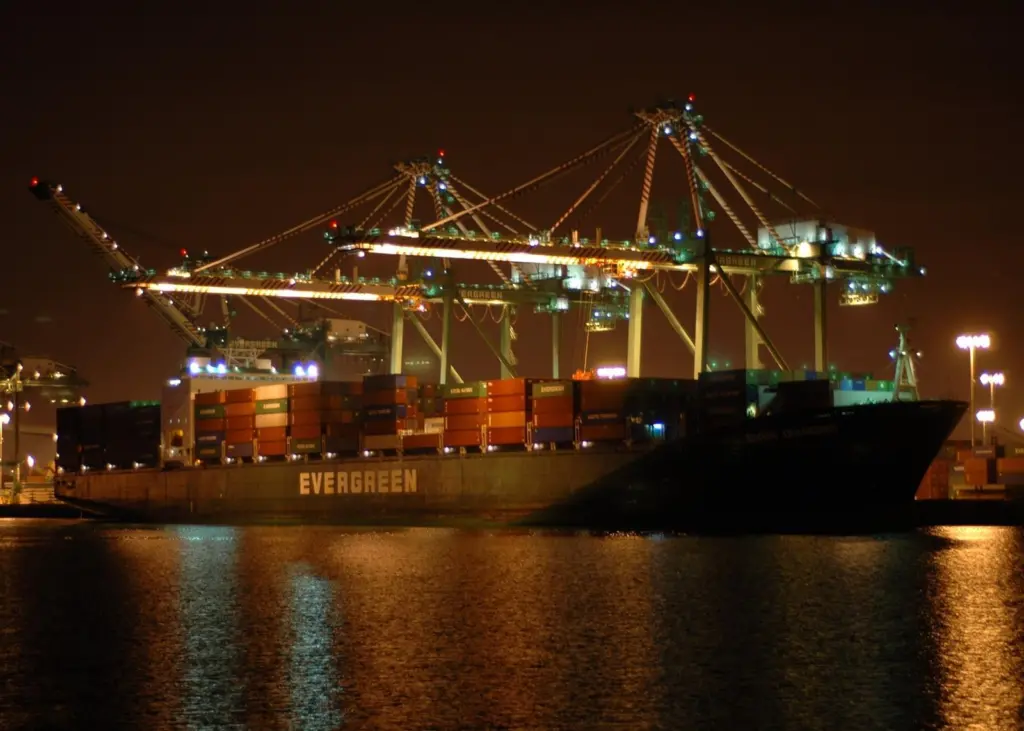
Purists and old-school planners are being sidelined in the modern approach to planning and design. Ports are no longer seen as engineering and construction challenges but as business units, community assets and environmental question marks.
They are also being looked at as job creators, even as job factories, and a project that does not trumpet employment potential runs the risk of stirring up political and public opposition.
Essential to the foundation of a project is a balance between financial/investment considerations and engineering/operational requirements – which one port executive likens to a chicken-and-egg situation. This is a distinct change from 40 years ago, when ports were mostly a function of a local authority or central government.
Financial modelling is de rigueur, with environmental benchmarks adding to balance sheet costs.
But the meeting point of this balance, and the pivotal point, is the speed and efficiency of vessel service. “There are a large number of Performance Indicators,” says Ashebir Jacob, senior port planner, at Moffatt and Nichol, “but they all come down to the time that the vessel spends at berth. You have to continue to get it in and out of port as quickly as possible.”
The two next important factors focus on intermodal efficiency – the railway schedules and moves from the dock plus the time taken in getting through the dock gates.
Bill Chalmers, group project manager for Gulftainer in the UAE, says: “It’s certainly been one of our main drivers.”
At ICTSI, Jhun Oblego analyses the priorities as firstly, cargo/container traffic. “Is there enough volume to make the project financially feasible?” Second is landside development – based on the forecasted volume. “Is there a sufficient yard that can be developed as the market demands? The development program does not only include the civil works, i.e. construction/expansion of the yard; equipment, including IT but the manpower requirement as well.”
Third is berth design – dependant on the vessel size, capacity and LOA expected to be handled. This will determine the type of ship-to-shore crane required, design water depth, berth superstructure to withstand the dynamic quay loading. Fourth is defining the business process (port rules and other applicable laws, including customs’ regulations) of the country or locality to include other requirements such as scanners, OCRs, labour arrangement/laws, etc. in the planning and cost evaluation of the project.
“After we have finalised that information, we can plan the terminal’s quayside and landside requirements,” says Mr Oblego.
Berth productivity heads the list – rates per hour, depending on the type of vessel, and whether the terminal is a feeder or transhipment hub. The performance ranges from 20 moves per hour for a port without quay cranes (using only ship’s crane in discharging and loading of containers) to over 100 moves per hour.
Next is dwell time in the yard, measured from the time of discharge from vessel to withdrawal by consignee’s truck, or receiving of the container to the yard from the consignee’s truck up to its loading to the nominated vessel. “Depending on the customs’ rules and port regulations, the container normally stays from three to 10 days.”
Third is truck dwell time – average period of stay of outside trucks inside the container yard, which is normally less than one hour.
Fourth is ship-to-shore productivity. Annual crane productivity ranges from 100,000 to 150,000 moves.
Fifth is loading/discharging rate of ro-ro cargo – rates per gang per hour averages between 100 to 120 cars.
Mr Jacob reckons that too much fuss is sometimes made of individual crane performance. “Confusion sets in over net or gross moves and sometimes peak moves are stated, rather than average moves. There is too much focus on individual crane statistics instead of overall service levels.”
His opinions are echoed by other consultants, who caution against projects becoming too fixated on details such as dwell times and yard densities. “Marry these to overall levels of operation and don’t allow specific details to be the focus of a project.”
Few people, engineers and financial professionals alike, quibble with this. However, ports are looking at more distant horizons and realising they are part of a wider economic and social community. A prime example is Miami, which last December updated and received county approval of its Master Plan 2035.
“We have embraced our position as an economic engine for South Florida and as part of a major tourism destination,” says Elizabeth Ogden, chief of Architect/Engineering Design Services at the port. “Our mission is to develop our port and our business in a manner that supports the community and sustainability, and complements our environment on Biscayne Bay.”
Dubbed “the cruise capital of the world”, Miami is currently studying options for commercial development of an office complex, hotel, multimodal facility and a luxury marina.
Says a consultant: “Miami is an example of a dynamic new approach to port development. It wasn’t so long ago that most ports, particularly in the US, kept land bare if it couldn’t be used for shipping operations, no matter how valuable it was.”
For regions such as the United Arab Emirates, local conditions dictate different approaches compared with Western countries. With labour costs being so much lower, automation has played a less important role. “Also, it’s a two shift system here,” says Gulftainer’s Bill Chalmers. But, the future is nonetheless automation and the project being designed for Khalifa will incorporate a considerable amount.
The markers of the future throughout the world will be tied to the pressure to reduce costs, says Moffatt & Nichol’s Mr Jacob. These markers will need to be coupled to innovation to implement environmental controls. Cold ironing and solar power are already seen as being almost outdated.
Adds ICTSI’s Mr Oblego: “The price war between the shipping lines will continue and they are expected to pass this pressure on reducing cost to the port/terminal operators by further improving their service level. They will demand shorter vessel port stays (which means higher berth productivity), extended free storage days for empty boxes, and more incentives.
Computers will continue to gain importance in design. “Software will be refined to expand automated operations,” says Mr Jacob.
Innovation will also count for much – Gulftainer adapted container spreaders to handle oil pipes and speed up ship-to-shore movements.
Related Articles
 BULK HANDLING
 BULK HANDLING
 BULK HANDLING