![PortStrategy[GreenPort]](https://www.portstrategy.com/wp-content/uploads/2026/09/PortStrategyGreenPort.svg)





The big squeeze
Innovation abounds when it comes to uncovering recession-beating cost savings, as Iain MacIntyre finds out
Ports have been hard hit by the global economic tightening as much as anyone. But the need to squeeze a few more dollars out of operations in tough times has revealed the ability of some port executives and consultants to think outside the square when it comes to cost-saving initiatives.
Rotterdam-based Rebel Group suggests there are several ways ports can cut cost to improve the bottom line.
Senior infrastructure finance adviser-port sector specialist Yann Pleindoux and managing partner and infrastructure finance adviser Kees Hörchner say that long-term cost-saving measures may be found by avoiding an ‘investments burden’ and externalising long-term risks through private contracting.
They point to three strategies to achieve this. First is to privatise existing terminals, allowing a port to disengage from a loss-making or inefficient business unit and harness the experience of global terminal operators who have the ability and expertise to streamline operational costs, boost traffic and increase service level.
A port can also avoid costly future investments and renewals by integrating such obligations in the concession terms. Cash inflow from concessions can be channelled to overdue maintenance or to reduce debt, for example.
Gothenburg illustrates this change of strategy, where APM Terminals will invest $115m in Skandia Container Terminal to lift productivity and develop traffic, while the port authority is focusing on its landlord functions and divesting terminal assets.
Purse strings
Second is to transfer demand risk to avoid over-investment. Authorities usually bear the largest share of the upfront investment costs in ‘wet’ infrastructure. Combined with the difficult scalability of those investments, they run the risk of over-investment in times of faltering demand.
Say Mr Pleindoux and Mr Hörchner: “To anchor sufficient demand for the newly-developed port infrastructure, authorities may look for a larger involvement of the terminal operators in basic marine infrastructure, primarily to secure a firmer buy-in to the overall port development and investment.
“Additionally, this would reduce the risk of excessive capacity or over-designed specifications driven by private operators’ demands.” Downside sharing mechanisms include linking the land lease price or plot availability to the scope of investments and use it as a bidding parameter for selecting new concessionaires,
Concessionary payments or minimum volume guarantees can be geared to the scope of infrastructure investments brought by the private operator.
Lastly, say Mr Pleindoux and Mr Hörchner, ports should use performance-based, life-cycle contracting. “Apart from the potential benefits of ‘off balance sheet’ treatment, the benefit of this route is predominantly in the transfer of risk by way of externalisation of long-term infrastructure maintenance or operational costs, while shielding the contracting agency’s bottom line from costs fluctuations, construction delays and substantial cost overruns.
“The private operator receives a (fixed or indexed) payment for the asset delivered, subject to contractor’s performance, enabling it to spread investment costs over time and more precise long-term budgetary forecasts.
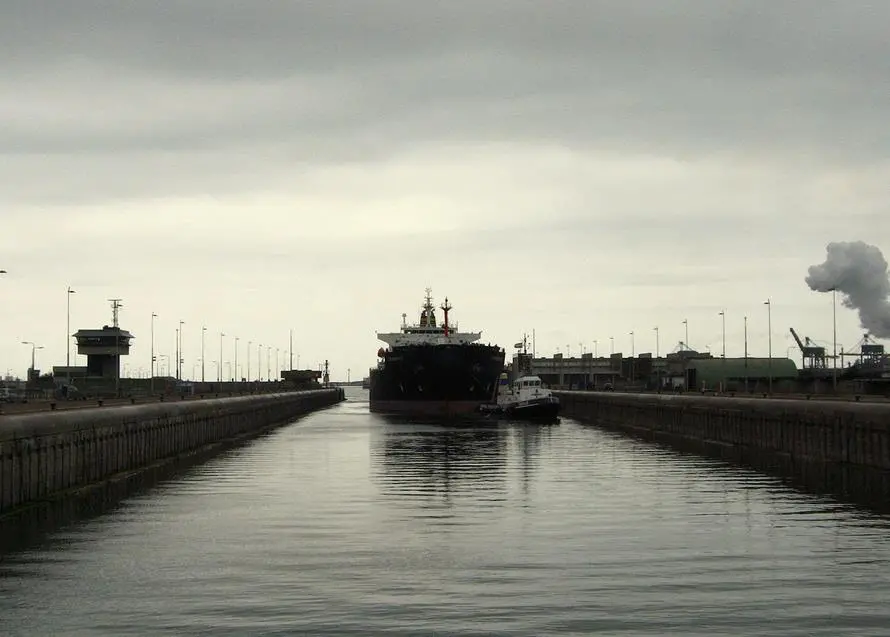
“Life-cycle contracting is still a novelty in the port sector, with the Dutch Government now planning to use this concept for the construction and financing of the new sea lock in Ijmuiden.”
Major projects
Sometimes, cost pressures come because developers, particularly governments, have found themselves in long-term port infrastructure projects they can no longer afford.
Wain Lawrence, project development/infrastructure global director for Ontario-based engineering and project management company Hatch, says developers now are often groups who don’t want to be in this space but are forced to be if they want to export their commodities.
“In a lot of places there is a requirement of governments: ‘we want you to build this terminal, but we want you to make it multi-user’. You have got to then put together various development groups.
“The efficiencies then come in the engineering and project execution. The owners toss up between a lot of execution models. Some of them may … think that the EPC (engineering, procurement and construction) is a good model. They just want a turnkey option of giving it to one major contractor. Others understand the risks with that delivery and seek an EPCM (engineering, procurement, construction and management) model.
“That’s where we believe we can produce good cost efficiencies and schedule efficiencies.
“These days a major 30 million-tonne coal terminal development will cost between A$1.5bn to A$2bn dollars(US$1.05bn-US$2.1bn) so there are a lot of areas that have to be looked at to try and optimise and produce efficiency in that capital.”
Blowouts
Unfortunately, says Mr Lawrence, there are several instances of big blowouts in cost and time in major projects. The culprits usually are poor specification, poor tendering of procurement procedures and sub-standard supervision of contractors on site.
“That’s where if we are pitching to clients, these are what we see as the areas you need to be concerned about.”
Financially, he says a lot of projects are funded through a big percentage of debt, and bankers and financiers’ main concern is the certainty of getting their money back. “They tend to drive and approve delivery models that they think will give certainty of cost and schedule, such as the EPC model, where you give it all to one big construction contractor.
“It is a false security in many ways and it has been proven in many years that it does not give the certainty in cost and schedule that it purports to give, because there are just so many factors along the way during execution that allow the EPC contractor to increase their price and extend their schedule.”
Hence Mr Lawrence advocates a risk mitigation methodology which sets out project risk registers right at the start.
“These days you need to focus on the things that might cause you additional cost or inefficiencies in the delivery of the project.
“We are finding there are more of the ‘soft’ issues that need a greater amount of consideration – say to do with environmental and local community impacts and issues to do with labour laws and moving labour around the world. You really need to put the right teams and get the right emphasis on managing those impacts and particular topic areas, apart from getting the design and technical aspects right.”
Related Articles
 BULK HANDLING
 BULK HANDLING
 BULK HANDLING