![PortStrategy[GreenPort]](https://www.portstrategy.com/wp-content/uploads/2026/09/PortStrategyGreenPort.svg)





The key message: keep it simple
Intelligent use of KPIs can have real value in monitoring and improving operational performance. Felicity Landon reports
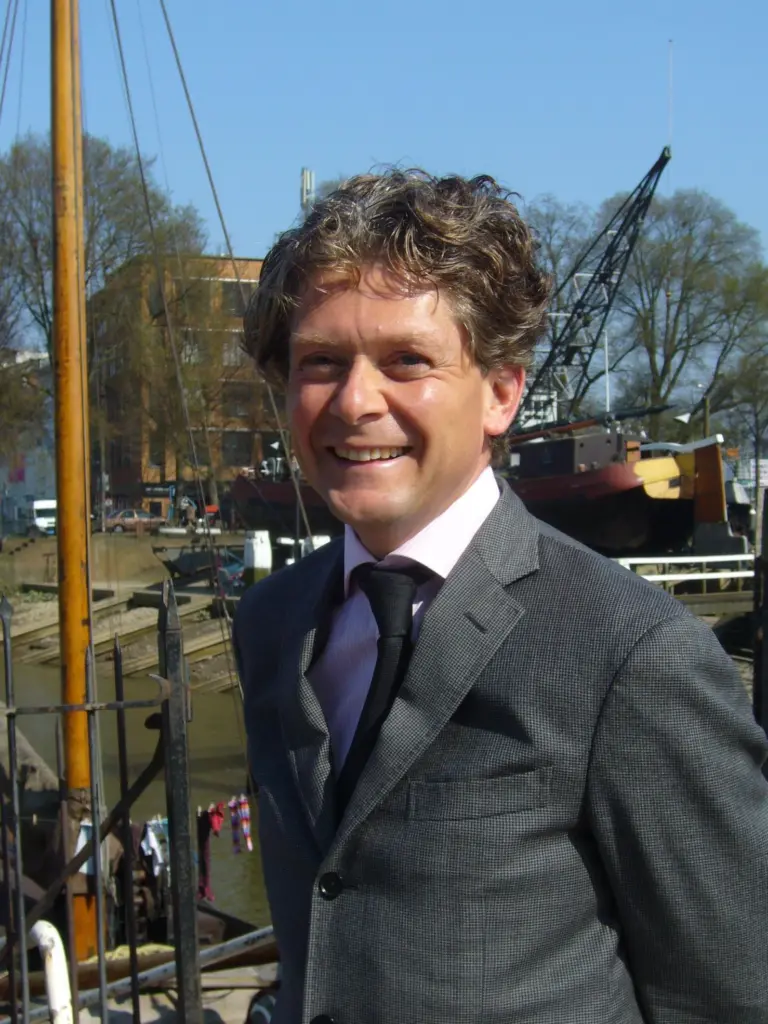
Keep it simple and understand what you are evaluating; too many key performance indicators (KPIs) and you can start losing track of exactly what it is you are trying to measure or achieve. It all boils down to what are the key KPIs, says Jim Kukucka, Halcrow’s project manager and senior port planner based in New York.
“Too many people use the acronym and forget what we are really saying,” he warns. “Let’s remember, this is about Key Performance Indicators. You can over-analyse something or make the numbers say whatever you want them to say. But we should not be slaves to the statistics – we should be utilising them as an effective tool to make positive change.”
Mr Kukucka says there is also the danger that KPIs can be “hijacked” and turned into spin by marketing people – or even “adjusted” by operations people anxious to factor out any delays in crane utilisation, for example.
“Basically, KPIs are definitely needed to give some kind of comparison between terminal operators – the use of KPIs gives a way to quantify,” he says. “Terminal managements want to develop true KPIs that they can base management decisions on. But there are some pitfalls.”
Tom Doyle, whose Dublin-based company Cannizaro works with clients in a number of business sectors to improve their productivity and performance, adds that terminals can be “prisoners of their own history”.
“Things are often the way they are because they always have been, often based on an accretion of decisions,” he says. “People are reluctant to take the axe and chop down what they have put in place and it is easier for an outsider to point things out than an insider.”
And Cannizaro shares Halcrow sentiment of “keep it simple”.
Says John Bradshaw, a consultant with Cannizaro: “All that KPIs are is basically setting a baseline for what the operation is. A lot of companies make it over-complicated,” he says. “Too many KPIs and they tend to be ignored. For example, tyre depth, fuel consumption of a tugmaster – if you produce too much data, it tends to devalue it. So keep it to the critical issues affecting the business.”
Halcrow’s Mr Kukucka divides the process into two distinct areas – service-based KPIs and productivity-based KPIs.
“Service KPIs are measurements such as how quickly a terminal turns a vessel from docking to sailing – that has always been a big item, especially in contract negotiations. Shipping lines will look at the KPIs if they are available, and benchmark these with other terminals. Respectable or stellar KPIs can show that the terminal is exemplary and attract business that way.
“But there are problems with productivity-based measurements. I have seen marine people wanting to factor out a delay such as crane break-down. And once you start to make such adjustments, it is not easy to make a comparison.”
Rather, a terminal should use clear KPIs with no variables allowed, and make a clear distinction between “what I need to know” and what is just fluff or marketing, he says. “For example, teu/year crane utilisation, throughput per lane at the gate, or berth utilisation – you are not going to be able to fudge that.”
Rotterdam-based Maritime and Transport Business Solutions (MTBS) looks at KPIs from the contractual or concession point of view as part of its work in giving transaction and other advice.
“Container terminals are the area where KPIs most often come in because they serve a multitude of clients – so it becomes sensible to talk about performance,” says MTBS director Paul van Eulem.
“KPIs in general are quite useful. However, what we see in practice when we work on behalf of port authorities, there is a tendency to overdo the thing and focus too much on detailed operative KPIs – whereas I think in a concession contract often for a long period of time, KPIs should be fully aligned with the strategic objectives of the port authority.”
There is a lot of emphasis on crane movements, for example – “but I think that is a KPI on too low a level of detail,” says Mr van Eulem. “We would rather advocate KPIs on a more strategic level; for example, if the port authority’s objective is to enter into a concession contract with a party to boost volume, that volume can be a KPI. It is about broad targets, not getting bogged down in minute detail.
“Too many KPIs can start to annoy; it is like a marriage if the husband and wife are always checking on each other. You have to give each other the right degree of freedom and rely on your mutual long-term expectations. Forget the details – just focus on the things that are really important and also the things that you can objectively measure.”
Too much detail makes it very difficult to measure performance objectively, he says – and if you enter too much debate, the lawyers come in and a lot of management time and attention can be taken up.
Equally, terminals that overdo it tend to look away from the KPIs and end up with even the important ones not being recognised.
KPIs in a typical operation include issues such as berth utilisation, dwell time and crane moves, but MTBS advocates a more “innovative” approach. For example, KPIs obliging the concession holder to manage the modal split so he is required to reduce the percentage leaving by truck and build in incentives to improve the use of rail and barge, to reduce congestion in the hinterland. “I think that is innovative and clever – an example of a more sophisticated KPI.
Port of Dover finance and commercial director Tim Waggott agrees KPIs are very much organisation-specific: “The best measure you quite often have is your own performance and your own targets. You set your KPIs to deliver your corporate vision and mission.
“We look at operational KPIs such as how rapidly traffic is moved through the port, or how long it takes to tie up a ship and unload. If it starts to slip, it enables you to look into where the problem and find a solution.”
Port of Dover chief executive Bob Goldfield adds: “You should measure those KPIs that tell you how you are going to meet your own objective and also those that are important to your customers. “There is no point in measuring things just because you can. Unless you need to know it in order to achieve what you are after, or what the corporate plan says, or what the customer is interested in, what is the point?”
KPIs could also be vital as terminals and port look to keep costs under control. Is an extension really needed, or could present land utilisation be improved?
“We are looking at gaining more productivity but of course we have financial KPIs too – looking at revenue per box and statistics on volumes that could indicate to management that they should downsize,” says Halcrow’s Mr Kukucka. “I believe the use of KPIs is the way forward for managers to optimise their terminal both in long-term planning and strategy and in the short and medium-term operations.”
Related Articles
 BULK HANDLING
 BULK HANDLING
 BULK HANDLING