![PortStrategy[GreenPort]](https://www.portstrategy.com/wp-content/uploads/2026/09/PortStrategyGreenPort.svg)





Tighten those belts
Its all about the money – good and bad – as we welcome in 2013, finds Martin Rushmere
Civil engineering consultant Nigel Nixon is sending out a fervent wish to port operators for 2013 and beyond to pay more attention to regular, minor maintenance to unglamorous facilities such as wharves, jetties and paving.
“No one takes maintenance servicing properly and the normal pattern is of crisis management only. Operators and owners reckon that if it works, that’s fine and they will wait until it breaks. There are techniques that can extend the life of facilities considerably.”
Mr Nixon reminds operators of the advances in dynamic monitoring through the positioning of accelerometers at strategic points and says that there have been some far reaching advances in the field (such as by VCC-ISS).
“If I have a wish for this year it is that owners pay more attention to pre-planned maintenance.”
Finance woes
Part of the reason for turning a blind eye could well be because of more restrictive financing and lending opportunities. As infrastructure finance specialist Martin Blaiklock notes: “Commercial banks are restructuring their balance sheets to comply with Basel III requirements.” These call for greater capital reserves and equity, aimed at making lending more prudent – dubbed “more cattle and less hat” in the street slang of US finance.
“Certainly, over the next year and probably two years, there will be very little change in the lending climate of a maximum of 10 years’ funding for projects,” says Mr Blaiklock. “In the emerging markets the development banks are the prime lenders for infrastructure, because they don’t have the same restrictions on their lending. In other markets you often find the developers using their own resources and once a project is completed and the risks reduced, pension funds and insurance companies will step in and refinance the project.”
The risk, he says, is that during the construction period the markets will move into negative territory and the refinancing cannot be found. “However, in my experience no major projects have gone bust since 2007, except for a couple of toll roads in Spain and Greece. Infrastructure projects have had their problems, but they have survived.”
The other side of the equation is that interest rates are low and costs are being kept down. Economics consultant Paul Bingham, of CDM Smith, says that capital construction cost inflation is generally low around the world (although China is suffering from labour cost pressure). But, “borrowers face tighter credit standards or reduced range of potential sources of investment, either from the private financial sector or the public sector facing fiscal crises. This situation isn’t likely to improve rapidly either. However, for the right opportunities, the port sector in general is still an attractive market for finance given continued prospects for long-term trade growth and increasing port volumes.”
Operation challenges
On the cost side, there is growing pressure from environmental requirements, says Mr Bingham. “With ever-tightening standards and costs for higher technology in use for new facilities, both of which change the mix of what has to be purchased (including technically-skilled labour) to be more expensive.”
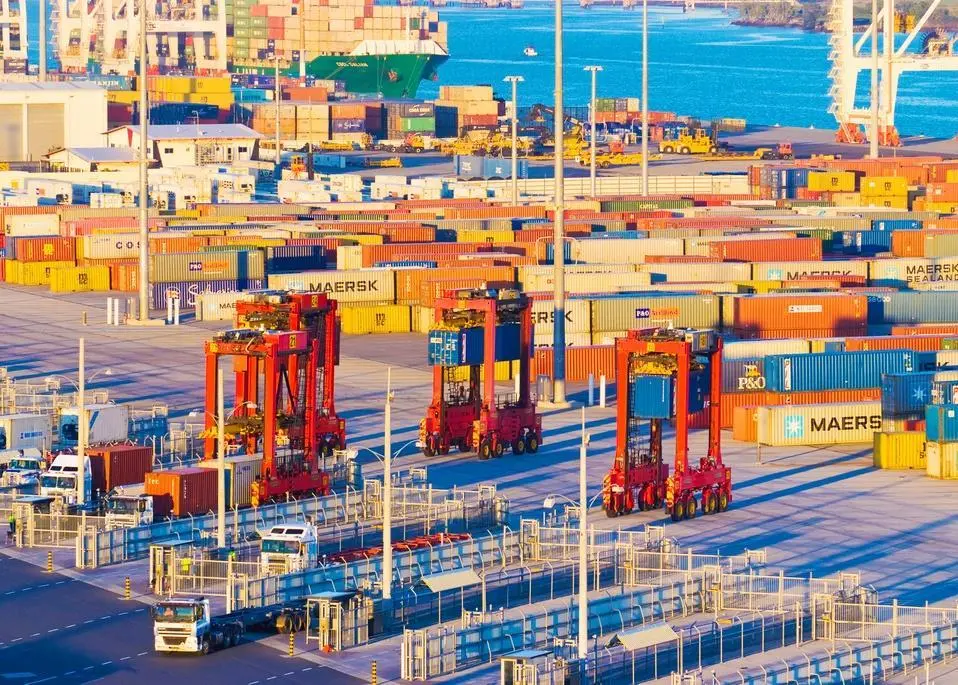
For general operations, automation is obviously set to advance. But Geraldine Knatz, president of the International Association of Ports and Harbours, cautions that the topic must be clearly understood. “We can’t stop the evolution of technology. The best we can do is work with each of our customers to bring it online in a way that works best for them and our labor force. We also need to proactively encourage workforce training so our current and future labour pools are ready to take on new roles in the supply chain.
“Twenty-first century container terminals are big investments, especially if you aren’t a container port right now. Our container terminals are our primary revenue source so we need to protect that core business while looking at other opportunities. ”
Mr Bingham says costs must be considered. “Additional automation and degree of automation needs to be justified such that the return on investment makes the expenditure worthwhile. Just because the technology exists doesn’t mean every terminal should be seeing the expense of further automation yet. Given the continued pace of the advance of lower costs for technology, for some terminals it will be better to wait, while for others the competitive pressure and current cargo volume can justify the expense now, even if newer technology will want to be adopted later.”
Looking further
Ms Knatz says that the ROI measure should be extended to more than just the traditional consideration of balancing containers against other cargo types. “I think the Great Recession forced many ports to focus more on having a diversified portfolio – and not just a cargo portfolio. As ports, we should look at how we can generate economic development beyond cargo jobs. We can pinpoint ROI for container terminals, but what’s the ROI on our other assets? How can we get the most value out of our property portfolio?
“Beyond cargo, what kinds of economic development would produce the best return on investment for our local economy,” asks Ms Knatz. “Those questions go beyond traditional port and cargo operations, and every port should be asking them.”
Mr Bingham advises ports to examine the “commodity mix” of markets they send and sell to when considering the container vs other cargoes argument. “Bulk and breakbulk cargo handling also continues to grow (perhaps with a few exceptions such as breakbulk reefer cargoes in some areas), so continued needs and opportunities exist for non-containerised port terminals and associated network infrastructure.”
Related Articles
 BULK HANDLING
 BULK HANDLING
 BULK HANDLING