![PortStrategy[GreenPort]](https://www.portstrategy.com/wp-content/uploads/2026/09/PortStrategyGreenPort.svg)





Cautious confidence
Post-crisis, what are the finance options for ports operating in an uncertain world asks Felicity Landon
In this new post-crash reality, port operators and investors have started to behave in a very different way when it comes to investment, finance and portfolio management. Gone are the confident forecasts, the conviction that the only way for volumes is up – the economic crisis brought with it some hard lessons.
Michael Pomerleau, partner at InduStreams and Port-Investor.com, says the vast majority of investors and operators he is in contact with are indeed employing a new approach. “Overall they are much more cautious and some are starting to concern themselves more with downside,” he says. “Some of the leading players are changing in a structural manner.”
This pretty much boils down to market volatility that they did not expect, he says. “Many are talking about ‘a new normal’, which I think is a bit of a misnomer. The fact is that global trade is inherently volatile and all the greater when you go from the global level to the local level, which is the level relevant to port investors. And it is very possibly increasing, because the interdependence of economies is increasing.”
As Tomas Vitsounis, project leader, Total Port Logistics, at NICTA, Australia’s ICT research centre of excellence, puts it: the shock from the economic crisis was profound for both container shipping and the ports industry.
“The period of continuous growth came to an end and the industry realised that the downturn was as easy as the upturn. It was like the party was over, the lights went on and everyone was facing the ugly reality,” he says.
“After a long period of continuous growth, I think that port operators and investors started believing that the market would never decline. Probably that led them to invest without taking full consideration of the risks or efforts to reduce uncertainties. Presently though, there is a need to re-examine their strategies and re-evaluate the rationality of their past decisions. “
However, he emphasises, this does not imply that all port operators will decisively change their investment and portfolio management. “Such decisions are largely based also on the companies’ strategic management and the willingness to commit to high-risk investments (with potential high revenues).”
Face the reality
Mr Pomerleau says the solution when investing today is ‘to accept this volatility and work with it rather than against it’. This includes abandoning precision forecasting which is, he says, in many ways what has led to many of the investment failures over the past few years.
“We can’t predict markets with any greater precision. So when we try, all we do is make strategies that fall apart as soon as the forecast does, and unfortunately more often than not brings it brings with it large-scale shareholder value destruction.”
So is there any way of creating more certainty or a surer return on investment when it comes to ports? “There is. We need to care much more about how we invest and the models we employ, which only a few investors today seem to be doing.”
For simplicity’s sake, says Mr Pomerleau, he would encourage clients to approach an investment by splitting it into three components: the investment model (concession/partnership agreement), the operating model (deployment of staff, equipment and resources), and the ownership model, as levers to be used to create the kind of return exposure being sought, and with that ‘real options’ which can make a huge difference.
“The key is really to think in two different domains: market variables and model variables. We are used to working with the market variables – now we need to get a lot better at working with the model variables.”
Over-exposure
In essence, Mr Pomerleau says his approach considers your exposure to any given market through the agreements, commitment and entitlements you put in place for that market.
He agrees that in some cases this could lead to a scenario where one party might win out at the expense of another, but says it should be a ‘win-win’. “For example, if you are starting out and making a concession agreement with a local government, the government has the opportunity to structure a PPP in a way whereby both sides can win out and there doesn’t have to be this massive downside.”
What if there is an unexpected upside and the investor has lost out because of too safe an approach? “That really is a question of optionality,” says Mr Pomerleau. “You have to consider carefully expansion or extension options to a concession or operating rights; it doesn’t necessarily have to come at a big risk or cost. In general it is possible to capture a lot of that potential upside by considering your options.”
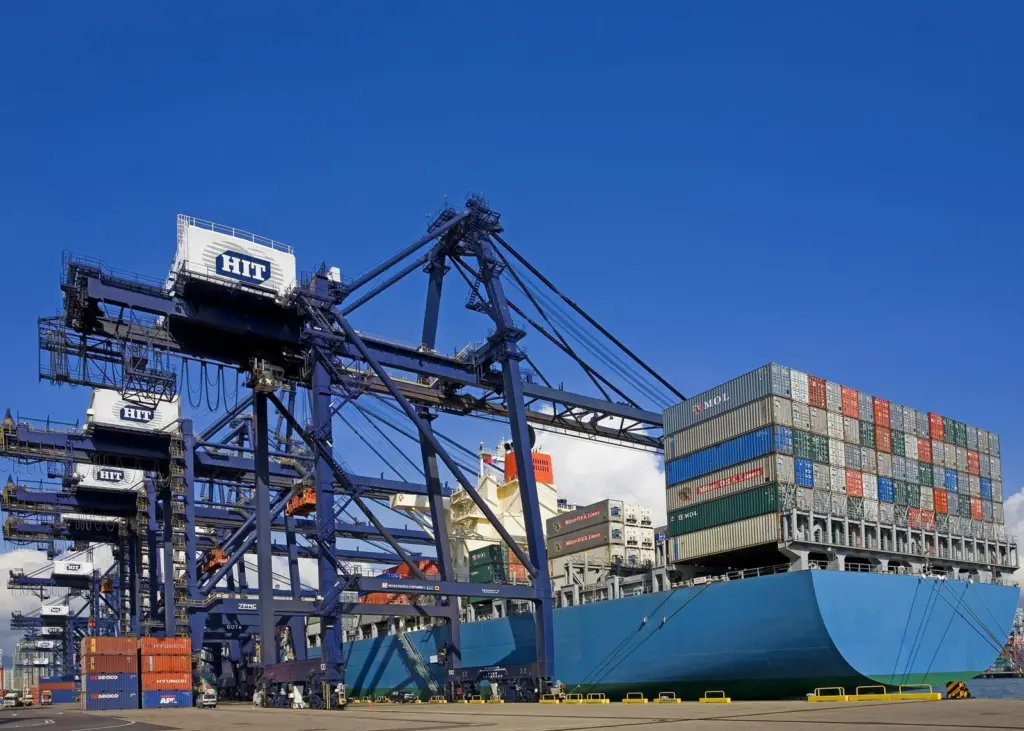
Port operators are certainly redefining their investment and portfolio management following the recession, says Mr Vitsounis. “These changes are not very obvious and do not necessarily take the form of an easily identified ‘new way’ of doing business yet. However, cases such as Hutchison’s recent IPO provide some early evidence. It will be interesting to see how other operators will manage their investments and portfolio in the near future.”
Hutchison approach
Mr Pomerleau says the Hutchison Port Trust IPO in Singapore is one of the most notable cases of a ‘new financial approach’ in ports.
“In one single move, HPH transformed their return exposure completely for all their Pearl River Delta assets when they IPO’d them on the Singapore Stock Exchange. Not only did they secure a substantial part of the potential future cash flows, they also placed themselves in a role that gives them many times the upside compared to the stake they have left in the game,” he says.
Mr Vitsounis says: “In my opinion, the changes in approach will impact mainly on the financial decisions, the reorganisation of financial portfolios (get more prepared to face uncertainties) and the level of capital investments and exposure to credit risk that each company is willing to take, though it is hard to imagine that operators will change their strategic approach to any great extent.
“The general economic environment has changed. Liquidity constraints that have to do with the restrictive conditions of the banking systems around the world – but mainly in Europe – have affected the flexibility of ports in structuring their finance and the debt-to-equity ratios.
“Governments with budgetary constraints are not willing to launch subsidies and grants and tax reliefs as they used to. Therefore ports and port operators may be entering an era where equity finance will dominate. The forms of equity finance have also changed. There are several schemes available in the market, from direct equity issuing, mergers or acquisitions to indirect participation through investment and operations agreements.”
Related Articles
 CONCESSIONS & INVESTMENTS
 CONCESSIONS & INVESTMENTS
 CONCESSIONS & INVESTMENTS