![PortStrategy[GreenPort]](https://www.portstrategy.com/wp-content/uploads/2026/09/PortStrategyGreenPort.svg)





Loss prone industry
Surely, few parts of any industrial economy can approach the modern port or terminal for the variety of ways in which losses can occur. Sam Ignarski reports.
There are the property and bodily interests of third parties – the ships, cargoes, and visitors to the port whose interests can be harmed or damaged in so many ways. Then there is the range of so called first party property owned by operators, the cranes, vehicles sheds and quays, loss of which by way of fire storm or flood can be sudden and dramatic. Finally there is the misperformance of services which amounts to professional negligence and gives rise to claims by customers harmed by poor performance. These so-called errors and omissions risks are such things as delay, misdirection and warranty claims for botched repairs or packing. Altogether this package of loss prone potential makes the insurance of ports and terminals a demanding undertaking for insurers and a trap for the unwary.
WHO IS WHO?
What sort of insurer willingly enters this fraught sector? They come in two basic varieties, one local and domestic in location, the other international in scope and willing in theory to insure any operation anywhere. And although the market is international in nature, there are lots of terminals and ports which are insured in their home markets by local insurers content to offer cover to a relatively small number of local customers. For instance, the whole range of ports and terminals in North West Europe from France to Germany, are on the whole insured by local French and German insurance companies. Only in Rotterdam and Antwerp is there any interest in accessing the more international specialist companies. The same may be said of the ports industry in Japan where local is almost always considered best, even if the local companies have a marked reluctance to offer any cover at all in respect of earthquake.
In the London market, home to the majority of the international market, there are some five insurers who are known for their desire to write this class of business, although not always as a complete package of risks and with marked differences in their willingness by reason of price or terms or both to have a go. A list of insurers, ranked by their perceived eagerness to write business, might start with the new and rather aggressive operation begun last summer by the St Paul’s Insurance Company under the auspices of Mark Trevitt, who decamped from the Navigators in 2005 with other staff to start up operations with the St Paul’s. A relatively new operation ITMU is backed by the Hanover Re and fronted by Peter Rogers, a well known specialist with a long history in the market over the years as an aggressive player. The Navigators, an American company with old marine origins, set up in the aftermath of 9/11 with undamaged capital and for some 18 months was the only company in London with an expansionary agenda. The new specialist underwriter there is Clive Nix who joined the company after an early career spent with the Limit operation in Lloyds. During the immediate aftermath of 9/11 the Navigators took substantial business away from markets in Lloyd’s and also the TT Club, the unit-load industry mutual which for many years commanded the market as the leading specialist. A further reformation of the post 9/11 marine insurance world was the formation in 2002 of the Wavelength Consortium, a group of Lloyd’s underwriters who specialized in these risks and who combined to offer large capacity liability and property insurance to the market. The leading figure in this consortium is Nick Sprott of XL. The Wavelength Consortium is currently thought to offer a high priced product in exchange for very good security.
ACME OF DIFFICULTY
There is no doubt that there is a shifting sensibility to danger in this sector of insurance which varies from one insurance cycle to the next.
These dangers and perceptions of heightened risk leave their monuments in the wordings used and the approach to writing insurance for ports and terminals. A survey of risks most calculated to rob ports underwriters of sleep over the last 25 years would start with the dangers of flood and fire (a monument to the conversion of many old general cargo piers to containerised use which took place during the late 1970s and early 1980s). Floods and fires in Hamburg around this time remain memorable.
The 1980s saw the full flowering of a liability insurance crisis in the United States as bodily injury claims, cargo losses and “action-overs” by workmen’s compensation insurers drove many US liability underwriters from the scene with large losses. Many of the more tortuous wordings addressing the circumstances in which a bodily injury will be entertained by liability underwriters are anchored in this crisis-prone episode in the United States. Similarly the wordings which are often called “fire legal liability” address the demarcation between the liability underwriter and the insurer of fire/property risks.
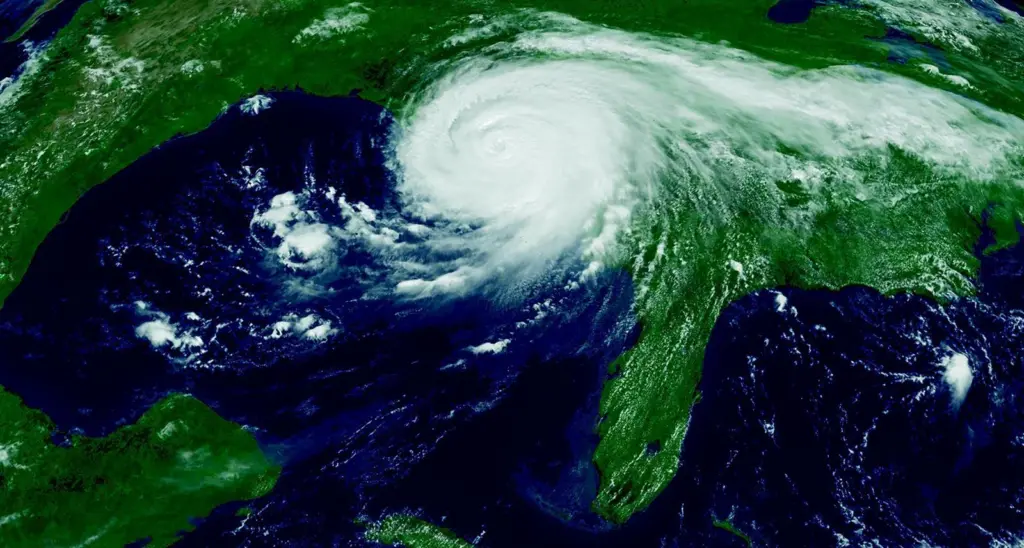
In the 1990s, with the rise of containerisation in Asia, new sensitivities to storm and earthquake risks became visible. Many of the more astounding claims made upon insurers during these years came from the rising industry in Asia. Memories remain inscribed with images of the dozens of cranes lost in Kobe, their legs distorted as if doing a vast mechanical splits. Storms in Taiwan traditionally provided the occasional text book loss during these years. Tie down routines, so professional in any of the countries in Asia subject to typhoon risks, have nevertheless been at times unequal to the fury of nature. For there is no doubt that the concern which most preoccupies insurers is the risk of catastrophic loss.
CAT LOSS
The growth of the big terminal operating group as part of the consolidation of the industry has produced historically high collections of risks in areas of the world where the construction of large scale port operations have been a feature of companies like Hutchison Port Holdings, the PSA Group, AP Moller Terminals and P&O Ports. The scale of risk and loss for those underwriters prepared to write the whole family of risks, is unprecedented and unfortunately the level of claims being produced in recent times is equally high. Rates of reinsurance for catastrophic loss have followed upon the last few years which has seen phenomenally large storm losses in Busan and the Gulf Coast in the Americas. Increases in this class of business are of the order of 25% for insurers like the TT Club who tend to retain only a small slice of the property risk. It is said now that a catastrophe cover with a limit of say US$150m per event (the price, after all, of only some 20 of the newer cranes in the industry) will not only cost primary insurers a substantial increase in their facultative reinsurance budgets but will also force them to retain say the first US$5m of each claim instead of the US$1-2m of yesteryear. A catastrophe premium of US$7.5m for a port operator with this kind of risk profile would not be unexpected in the current market. This is the logical progression of an era during which some specialised insurers have produced heavy losses to reinsurers for three years running. For liabilities the rates of increase commonly cited in the market are of the order of 5%.
OUTLOOK
Market forces are producing a rather polarised offering from the insurance industry. The smaller or medium port and terminal industry can be and is served by a variety of underwriters well able to rate the risks and deal with the aftermath of claims. The emergence of the very large container operation, grouped together into global combines, tests the capital of the entire reinsurance market, the players in which have now for some years been burnt by the industry. This guarantees a period of turbulence ahead.
Related Articles
 CONCESSIONS & INVESTMENTS
 CONCESSIONS & INVESTMENTS
 CONCESSIONS & INVESTMENTS