![PortStrategy[GreenPort]](https://www.portstrategy.com/wp-content/uploads/2026/09/PortStrategyGreenPort.svg)






Playing around
“If you had the choice between sitting down with, say, 20 different manuals to sharpen up your safety management skills, or playing a game, what would you rather do?” asks Joost Smits of Systems Navigator.
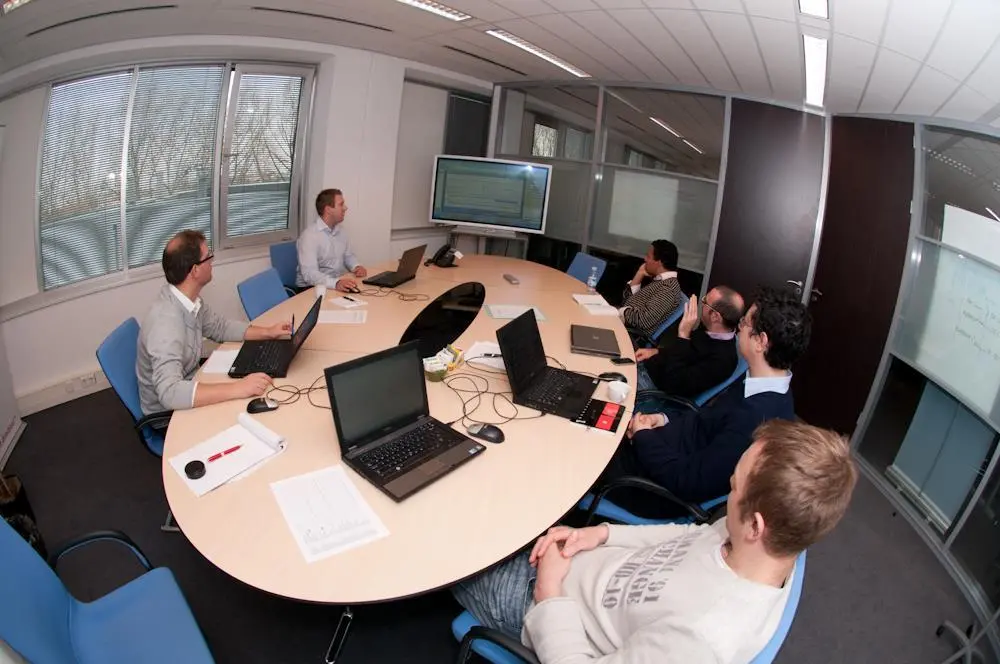
The surprising thing is that it’s not just the hands-on workers, like tugboat and crane drivers, that are now benefitting from simulators. There is one training game for general managers that that is aimed at safety issues.
Created for VTTI, it is a virtual oil terminal that’s surprisingly true to life: winning can’t be at the expense of efficiency as even ‘virtuous’ acts have realistic costs attached.
Mr Smits explains that teams or single managers find they have the usual jobs, such as volume management but they also have the responsibilities of improving training and investing in safety.
“In the game, you have a budget and you can’t simply do everything. Overall, you have to make a profit, or you don’t get to invest. The more you create, the more you have to play with – just like life,” explains Mr Smits. If there’s a big oil spill, you don’t receive the income and there are accident costs to cover – you can end up with a negative bank balance. The game is played out over a number of ‘virtual’ years, so you can see how the terminal is growing, or not.
It’s quite a complex matrix and there’s a question of opportunities and consequences at each level, explains Mr Smits. “Players must make balanced decisions between investing in ‘hardware’, such as which kind of gauging or alarm system is used and what kind of priority has it over other investments, as well as procedures, training and other aspects such as leadership and safety culture. Like in real life, there is no single solution for success while, as in life, the odds can be either for or against the participant.”
But can anyone play it? Well, no. In a way this is reassuring, because in order to have any understanding about what’s happening you still need to have the background, the lectures first, but it gives people the chance to grasp the ideas and put them to the test.
Of course, to get the most out of it you do have to trust the objectivity of the programming involved, and if it goes wrong take responsibility, not just assume that there’s something wrong with the programme.
And the reason it works as a game – well, “most terminal’s general managers are pretty competitive”, says Mr Smits.
Related Articles
 CONCESSIONS & INVESTMENTS
 CONCESSIONS & INVESTMENTS
 CONCESSIONS & INVESTMENTS