![PortStrategy[GreenPort]](https://www.portstrategy.com/wp-content/uploads/2026/09/PortStrategyGreenPort.svg)






polarisation at ports
With the end of the container line conference system in Europe, the battle over terminal handling charges has now moved to Asia. Mike King examines this controversial fee
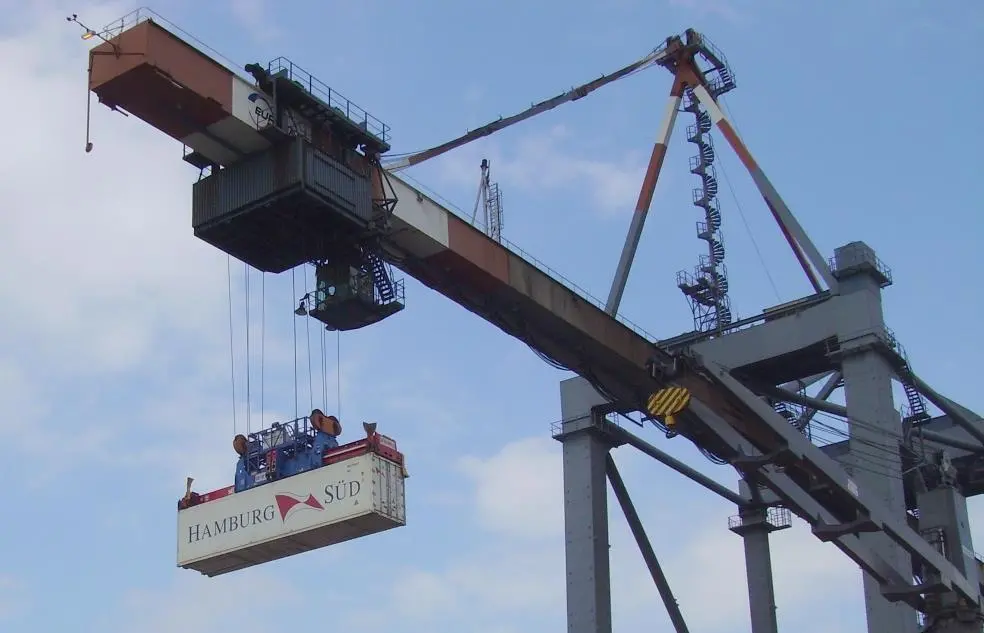
The debate about the fairness of terminal handling charges (THCs) splits container port customers down the middle. In theory at least, they are imposed by lines on shippers as a means of recovering the charges paid by them for terminal handling at the terminal. Port services required for the ship such as towage and pilotage are covered by the freight rate.
But what for lines is ‘cost recovery’ is often viewed as extortion by shippers, with port authorities and terminals usually taking up positions somewhere between the two extremes, caught between their two sets of customers.
Although THCs existed before, most shipping lines only started separating freight rates and THCs post-1980. In part this reflected the development of specialised container terminals which made it increasingly difficult to separate out port costs on a box by box basis and impractical for cargo interests to decide how a single box would be handled and stored on the landside.
The separation between landside handling on to truck or rail and stevedoring costs for ship-shore handling narrowed as terminals and lines gravitated towards all-in, standard handling charges covering the whole phase between ship and hinterland transportation.
Once lines grasped that they were paying the landside part of the equation which had formerly been the responsibility of the consignee or consignor, they looked to recoup their costs in the form of THCs. This, it was argued, would not only increase transparency for shippers who would know how much they were paying lines for the handling of containers at ports, but also protect shipping lines from currency fluctuations, since terminal handling costs charged by ports were calculated in local currencies while freight rates were charged in US dollars.
In Europe, an ’80/20′ agreement was drawn up between lines and shipper bodies. This stated that lines would initially pay the full fee for port handling charges, swallowing 20% of the cost and passing on 80% to shippers in the form of THCs on the basis that most of the cost of handling a container at a terminal relates to land-side services.
But the 80/20 guidelines quickly became untenable because handling tariffs agreed between lines and terminal operators were almost uniformly kept confidential so shippers were unable to tell if charges were in accordance with the agreement.
Conferences also agreed THCs for member lines at each port for each trade in much the same way as they collectively agreed freight rates, further muddying the ‘cost recovery’ waters. Most non-conference lines tended to toe the conference line so THCs became a fixed, non-negotiable charge at most ports on most trades.
For shippers, THCs quickly became divorced from actual handling fees and viewed as a liner supplement to freight rates which increased overall shipping charges irrespective of demand and supply for carrier or port services.
Shippers claim THCs increased throughout the 1990s and the early part of this century at much faster rates than freight rates or port handling charges, despite the fact that larger ships and more efficient handling systems at ports were seeing port charges per teu fall.
Lines respond by insisting the original THCs introduced were set at far below the cost suffered by lines and that subsequent hikes merely reflected a desire to recoup the entire cost. Other carrier sources say that THC prices didn’t, in fact, rise at all in Europe because conferences were wary of investigation by the European Commission over price fixing.
What is clear is that rising volumes throughout the 1990s and the better deals available at ports, where many carriers had started operating their own terminals, allowed the leading container lines to improve their margin on THCs whether charges to shippers were increased or not.
The mistrust between all the parties affected by THCs intensified. A survey published in 2005 conducted on behalf of liner lobby group the European Liner Affairs Association (ELAA) by Rotterdam’s Erasmus University, found that although shippers and consignees did not want to negotiate handling changes with terminal operators directly, they considered liner THCs to lack transparency and many wanted THCs reincorporated into freight rates.
Damningly for lines, at least to those who took the view that making a profit on THCs was wrong, the study also found that terminal operators thought lines were overcharging on THCs, which many claimed bore no resemblance to the actual costs levied by them. They worried this could affect their competitive position vis-a-vis other ports and viewed THCs as simply a means by which carriers bolstered income.
However, the outlawing of the conference era in Europe last October, in part because shipper interests successfully argued that fixing THCs across trades amounted to ‘cartelisation’, had wide ramifications. By banning lines from collectively setting THCs and freight rates on any trade which included a European call, shippers were suddenly free to negotiate directly with each line over suitable rates and surcharges, including THCs.
Shippers hoped this would lead to ‘all-in’ freight rates covering all shipping charges including THCs, a trend still in its infancy as Port Strategy goes to press.
Chris Bourne, executive director of the ELAA, says there is now less transparency for shippers on THCs on trades to and from Europe despite more intense competition. “Lines have looked at terminal costs and seen that THCs were too low so, generally speaking, they have gone up,” he explains.
“The 80/20 deal is out of the window now on trades to and from Europe,” he says. “Lines are free to charge what they like. Each line has a separate THC. Each carrier looks at the market and independently decides a suitable rate. Shippers can then decide who to use. Generally speaking lines seek at least to cost recover.”
He argues that THCs, either in Europe or elsewhere, are simply legitimate charges made by lines on their customers. Therefore, carriers are entirely free to charge more than the cost levied by the local terminal operator as they seek to satisfy their own shareholders by maximising profits. “Whether the customer wants all-in rates or THCs broken out depends on them,” he says.
With the end of the conference system in Europe, the shipper vs carrier debate has now shifted to Asia. But it remains mired in three decades of confusion and antagonism over the legitimacy of lines making a profit on THCs imposed on shippers over and above the actual port costs incurred.
Many Asian shippers are now expressing the concern that lines, unable to pass on extra charges to European consignees, are instead using the ongoing operation of conferences on non-European trades to increase THCs for exporters. John Y Lu, Asian Shippers’ Council chairman, argues that now lines are prevented from collectively setting THCs and freight rates on European lanes, they will increase the burden on Asian shippers. “It’s the area where they can take advantage,” he says.
Mr Bourne says some lines have actually increased THCs more on European trades than on those trades presided over by conferences where collective THC rates are established by port and trade.
Nicolette van der Jagt, secretary-general of the European Shippers’ Council agrees that THCs have gone up and calls on shippers to “negotiate as many costs as possible within the freight rate as well as reaching agreement on who pays which elements”.
In Asia as in Europe before, the polemic between cargo and liner interests over THCs is part of a wider picture – the global battle over the rights and wrongs of the conference system. But as long as lines are forced to justify THC charges as a reflection of costs incurred – when the costs incurred are not transparent to their customers and terminal operators contradict carrier claims over handling fees – rather than arguing they have the right to turn a profit wherever and however they are legally free to do so, then the THC debate will trundle on, weighed down by three decades of rancour.
Related Articles
 CONCESSIONS & INVESTMENTS
 CONCESSIONS & INVESTMENTS
 CONCESSIONS & INVESTMENTS