![PortStrategy[GreenPort]](https://www.portstrategy.com/wp-content/uploads/2026/09/PortStrategyGreenPort.svg)






Safe and sound
HFWs Flora Stewart asks if the disjointed safety regimes in place in the UK go far enough to protect dockworkers
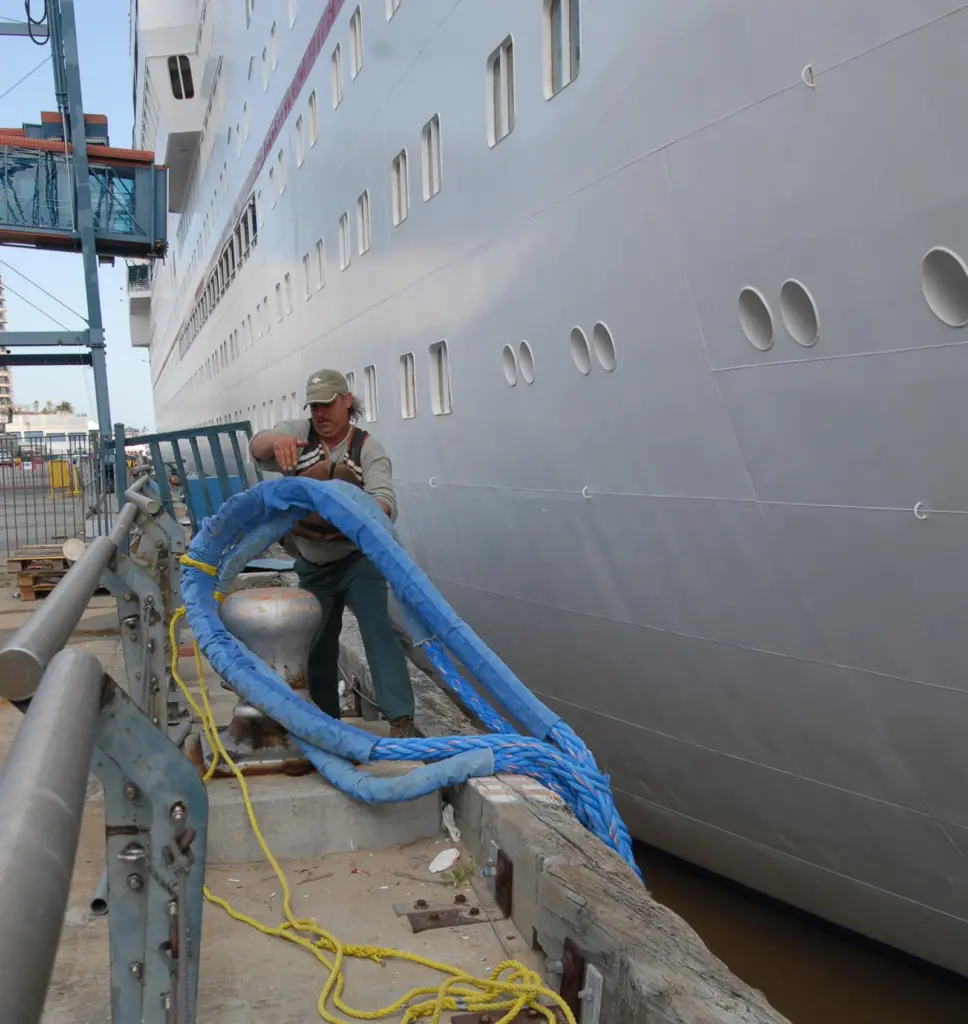
Although over 4,000 miles away from the UK, the tragedy on March 29, 2010 at the Freeport Container Port in Grand Bahama reminds us of the hazardous nature of the ports industry: three workers died while carrying out maintenance work on a gantry crane when a tornado suddenly hit.
There is of course no evidence to suggest that the deaths were due to a failure of safety procedures, but nonetheless the story highlights that the protection of the health and safety of workers should always have the highest priority.
Acknowledging that the ports industry is especially hazardous yet largely unconsidered, the UK Government has over recent years made efforts to address safety issues. In October 2009, the Department of Transport published an updated Port Marine Safety Code (PMS Code) and supporting Guide to Good Practice on Port Marine Operations (the Guide).
But do the various safety regimes go far enough to protect ports workers, and if not, what needs to be done?
Cover from all angles
The UK Health and Safety Executive (HSE) was created by the Health and Safety at Work Act in 1974. It is a non-departmental Government body responsible for the encouragement, regulation and enforcement of workplace health, safety and welfare, and for research into occupational risks in England and Wales and Scotland. One of the industries on which the HSE focuses is the docks industry. The Ports and Skills Safety Ltd (PSSL) works with the HSE and is the UK ports industry’s organisation for the promotion of health, safety, skills and standards. The PSSL was formed in 2002 and represents the interests of port employers while also working closely with the trade unions and Government bodies. PSSL estimates that it represents approximately 20,000 people.
The responsibility of harbour authorities for maintaining safety in UK ports is governed both by marine legislation and general legislation. Some duties and each harbour authority’s powers are contained in local Acts and Orders, which although broadly similar do vary from port to port. As the Code acknowledges, most are established by the incorporation or transposition into local Acts and Orders of model provisions in the Harbours, Docks and Piers Clauses Act 1847. Other duties and powers are in general legislation – for example, the Harbours Act 1964, the Dangerous Vessels Act 1985, the Docks Regulations 1988, the Health and Safety at Work Act 1974, the Pilotage Act 1987 and the Merchant Shipping Act 1995.
One important legislative instrument which the Code does not acknowledge is the Corporate Manslaughter and Corporate Homicide Act 2007 which prescribes that companies and organisations can be found guilty of corporate manslaughter as a result of serious management failures resulting in a gross breach of a duty of care. The new offence is contained in section 1 (1) of the 2007 Act.
The Code also makes no mention of The International Ship and Port Facility Security Code which is a comprehensive set of measures to enhance the security of ships and port facilities, developed in response to the perceived threats to ships and port facilities in the wake of the 9/11 attacks in the US. Because of space constraints, this article will not deal with either of these instruments.
The PMS Code states that it is effective to impose obligations on all harbour authorities in the UK that have statutory powers and duties. It establishes the principle of a national standard for every aspect of port marine safety and aims to enhance safety for those who use or work in ports, their ships, passengers and the environment.
The introduction to the Code emphasises that it applies to port marine operations the principles of risk assessment and safety management systems. It provides a measure by which harbour authorities can be accountable for the legal powers and duties which they have to run their harbours safely and assists them in discharging their obligations effectively.
The Guide complements the PMS Code and provides harbour authorities with generic advice and examples about how they might meet the requirements under the code. The British Ports Association highlights that for some harbour authorities the Guide may not be the best means of achieving compliance with the code.
Although the updated PMS Code refers to some of the existing legal duties and powers that affect harbour authorities in relation to marine safety, it does not create any new legal duties for harbour authorities. The code is a set of standards – it is not legally enforceable. Harbour authorities should note however that although a failure to comply with the code is not an offence in itself, a failure to adhere to good practice may be relevant to whether the harbour authority is in breach of certain legal duties.
Indeed, an authority may suffer reputational damage if it has publicly committed to the PMS Code’s standards but then fails to meet them. Despite these risks for harbour authorities, some critics assert that since the code is not compulsory it lacks real bite.
Secure by design
Although not mandatory under legislation, the updated PMS Code does contain some additional measures which the Government states are key to successful implementation. In order to comply with the code, harbour authorities must: be aware of existing powers and duties; appoint someone as an independent “designated person” with direct access to the board; develop an effective marine safety management system which employs formal risk assessment techniques; employ people who are competent and qualified for the positions they hold; and publish a comprehensive safety plan along with a regular assessment showing the authority’s performance against the plan.
Is this patchwork of legislation and voluntary standards sufficient to protect the safety of ports workers and if not, what are the problem areas?
One problem, which the HSE itself acknowledges, is that it is not always easy to discern from among the patchwork of legislation which laws apply in a particular circumstance and the relative roles of the HSE and other regulators in any investigation. For example, the HSE states that there have been a number of fatal and serious accidents involving vehicles on roads in and around ports but that it is not clear which legislation applies to these roads and what role the HSE should play in the investigation.
The confusion of which body should play which role leaves some important issues untreated. Research on various issues is urgently required: 17% of all reported cases of Chronic Obstructive Pulmonary Disease are from the docks industry. Dusty cargoes such as coal, aggregates, grain, timber and biomass all have the potential to contribute to the problem. More information is needed to establish if this is a historical problem or a live one.
Both the PSSL and the PMS Code are voluntary. It is widely acknowledged that the PSSL is a professional organisation that makes best and effective efforts to improve safety. However, it only represents 20,000 people and the Government has reported that this number is only a small proportion of the employees in the ports industry. It is submitted that to deal with this and other issues, the Government should make the PSSL a statutorily recognised body.
The Code is also acknowledged to work well, but why not give it maximum peremptory force and make it compulsory? The Department of Industry also makes a sensible proposal that an independent audit of ports safety should be carried out.
All in the numbers
Perhaps the first stage issue however is not with the PSSL and the PMS Code but with the difficulty in evaluating what the improvements in safety for ports workers have been.
Currently, the employment and accident figures are inaccurate. The Department of Industry reported at the start of 2007 that they had reviewed significant evidence to suggest that the statistical basis of the Governments 2005 figures in “Port Employment and Accident Rates” was faulty and that the employment figures for ports workers were being underestimated. This concern was echoed by the Transport and General Workers Union.
Ports employ approximately 90,000 individuals but approximately 26,000 of these are agency workers and day labourers that are frequently changing. The ports industry and their workers are vital to the UK’s economy, serving as this country’s trade gateway to the rest of the world.
Given the industry’s importance, why does the employment data continue to be erroneous? The danger is that it is not possible to analyse whether there are any improvements to safety without reliable figures.
The current broad safety regime is potentially highly effective – but put simply, our ports workers deserve the best protection and the recommendations summarised in this article go some way to achieving that.
Flora Stewart is a solicitor at Holman Fenwick Willan LLP, a law firm advising on all aspects of international commerce. For further information please visit www.hfw.com/sectors/portsterminals.
Related Articles
 CONCESSIONS & INVESTMENTS
 CONCESSIONS & INVESTMENTS
 CONCESSIONS & INVESTMENTS