![PortStrategy[GreenPort]](https://www.portstrategy.com/wp-content/uploads/2026/09/PortStrategyGreenPort.svg)






Second tier opportunities
Second tier ports that support local requirements and offer feeder orregional capability are particularly attractive options for investment,according to James Sutcliffe, chief executive at UK-based PortEvolution Management.
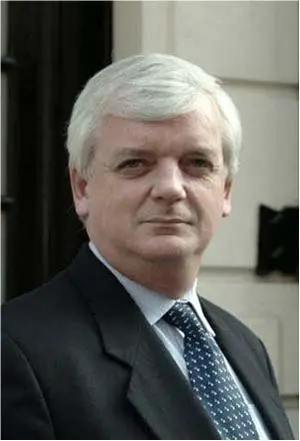
Major port investments and operations are “dominated by the usual suspects”, usually as a result of tendering processes that eliminate the smaller operator from the outset, however good they are, he says. However, “there are a great many opportunities in the market as countries such as Turkey, Vietnam and [those in] South America privatise ports or require investment in terminals,” he says.
“Simply put, efficient ports and terminals facilitate more international trade. This is a smart way to open up international markets to a country’s indigenous manufacturing and therefore, in the current climate, a good way to drive up commerce, employment and income.”
Mr Sutcliffe, who founded Lincolnshire-based Port Evo in 2007, has a long track record in the field, including restructuring his traditional family stevedoring business, John Sutcliffe & Son (Grimsby) in its 125th year.
His port management experience has ranged from the £4m acquisition of Boston Docks in 1990 to the founding of DCT Gdansk in 2001, to develop the 500,000 teu container terminal which became operational in 2007.
In 2004, Mr Sutcliffe led the £475m buyout of PD Ports from Nikko in 2004, followed by the floating of the company on the London Stock Exchange in December the same year, and finally its sale to Babcock and Brown in 2006.
Last year, Mr Sutcliffe was appointed project manager for a $200m container terminal redevelopment at the Port of Vyborg in Russia.
He has been chairman of the UK Trade and Industry Ports Group since 2006. “We promote British companies in the maritime sector in emerging markets, as we remain confident that these markets still offer growth prospects,” he says.
He believes infrastructure investment is still attractive. “There is no doubt that equity providers and banks are finding it tough to source funds but infrastructure is still seen as a long-term stable cash flow resource.”
Meanwhile, Oslo Marine Group (OMG) is developing Vyborg to become a strategic logistics hub for the northern Baltic region, with container and ro-ro facilities augmented by direct rail links to St Petersburg and Moscow.
In October last year, James Sutcliffe was appointed to project manage the $200m development. Port Evo will be responsible for all aspects of delivery of the project, which is due for completion next year.
The redevelopment includes replacement of port handling equipment, replacement of road and internal rail systems, upgrading and expanding berths, and increasing container storage and warehousing.
Related Articles
 CONCESSIONS & INVESTMENTS
 CONCESSIONS & INVESTMENTS
 CONCESSIONS & INVESTMENTS