![PortStrategy[GreenPort]](https://www.portstrategy.com/wp-content/uploads/2026/09/PortStrategyGreenPort.svg)






Sign of the times
Tension builds for Brazils port sector, as unions see private terminals grow without organised labour. Bob Moser reports
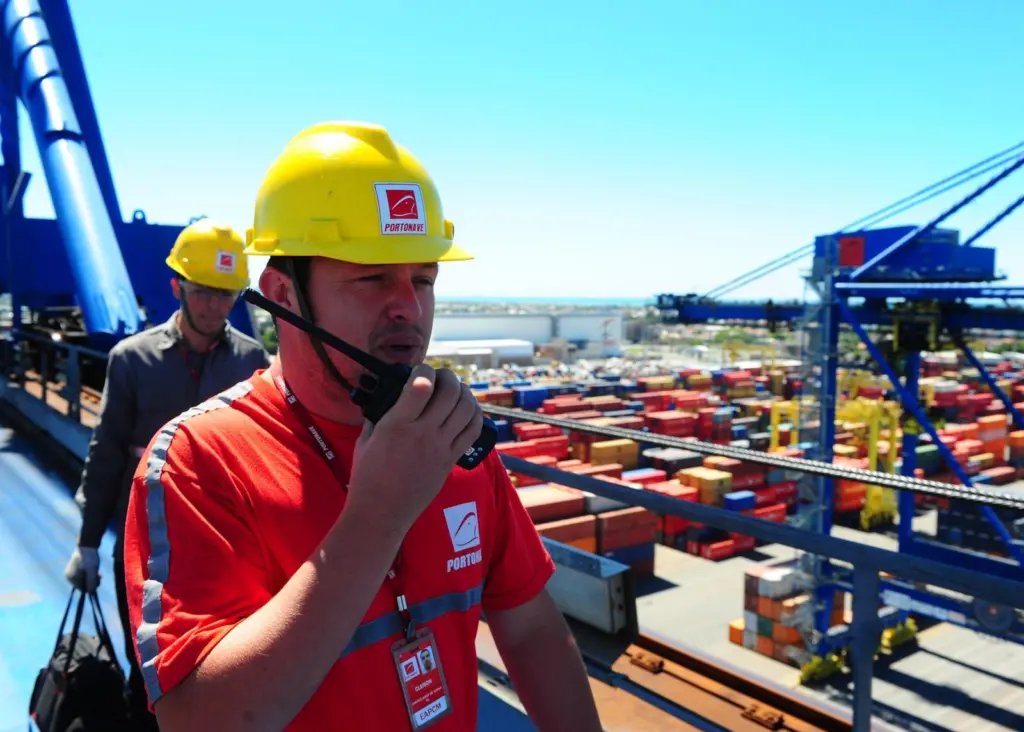
A near month-long work stoppage at one of Brazil’s busiest ports, labour unrest elsewhere and a national coalescence of union leaders have made the last year in Brazilian port management a nerve-wracking one.
Analysts and industry bellwethers see tension building in the sector, as private terminals outside the public sphere grow by avoiding organised labour and capitalising on bottlenecks at overwhelmed public ports. Little training by unions in the latest skills dock workers need only aggravates the problem.
With Brazil’s government opening more ports to private management over the next two years, the nation’s maritime workforce may face demands to change. Whether unions embrace that will play a big role in determining how Brazilian ports and terminals develop in the near future.
‘Retrograde’ workforce
It isn’t definitive whether terminals at public ports are at a permanent disadvantage in Brazil when competing private terminals have labour flexiblity. Benefits exist for both approaches, but each side seems to agree that Brazil’s ports law of 1993 is too vague for today’s labour challenges, says Wilen Manteli, president of the Brazilian Association of Port Terminals (ABTP), a non-profit representing more than 100 private terminals or those leased in public ports.
“I think a lean, well-trained pool of temporary workers, paid based on market demand, can be the solution for public ports. Conversely, many private terminals outside public ports are facing strong pressure, even legal suits, to hire unionised labor, despite the federal constitution and port law ensuring their freedom to hire independently,” says Mr Manteli.
“If we don’t solve Brazil’s (port) labour issue, all terminals – public or private – will suffer the ongoing effects of ports with modern equipment but a retrograde workforce.”
Unions could make headway with port management and revitalise their workforce by conceding to staff cuts, before the problem becomes so prominent government steps in. There’s an estimated excess of 26,000 port labourers, according to ABTP, many of which are eligible to retire based on age or health issues.
“We have a labour excess at the ports, and worse, an aging workforce that’s unprepared to operate with the newest methods of cargo storage and handling,” Mr Manteli says. “Some terminals can operate with their own staff, but end up having to also pay unionised staff (with limited work). It’s a bottleneck that must be resolved by government, employers and workers, with retirement required of those eligible, or relocation assigned to other activities.”
Private terminals outside ports could eventually face skilled labour shortages because of Brazil’s record-low unemployment nationwide, but the migration of redundant labourers at public ports to private terminals won’t happen naturally, because the demand lies in new technical jobs, which few veteran workers are retraining for, Mr Manteli says.
Lost opportunity
Topping labour squabble headlines last year was APM Terminals, the dominant terminal operator at the Port of Itajaí (Brazil’s no. 2 for container traffic), which had a contract with tally clerks expire in early 2011.
Negotiations dragged on for months with little progress. Able to employ freely, APM began hiring union workers on the company’s monthly salary basis, instead of casual work the union had long enjoyed.
Itajaí tally clerks began a 23-day strike in October, nearly shutting down the public port and driving container traffic across the way to a competing private terminal. A deal was eventually struck, with APMT firing the salaried workers it had hired and the union taking a pay cut.
“But APMT lost the chance to completely change labour relations at that port, because if tally clerks had agreed to (salaried) employment it would have been a historic moment for the rest of Brazil,” says Robert Grantham, former commercial director of the Port of Itajaí, now an industry consultant in southern Brazil. “It could’ve been especially key in places like Itajaí, where you have terminals in public ports working opposite private terminals not obliged to use union labour.”
More recently, 100-plus leaders from maritime labour groups met in March to decide whether to cripple Brazil’s port system with a national strike. The groups decided against it but have shown signs of gelling, passing a charter last year calling on unions within strategic regions to pursue collecting bargaining together.
Anti-privatisation
Brazil’s ports law of 1993 opened the door to privatisation of port operations, and leasing of terminals for private use. But it also set rules for concessions to always pass through a bidding process and required hiring unionised labor, something more and more terminals are being built outside public ports to avoid, says Eduardo Lirio Guterra, president of the National Federation of Port Workers, or FNP.
More than $20bn in new investment could flow into Brazil’s public ports in the coming years, via concessions expected for terminals with contracts expiring this year. Mr Guterra doesn’t see the efficiency in Brazilian ports being improved by privatising administration, from the point of view of dock workers. Further concessions in 2013 may even draw retaliation from labour forces.
“We have stressed we are against privatisation of port management or the opening of capital for terminal companies,” said Mr Guterra, in an April interview with Brazilian media. “Criticisms exist (of full privatisation), including from the World Bank, regarding the difficulty to execute planning for the port sector of a country when decision-making power lies with businesses and not the government.”
Mr Guterra agrees it’s necessary to expand and improve Brazilian ports, and streamline the cargo release process. But respect for the rights of port workers is also important, and he argues politicians call for infrastructure improvements but show little interest in how progress affects Brazilians working in the trenches.
Meeting of minds
Despite the challenges, Mr Grantham says labour relations for Brazilian terminal operators are improving overall. With Itajaí an exception, strikes are rarely seen through at Brazilian ports today, with labour leaders better tuned to the fact they may be losing leverage with the onset of new machinery and technology.
“Terminals within the ports could face the obvious problems,” Mr Grantham says. “But I don’t think (unions) will be an obstacle in the future. I think they’re tamer, and know their survival depends on cooperation.”
Related Articles
 CONCESSIONS & INVESTMENTS
 CONCESSIONS & INVESTMENTS
 CONCESSIONS & INVESTMENTS