![PortStrategy[GreenPort]](https://www.portstrategy.com/wp-content/uploads/2026/09/PortStrategyGreenPort.svg)





Sorry to interrupt
Business interruption insurance is an obvious ‘must’ for ports, as Felicity Landon explains
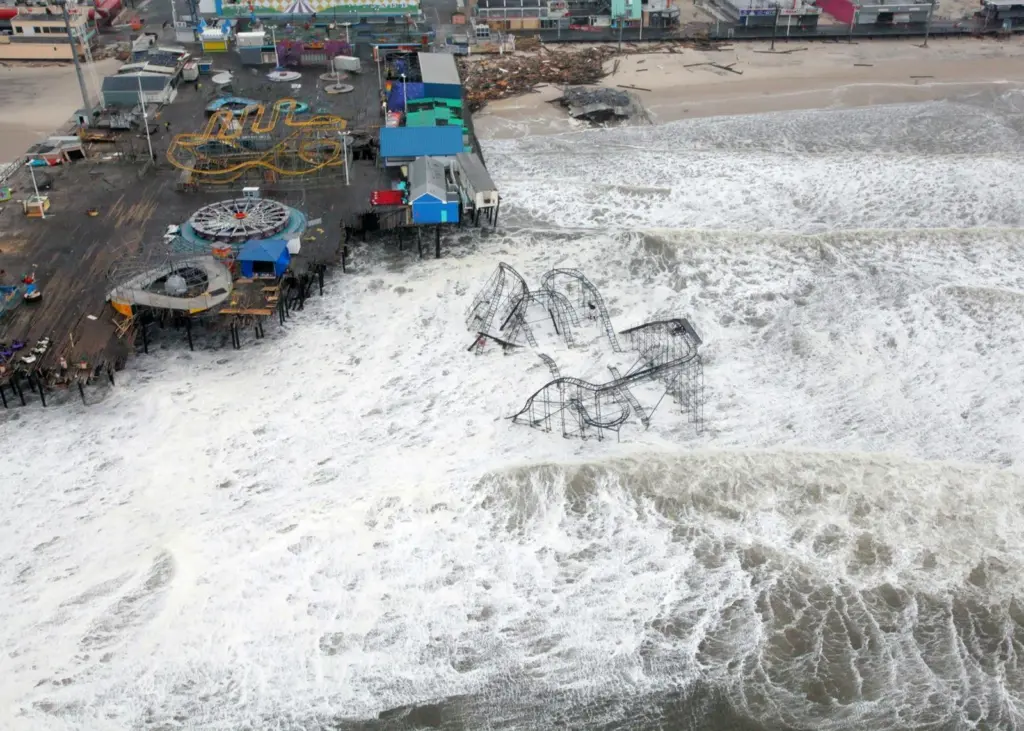
Once the dust had settled after Hurricane Sandy last year, underwriters assessing the fallout came up with an interesting warning – that business interruption payments would probably account for the greatest portion of the losses covered by the insurance industry.
That assessment reflected the fact that the storm affected a wide variety of businesses in heavily populated areas, and the high level of supply chain disruption caused by the damage from Sandy.
This served as a timely warning to the ports sector, where even the slightest delays can be extremely costly. What if an extreme weather event or other disaster caused huge disruption or even closed the port? Are ports properly covered in terms of loss of earnings or even long-term loss of business?
In a recent report into the impact of extreme weather events, Miller Insurance Services LLP warns that underinsurance of any kind can have expensive consequences for port operators. “Examples have been seen where buildings with insured values of £1.5m have been demolished after suffering damage from extreme weather conditions and have cost £2.5m to rebuild,” it says.
However, damage to infrastructure can be twice as costly for a port if it means it is unable to accept ships while quotations and repairs are arranged. “Customers may be forced to use a competitor and face a tough decision whether to switch back,” it says.
Extended cover
While it’s clear that a port needs cover against physical damage such as cranes, the port should also pay close attention to whether it has the business interruption (BI) cover it needs, says Stephen Clarke at Miller.
“Business interruption in ports can be a little patchy,” he says. “You do see occasions where limits aren’t sufficient and don’t incorporate sea walls and major structures.”
The attitude can be: these sea walls were built in Victorian times and have lasted this long, why shouldn’t they continue to last, so we won’t bother with coverage.
But several ports’ sea walls have taken a pounding this year and there has been quite severe damage, Mr Clarke points out. Some ports affected have had BI cover and others have not. A particular concern can be with council-owned ports in the UK, for example, where the council used to be able to take money out of other budgets to cover any losses: “These days they don’t have the spare cash anymore.”
Show on the road
‘Increased cost of working’ is an important element to be incorporated in BI cover, says Mr Clarke – essentially this is to provide the money for any measures that can be taken to reduce the actual business interruption and keep the show on the road.
“If you need to go and rent another warehouse a few miles away, ‘increased cost of working’ cover will reduce your loss of income and at the same time make it more likely that you will hang on to your customer, because you can still service them,” he says. “This could mean instead of just being able to put the cargo straight into the warehouse, you might have to employ some trucks to move it further down the road while your warehouse is repaired.”
A total wipe-out would be pretty rare, he points out – most ports are able to continue operating at least at some level, and that is why ‘increased cost of working’ cover is so essential. “You might have some disruption, and you might be able to accommodate it in another facility.”
Of course there are plenty of gloomy warnings about extreme weather in the years to come, but so far there is no sign of BI premiums increasing for the ports sector, says Mr Clarke. “The insurance sector in this area is still remarkably competitive. In most cases, no one is paying any more than they have done before – if anything, they are probably paying less.”
Apart from weather, however, there are other BI risks not necessarily considered. “Consider one quayside crane: it costs £6m, and there is the lead time to consider too. You would have to join the queue for a new one to be built and delivered. You might be able to do longer shifts and move ships around, or hire in some cranes to do some of the work, but nonetheless you are going to have a fairly large increase in costs in your operations. And probably the worst thing of all would be a vessel going down in the approach channel. If the only approach in and out of the port is closed, what then?”
Individuality
Clearly, every port has its own characteristics, based on different trades, cargo types handled, size, land and equipment. Sometimes alternative arrangements can be made but sometimes they can’t.
“One of the things not focused on so much is the actual loss of a client. If you did have complete closure for a period of time, remember that this is a very competitive world – people can move down the coast. Everyone wants everyone else’s business and you have to take these things into consideration. Where you have 12 months’ indemnity, perhaps you should be looking at longer.
“But overall, the message is this: consider what items are being protected by damage and BI insurance. Ask the question, is it what I really need?”
The Port Authority of New York and New Jersey says BI cover has been an instrumental portion and focal point of its property insurance programme for quite some time, as it provides coverage for lost revenue sustained when operations are impacted. New risks or increased occurrence of known risks such as terrorism and extreme weather are always considered.
“As recently as Hurricane Sandy, the port authority has relied on this type of insurance to recoup revenue lost as a result of the storm and to reduce the impact of the disaster to the agency,” says assistant treasurer Veronica Biddle.
Taking stock
As to whether there will be any review of BI insurance strategy following Sandy, she says: “During each renewal process, the strategy is consistently reviewed. The port authority’s BI coverage was more than sufficient to respond to the Sandy loss.
“The port authority views insurance on both macro and micro levels. We design insurance programmes to address overall port authority risks and also transfer significant risks to our leases and other vendors. Port authority staff review every lease, contract or agreement to assign primary insurance coverage responsibility to the third-party vendor, based on the location of the lease/agreement, type of operation or service involved, and the needs of the agency. It is a challenging task, given the size and diversity of port authority operations.”
Ms Biddle’s advice to other ports and terminal operators? “Expect the unexpected and, to the degree attainable, structure insurance coverage around the known risks and also the potential, non-routine risks.”
Related Articles
 CONCESSIONS & INVESTMENTS
 CONCESSIONS & INVESTMENTS
 CONCESSIONS & INVESTMENTS