![PortStrategy[GreenPort]](https://www.portstrategy.com/wp-content/uploads/2026/09/PortStrategyGreenPort.svg)






The hidden message
H&S campaigns falling short? There may be more to the message than the signpost finds Stevie Knight
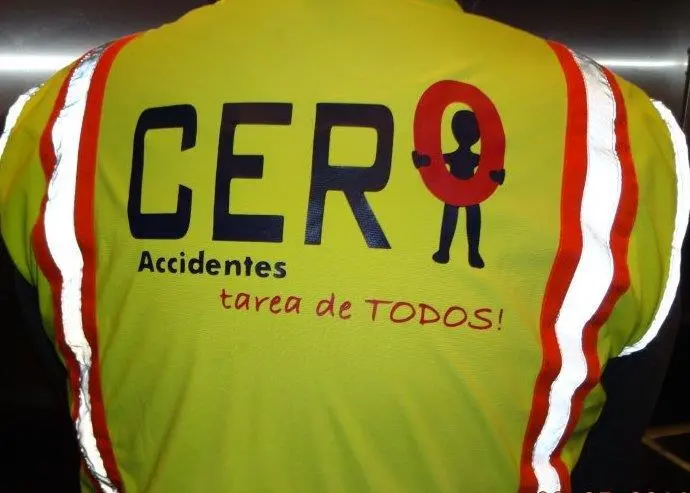
Health and Safety figures can be about a lot more than just the statistics. They are often also a reflection of the state of communication between ‘management’ and ‘workforce’.
As Glenn Farrant of The Preventative Workplace Health Group explains, in one port the workers on the quays didn’t feel that their safety concerns were being heard by their bosses, “so as their frustration increased they reacted by increasing reporting of injuries in an attempt to bring about changes”.
He adds: “In Australia at least, men are often not very good at communicating. So management often do not have a full understanding of what motivates the workforce or why they may be feeling undervalued or unsupported.” Not surprisingly, this can drive a wedge between management and stevedores, leading to a difficult and often unproductive environment.
Culture of course is the biggest challenge, says Peregrine Storrs-Fox of TT Club. “In many places there’s a perception going back generations that sea and port activities are a ‘rough environment’ so there’s a greater risk of injury. It’s just seen as part of the job.”
Being human
However a lot is simply down to being human. Mr Storrs-Fox says: “Behaviour is one of the most tricky things to change: signs saying ‘keep off the grass’ often makes people want to walk on it.”
Thinking laterally helps. “For example, a sign saying ‘Zero injuries in the last three months’ will express more than injuries being an issue of concern, it also flags up the idea that ‘this is a place where you can get hurt’,” explains Mr Storrs-Fox. And being accurate about exactly when the last injury was helps drive home the message that it is based on realistic, verifiable information.
But as any one form of communication simply stops being registered after a while, ICHCA’s Capt Richard Brough and Mr Farrant are in complete agreement about “using anything and everything to get the point across”. Having a safety message included in the toolbox talk at the beginning of a shift, putting a few lines in with the paypacket, flashing them up on the cargo barcode scanning screens, “all works like a steadily dripping tap on attitudes”, says Capt Brough.
He also isn’t above advocating sneakiness: in one company in the UK the H&S notices got sent home in the post, knowing that wives and partners would open ‘official’ mail and so involved them in spreading the word. Another family-centred approach was having the workers’ kids design safety posters.
There is, however, a word of warning: there can be a cultural bias which rings the death knell for some bright ideas. For example, one operator tried having designated ‘observers’ that would pick up on loose behaviour. Although successful in some places, in the UK people simply felt spied on and the initiative had to be withdrawn a year later.
Phone hacker
Sometimes it takes a complete rethink. One big operator tried, unsuccessfully, to get mobile phones removed from work areas. Reconsideration resulted in using these phones to get H&S messages right into workers overalls via a Bluetooth broadcast – including a message about when calls could be made safely.
If all this fails, a port can quite literally, turn things around so rather than relying on drivers looking at the signs, it’s the drivers themselves that are watched. “Let people know they can be seen. After all, when you know you are passing a speed camera, you tend to slow down,” says Mr Storrs-Fox.
He explains that one terminal was repeatedly having the same accidents with ro-ro trucks coming off the ramps. “The actions taken included training and warnings signs, but it was only when the CCTV was installed that behaviour changed.” Soon after operations started being recorded the accidents stopped.
However, this kind of treatment needs to be kept to absolutely critical areas. “People tend to want to make their own decisions about what is the right action, the right attitude to take,” says Mr Storrs-Fox. That point is echoed by Mr Farrant, who adds: “Ports are a very male dominated environment, and men especially are hard to ‘tell what to do’.” In fact this, he says, is probably one of the worst traps management can fall into.
Mr Farrant says his job as a third party is to “listen to the management’s objectives” – but not, he hastens to add, necessarily take onboard their solutions. He explains the workforce usually understands better than anyone what’s needed: “Each and every health and safety initiative put in place during a project with an Australian operator came from the workforce on the ground,” says Mr Farrant. It worked, the lost-time dropped by a massive 49% from one year to the next. “In general people act if they are heard, if they feel part of the process in finding a solution.”
Different directions
“It’s important to try to align concerns to help people see they have a common goal, a zero-injury operation,” says Mr Storrs-Fox, but the elephant in the room is what happens when there’s a real divergence of interests?
For example, emerging technology may be able to automate the removal of twistlocks from containers in handling operations, but leaves those who currently do this without a job, dangerous or not. It can also be a matter of the wider culture: “For example, there are some Asian ports where you have a lot more people on the quay and around the terminal than comparative European operations. The culture and cost is more about keeping people employed than efficiency or safety. This can result in four or five times the number of pedestrians to deal with,” says Mr Storrs-Fox, “which adds enormously to the risk.”
While Mr Storrs-Fox and Capt Brough agree that automation is the best answer to purely H&S challenges, both understand the issues: “It’s a sensitive subject, automation concerns unions because they are morally bound to make sure their members have ongoing employment,” says Capt Brough. However much comes back to careful negotiation and finding alternative roles – something that has a better chance of success if it springs from a bedrock of communication “and trust”, he adds.
Despite this, automation has its hidden difficulties. “Automation, as it stands, doesn’t take out the human element entirely, but makes it more likely that someone will have to step in to deal with the exceptions, something that people are uniquely capable of.” So for the foreseeable future human beings will still be used as backstop when things don’t go to plan, says Capt Brough.
This can cover jammed twistlocks to sorting out equipment failures or times when a load just doesn’t do what you’d expect. At these moments a port’s H&S scheme can be sorely tested: “If you have something like two 20ft containers that have been mistaken for a single 40ft unit during a lift, firstly they can simply drop, and secondly, it can take someone several hours swinging in the air in a harness to help get the boxes down safely.”
Getting the message across
What can a port do to make the Health and Safety message stick, especially in a climate where a certain amount of harm is habitually expected, both outright accident and strain injuries?
“Link it to what goes on outside the gates,” says Mr Farrant. “Put it in terms of their life. Sometimes people forget that it’s not just work that suffers if they get injured, they won’t be able to relax and watch a game on TV, build the patio, make love to their wife…”
Capt Brough says that one country is going so far as to film accident victims: “These are real people, talking honestly about what they’ve lost. A message from your peers: that is bound to get through.”
But injury isn’t always dramatic. A lot of employees have an entrenched expectation “that work on the quay means your back will be stuffed after ten years,” says Mr Farrant, so it comes as a surprise to them that it doesn’t have to be. “I make it pretty clear that there are ways to avoid things like lower back stress, for example actually adjusting the crane seat position every time they sit down. Most operators will make one change to the seat position if the guy in before was taller, but there are several that will make a difference, and they don’t take long – only about 30 seconds,” he adds.
Better than years of pain.
Related Articles
 CONCESSIONS & INVESTMENTS
 CONCESSIONS & INVESTMENTS
 CONCESSIONS & INVESTMENTS