![PortStrategy[GreenPort]](https://www.portstrategy.com/wp-content/uploads/2026/09/PortStrategyGreenPort.svg)






Victims and victories of the recession
APM Terminals recent withdrawal from the 2.15m teu capacity Kaohsiung terminal, and from its 10.5m teu investment in the Yantian facility in the Port of Shenzhen reflect the company’s strategy of focusing on growth areas.
The ports that APM Terminals are particularly interested in are ones like those on the Chinese mainland and elsewhere in emerging markets in which the company can assume a leading role in operations and as a significant shareholder.
Projects currently underway include the Cai Mep International Terminal in Vietnam, scheduled to open later this year; the Maasvlakte II new construction at the Port of Rotterdam; Jadewaser Port in Wilhelmshaven, Germany; Savona-Vado, Italy and Posorja Ecuador. Terminal expansion plans are proceeding at the Suez Canal Container Terminal (SCCT), at Port Said, Egypt and the Port of Aqaba on the Red Sea, in Jordan.
SCCT, which saw throughput for 2009 rise by 11% to 2.7m teu, is in the process of doubling capacity to 5.4m teu, which will make it the largest container terminal on the Mediterranean Sea.
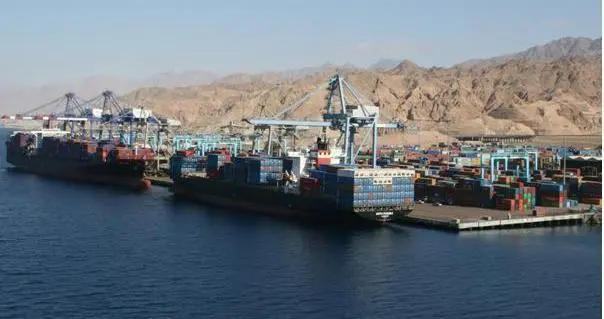
Aqaba Container Terminal was one of several APM Terminals facilities which increased container throughput in 2009 despite the overall downturn in global cargo volumes. ACT, Jordan’s only container terminal and an increasing important maritime trade hub for the emerging Middle East market has announced an expansion program which will double wharf length to 1000m and annual capacity to two million teu when completed in 2013.
Elsewhere, APM Terminals and Shanghai International Port Group (SIPG) finalised an agreement for SIPG to acquire a 25% share of APM Terminals Zeebrugge for $33.7m.
APM Terminals Zeebrugge, which opened in 2006 with an annual capacity of 850 000 teu, will remain under the operational control of APM Terminals, which retains a 75% majority share. The terminal is a multi-user facility located in the Belgian seaport city of Bruges. Terminal throughput in 2009 was 700,000 teu.
Related Articles
 CONCESSIONS & INVESTMENTS
 CONCESSIONS & INVESTMENTS
 CONCESSIONS & INVESTMENTS