![PortStrategy[GreenPort]](https://www.portstrategy.com/wp-content/uploads/2026/09/PortStrategyGreenPort.svg)


Congestion misconception
There are a lot of misconceptions about congestion. In this definitive article Mike Mundy digs behind the scenes, identifies the root causes and highlights the first of a series of Case Studies that shows that there are those getting it right in the face of adversity.
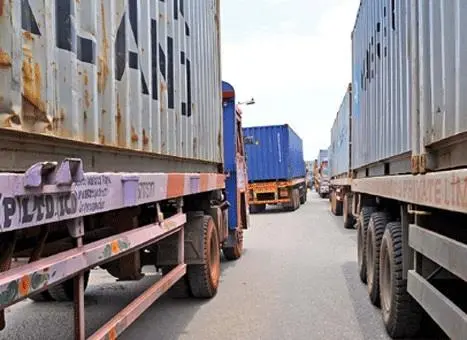
There is a common perception that ports are the cause of congestion. This is not entirely correct – ports are a single (very obvious) link in the chain, usually with little control over other links.
It is true that diverse ports in Asia, the Americas and Europe have experienced congestion with some struggling to operate effectively but, on the other hand, there are those that have performed well in the face of extremely volatile operating conditions.
The causes of congestion, however, to a large extent do not lie at their door. The bottom-line is that ports are in effect the choke point for container traffic caused by a variety of actions along the supply chain invariably beyond their control. Typically, these encompass:
- At the point of cargo origin: factory shutdowns or complete local or regional lockdowns.
- En route to the port: stop-start operations caused by shutdowns, lockdowns, trucker shortages and disrupted rail services.
- At the port/terminal: vessels arriving outside their allocated berthing window/bad weather and staff shortages caused by the pandemic.
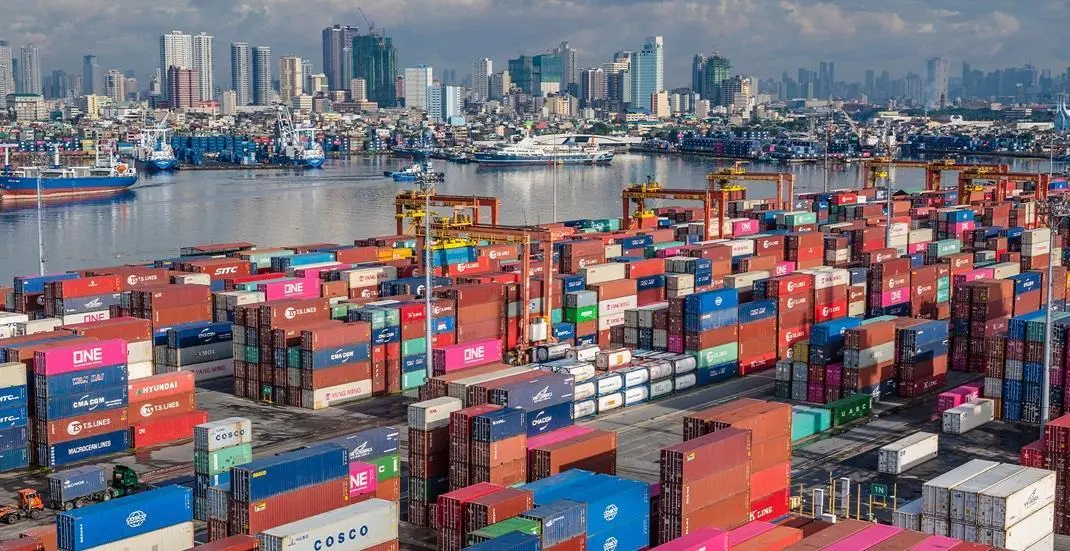
Such factors have been massively in-play since the advent of COVID-19 and their collective impact on port and terminal operations has generated unprecedented levels of challenge. Container terminals, as the interface between ocean-side and landside transport systems, are in effect the collection point for many of the problems generated elsewhere along the transport chain that are the root causes of what many parties mistakenly identify as port generated congestion.
This perception is understandable – it is easy to think of a port or terminal as the cause of congestion when it is most severely manifested within in its perimeter. The fact that it will to a large extent have come about as a result of factors such as waves of cargo being received due to vessels out of berthing schedule, slow Customs clearance, trucker shortages or any number of other external problems is easy to overlook.
EASY TARGET
Furthermore, speaking frankly, it is an easy option for other players in the supply chain to promote the view that ports and terminals are the sole cause of congestion to divert attention from their own inadequacies in this respect. The regular operational bulletins issued by key shipping lines which cite port congestion, are a good example of the promotion of this view. Never mind the fact that many terminals have in recent months experienced near 100 per cent zero adherence to shipping lines calling in their allocated berthing windows. Such bulletins conveniently promote the view that it is the container terminal that is wholly at fault and not themselves.
Another common example is container availability. It has been a fairly regular statement from lines to shippers wanting containers to ship their goods that they are unavailable as a result of import terminal congestion. In truth, the real answer is that lines have been slow to address container imbalance problems – bringing in sufficient empty containers to meet demand – in favour of serving pent-up demand and capitalising on high freight rates. Indeed, blaming terminals while creaming massive freight rates has been a key feature of the market. One indicator of this is the relatively few vessels deployed, up until recently, to achieve the large volume movement of empty containers back from the US West Coast to Asia to meet expressed needs, a point amplified by Daniel Maffei, Chairman, US Federal Maritime Commission, recently when commenting on US port congestion. He underlined:
“When ocean carriers continue to bring thousands of containers per month to a port and pick up a fraction of that number it creates an untenable situation for terminals, importers and exporters, trucking companies and the port itself.”
Lines have been happy to earn sky-high freight rates and almost ignore the empty issue. Containers have piled-up not just in ports but at rail terminals and distribution centres. The costs of this to the lines pale into insignificance when freight rates are at unprecedented levels.
REALISTIC APPRAISAL
The foregoing is not to suggest that all container ports and terminals are entirely blame free with regard to congestion but, rather, that there are many that face problems that are not of their own making and that there are others maintaining a good position and some doing very well in difficult circumstances.
The “difficult circumstances” aspect can really be defined as a port or terminal that has in the recent past and/or today faced the problems referenced earlier plus other factors such as: vessel bunching, big upturns in per call box exchange volumes, a much greater number of over-staying containers – dry van and reefer – and other local factors such as Customs constraints on being able to move Customs cleared over-staying containers to off-terminal bonded depots, poor offtake infrastructure, road traffic management and so on.
The steps to performing well under such circumstances always have a bespoke element related to individual terminals but in general include:
Administrative Level
- Vaccination of the workforce against COVID-19.
- Implementation and enforcement of COVID-19 prevention protocols.
- Increased collaboration with the host Port Authority and other government agencies.
- Working with cargo owners/shippers to optimise container drop-off and pick-up arrangements.
- The application of digital processes to expedite back-office functions.
- Focus on billing strategies to minimise overstays.
Operational
- 24/7, 24-hour working if required.
- Enhanced vessel planning procedures/shipping line/agent contact.
- Use of a mandatory Vehicle Booking System to manage the flow of containers through the terminal.
- Use of off-terminal bonded depots to hold Customs cleared over-staying containers and maximise yard capacity.
- A reassessment and potential modification of internal and external rules covering container operations – for example, rules covering container stack heights, hours of trucking operations…
- The deployment of digital systems to enhance operational efficiency.
Terminals seeking to continue to perform well in the face of major upheavals as exemplified by the pandemic will pursue these courses of action as appropriate, as confirmed to Port Strategy by diverse terminals across the globe.
Related Articles
 EQUIPMENT
 OPERATIONS
 OPERATIONS