![PortStrategy[GreenPort]](https://www.portstrategy.com/wp-content/uploads/2026/09/PortStrategyGreenPort.svg)






2nd hand equipment
A lack of new sales has hit the supply of equipment to the second hand sector, as Alex Hughes explains
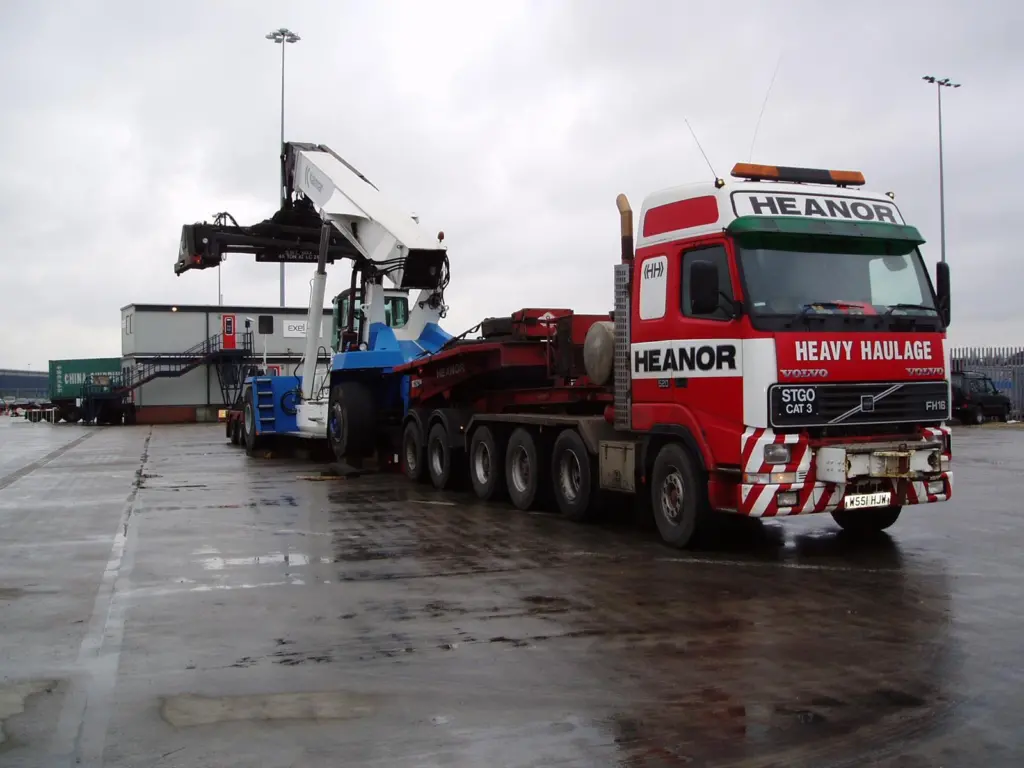
Sales of second-hand port handling equipment are grinding to halt, according to vendors. Demand is there, but available sources of equipment are drying up. The reason? New equipment orders are being shelved, prompting operators to hang onto what they already have, rather than trading equipment in for something more youthful.
“It’s devastating at the moment. The flow of unwanted units to the second-hand market has dried up,” says one company.
Perhaps unsurprisingly, therefore, the current economic downturn has not directly boosted sales of used lifting equipment to ports, something noted by specialist vendor Hanse Maschinen. There simply isn’t a flood of second-hand material looking for a market.
Demand for such equipment has disappeared in some markets, although has held up in others. Latin America remains the current best outlet for Hanse Maschinen, followed by Africa and Asia. Sales director Tomás González de Romero points out that banks in Latin America have not lost money in quite the same ways as those in either Europe or North America, so customers in that region can still acquire credit to buy new – if not brand new – machinery.
“In our experience, customers are more interested in second hand equipment because the price is only half or as little as a third of that of brand new machinery. Clearly, that means less investment and so less risk,” he says.
UK-based Container Lift Port Equipment (CLPE), which deals extensively in second-hand port equipment, says that it has real concerns at the number of contracts for port terminal equipment that are being delayed or cancelled because of the global recession.
“Although our business remains healthy and we are able to satisfy most of our customers’ requirements for reachstackers, empty container handlers, terminal tractors and heavy FLTs, we fear that this cannot be sustained unless the level of new sales increases very soon,” says Mr George Vaughan, pointing out that this is the view of both himself and partner Bob Brown.
They stress, for example, that demand in the Far East is still strong, but operators there prefer young, quality machines, which only become available when major operators discard relatively youthful material in favour of new build equipment from established manufacturers.
Mr González adds that it is the experience of Hanse Maschinen that, in many cases, “terminal operators normally buy second-hand equipment because it’s cheaper. If they need two machines, they’ll buy one new unit to do most of the work plus a cheap second-hand unit that will function as back up. At the moment, some owners are simply cutting back all together and just buying one unit.”
Interestingly, prior to the current economic downturn, there was more used equipment being offered for sale than ever before, although many potential customers showed a preference for units built between 1990 and 2004. Ironically, in some cases, more recently-built equipment was less favourably viewed.
“In our experience, irrespective of the type of port equipment being sought, terminal operators really want machines that are no more than ten years old. This is because spare parts are still readily available,” says Mr González. “Older equipment is less well thought of, because spare parts can be an issue, as can the lack of technical documentation. However, really recent material incorporates a lot of electronics, which our customers don’t really like, because it means they cannot easily undertake repairs themselves and are therefore dependent on after sales services provided by the manufacturer.”
He adds that operators buying brand new equipment can therefore often be in something of a quandary: they have to shell out a lot of money up front, which also implies taking on a lot of risk, but if they subsequently need to sell the equipment on, the fact that it is so new can mean it is difficult to place.
At CLPE, it also notes that, in the past, customers for second-hand machines did show a preference for those units incorporating less in the way of electronics. And, in certain parts of the world, this continues to be the case. Nevertheless, George Vaughan points out that most machines now becoming available already incorporated electronics as standard.
“There aren’t any reasonable alternatives; so customers of second-hand machinery nowadays have to accept that units that they will buy will have substantial amounts of electronics on board. Nevertheless, it is true that does make the operator more reliant on the manufacturer.”
In contrast to what Hanse Maschinen has seen, most customers of CLPE definitely still prefer more modern units. Indeed, if there’s a choice between a five-year-old machine incorporating electronics and a 10-year-old machine that doesn’t, Mr Vaughan says they will invariably be more interested in the five-year-old machine.
However, not all types of port equipment can be easily re-sold.
According to Mr González: “Container gantry cranes or very large luffing cranes are extremely expensive to disassemble, transport and re-assemble, while repair costs can also be so high that it would probably be cheaper to buy brand new equipment.”
Rubber-tyred gantry cranes, suggests CLPE, are similarly affected.
Mr González adds that it is therefore much easier to sell used container handlers and reachstackers, since these can be shipped whole. Straddle carriers, on the other hand, remain a dubious proposition, since they too need dismantling prior to shipping.
Another second-hand vendor of port equipment posed the following conundrum to Port Strategy. “Supposing,” he asked, “a 20-year-old container gantry crane became available to the second-hand market. What financial director in this right mind would pay in the region of $4.5m to have a unit disassembled, shipped half way around the world and then reassembled when he could pay around 25% more and get a brand new gantry crane from ZPMC?”
Related Articles
 CONTAINER & CARGO HANDLING
 CONTAINER & CARGO HANDLING
 BULK HANDLING