![PortStrategy[GreenPort]](https://www.portstrategy.com/wp-content/uploads/2026/09/PortStrategyGreenPort.svg)





A quiet revolution
The arrival of private players looks set to transform Callaos fortunes, as Alex Hughes finds out
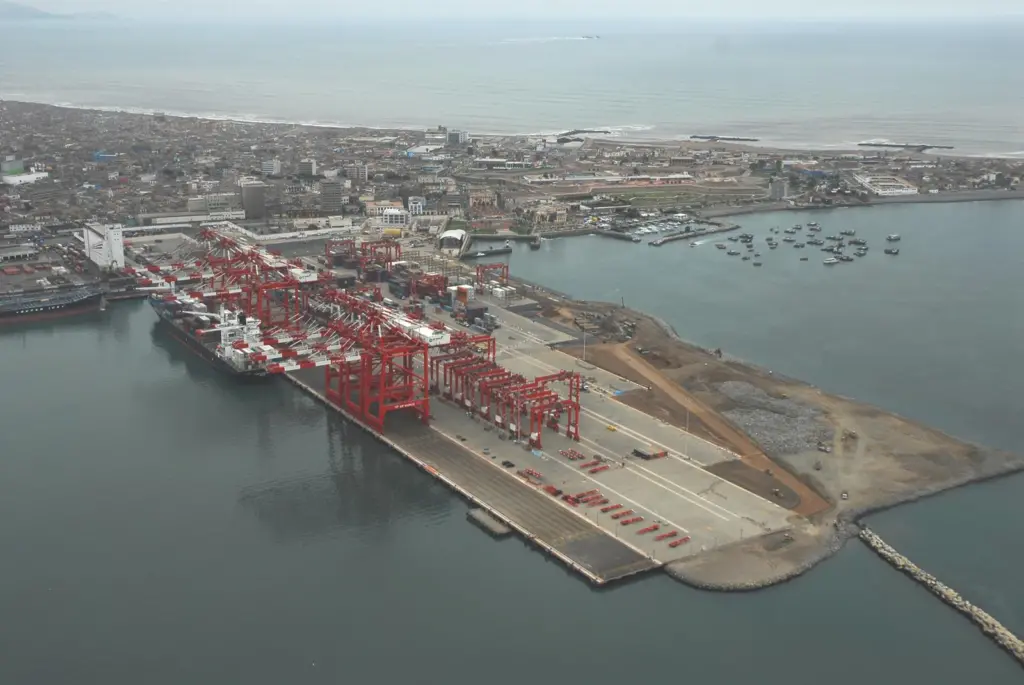
In August, Peru’s National Ports Authority (Enapu) is due to issue a tender for the concession of Muelle Norte container terminal at the port of Callao.
The tender has attracted much interest, with the importance of the scheme reflected in the big names that have already declared an interest: DP World, HPH, AMPT, PSA, Cosco, MSC and ICTSI.
However, the whole process is being heartily resisted by dock workers, whose strikes in May provoked the declaration of a state of emergency by the government, which sent in troops to keep cargo flowing. Enapu is similarly perceived as dragging its feet over the whole affair, hinting that it will want to retain some form of stake in the eventual concession.
The private sector, which claims this could undermine any subsequent efficiency gains, is publicly opposed to this. Wanting to hold on to at least a part of Muelle Norte is understandable, given that the state body uses revenue from existing operations there to fund other activities, including to offset a heavy pension burden.
Strategically, DP World, which already holds the concession for the Muelle Sur box terminal, identified Callao as the ideal entry point for the west coast of South America, situated at the heart of the dynamic Peruvian economy with a large local cargo market and strong trade growth. It was also viewed as being geographically well positioned to serve secondary ports and would therefore benefit from infrastructure investment. In addition, the port already had burgeoning box traffic in place.
“Until quite recently, all containers in Callao had to be loaded or discharged mainly using ships’ gear, thereby limiting vessel size to around 3,000 teu,” says Maciek Kwiatkowski, general manager of DP World Callao. “Developing a modern terminal at Callao will bring significant synergies to shipping services covering the west coast of South America, allowing the deployment of large vessels to cover both Peru and Chile with the same service. With the introduction of larger tonnage, we foresee further development of Callao as a transhipment hub, particularly for the secondary ports in Peru, Northern Chile and Ecuador.”
The company has therefore embarked on a two-phase development plan of its Muelle Sur facility. Initially, there will be two operational berths, with quayside lift consisting of six super post-panamax gantry cranes. The first cranes are already installed, meaning that the terminal will be operational well before the end of the year, even though the concession specifies inauguration must take place before April 2011.
The second phase development will depend on market demand.
In terms of shipping lines, Mr Kwiatkowski says the terminal has already signed up most of the existing key players in the port, which will involve the transfer across from the existing public container terminal. Muelle Sur will initially be able to accommodate up to 800,000 teu annually. However, this figure may increase as import dwell times are reduced as a result of modernisation of things such as customs procedures, which are on the government’s priority agenda.
According to Mr Kwiatkowski, at Callao transhipment currently accounts for 20% of total traffic, equivalent to 240,000 teu of the port’s total traffic of 1.2m teu. “We expect that traffic through Muelle Sur will initially also follow this pattern. However, the ratio of transhipment cargo is expected to grow in future as a result of the new infrastructure investment.”
He explains that, in terms of import-export traffic, the port serves the central region of Peru, including Lima; the central Andes hinterland; and coastal cities in a 300km radius. Nevertheless, Peru currently lags behind in transport infrastructure investment, which includes roads as well as ports. Despite this limitation, Callao has adequate access to the central highlands region as well as the Pan American highway, which connects the north and south regions of the country.
Significantly, DP World made a pre-emptive proposal to develop the Muelle Norte area of the port, leaving it open to suggestions of attempting to secure a monopoly. Mr Kwiatkowski dismisses this, pointing out that there is provision for tariffs to be regulated by state bodies.
“We believe development of the infrastructure under a single operator would provide for the most cost-efficient investment, while the oversight of a regulator would ensure that future tariffs remain appropriate to the market,” he says.
Related Articles
 CONTAINER & CARGO HANDLING
 CONTAINER & CARGO HANDLING
 BULK HANDLING