![PortStrategy[GreenPort]](https://www.portstrategy.com/wp-content/uploads/2026/09/PortStrategyGreenPort.svg)






African dreams realised
Continent’ s new super-port takes shape, with a facility to rival the traditional Mediterranean mega-hubs. Henrik Byrn reports
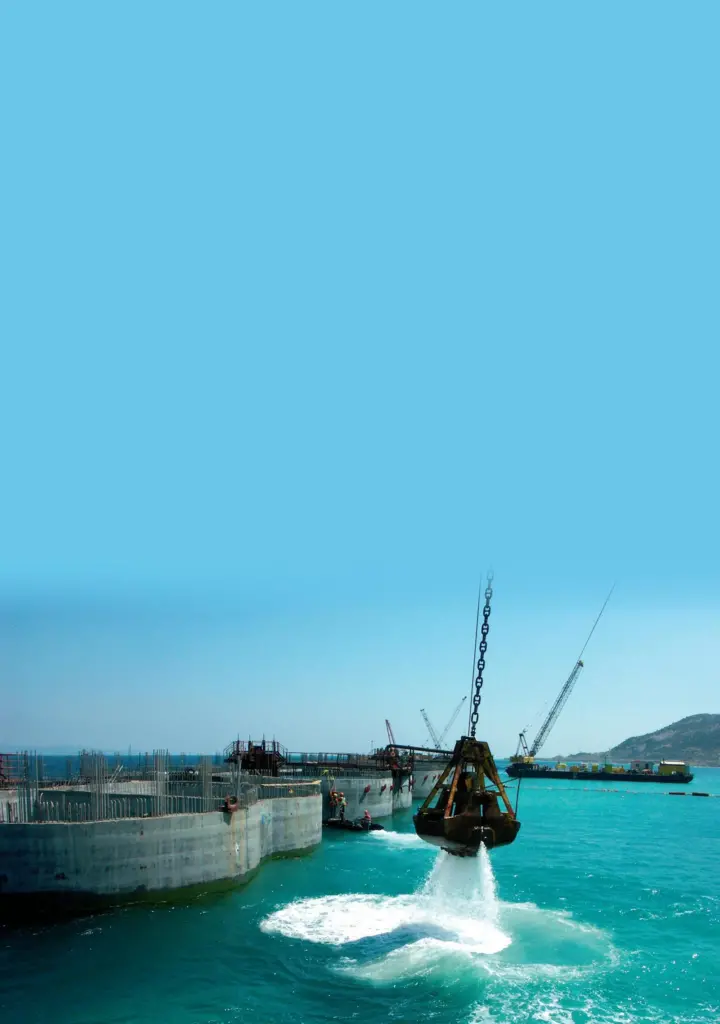
With water depth of up to 18 metres,two huge container terminals and installations for ferry, ro-ro and other freight traffic, Tangier Med is set to become an important new strategic port at the entrance to the Mediterranean, as well as the engine of development for the whole of northern Morocco. Initial facilities are due to open as soon as the second half of 2007.
The heart of the development will be a container area equipped with 16 gantry cranes and a 1,600-metre quay divided into two sections, each with its own operator. Maersk-affiliated APM Terminals has been awarded a 30-year concession to operate the first. The concession for the other terminal will be managed by a partnership of Germany’s Eurogate and Italy’s Contship, which already manages 11 terminals in the North Sea,Mediterranean and Atlantic.
APM Terminals is investing €150m ($202m) before 2010 in order to provide a terminal with 1.5m teu capacity a year which will form part of Maersk’s global network. The world’s largest container line has long used a transhipment hub at Algeciras in southern Spain, where expansion possibilities are limited, and is fast building up other hubs around the Mediterranean: one of the most recent is Port Said East at the entrance to the Suez Canal at the other end of the Mediterranean.
Also planned at Tangier Med are a dedicated ro-ro facility, two general freight berths for cargoes such as grain and animal feed, and a fuel station, all located within the same “industrial harbour” as containers. Just outside will be a separate ferry harbour with eight berths and an annual capacity of 5m passengers, 1m cars and 500,000 lorries.
Once all the facilities are in place, it is claimed the overall port will rival Durban as Africa’s largest. Furthermore,Tangier Med officials hope the port will soon establish itself as one of a handful of container facilities worldwide for the new generation of 12,000 teu-plus mother ships.
“The most logical voyage around the world has five or six stops,” says El Mostafa Almouzani, director of construction at the port, clearly believing the Strait of Gibraltar will prove to be one. The port of Algeciras is cooperating with Tangier Med in establishing common harbour and tariff conditions to strengthen the strait’s position as a power centre of world trade.
The landside infrastructure should also prove key to the development of both Morocco and northern Africa. A cluster of logistics and free zones is planned around the port – including a 130-hectare port-free zone with 49,000 sq metres of warehousing to be run by Dubai World’s Jebel Ali Free Zone International – as well as improved road and rail connections to the rest of Morocco and beyond. In doing so, Tangier Med will correct a historical imbalance in the country’s development that since independence has favoured western regions around Casablanca.
Already the construction project,managed by stateowned Tangier Med Special Operations, is offering employment to some 25,000 locals,as well as a vision of a more prosperous future for the whole country. And with an overall price tag of around $1bn – including $390m on the port alone – it still remains less costly than the national dream of one day building a tunnel under the Strait to unite the two continents.
Related Articles
 CONTAINER & CARGO HANDLING
 CONTAINER & CARGO HANDLING
 BULK HANDLING