![PortStrategy[GreenPort]](https://www.portstrategy.com/wp-content/uploads/2026/09/PortStrategyGreenPort.svg)





Caribbean queen
Colombian hub is celebrating a rise in container traffic on the back of an improving economy, finds Alex Hughes
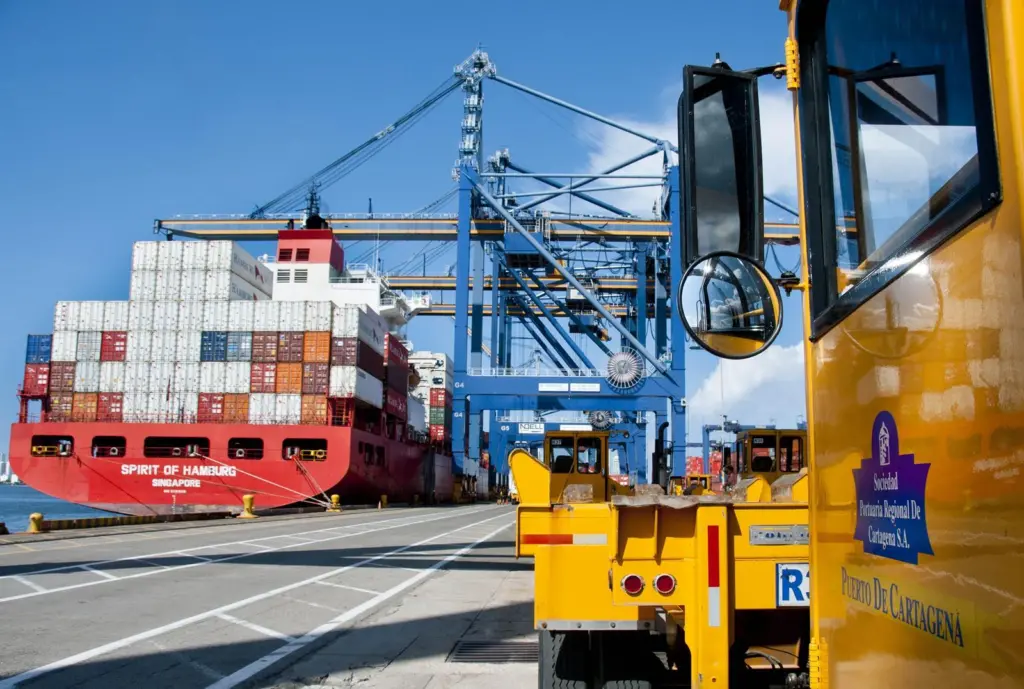
The Colombian Caribbean Port of Cartagena is having an encouraging 2014: for the first three quarters, the container terminal, Contecar, handled 1,613,570 teu, an increase of 13.44% over the corresponding period in 2013. Combining the traffic handled at this specialist terminal with others operated by the port company, SPRC, the forecast is for an end-of-year throughput figure in the region of 2,165,270 teu, an increase of around 16% over the 1,865,233 teu handled last year.
The port attributes this strong position to both a recovery in the health of the leading global economies and also to the fact that some services have switched their transhipment traffic from other Caribbean terminals to Cartagena. A spokesperson highlighted to Port Strategy the advantage of being able to offer high levels of connectivity when compared with rivals, serving more than 595 ports in 136 countries via 30 shipping lines.
Currently, post-panamax vessels are the largest making calls and these are expected to consolidate their position once the new locks on the Panama Canal are opened. However, the container terminal is also ready to deal with 14,000 teu vessels should these be deployed on routes to the Caribbean, which could very well be the case in the near future.
At present, an average of 70% of the port’s container traffic is in the form of transhipment – and this has been rising year-on-year in recent times. As to why Cartagena continues to be able to attract so much box traffic rotated in and out by sea, the port company points out that this is a function of its geographical location, with the Caribbean a natural hub for the Americas. Over time, it has become the effective regional hub for Hamburg Süd, Hapag Lloyd, CSAV, CCNI and CMA-CGM, while also functioning as a logistics distribution centre for a variety of international clients, such as Pirelli, Bayer, Red Bull and Direct TV. Other lines, including Maersk, NYK, Marfret, Melfi Marine and Norasia are also involved in transhipment activities at the port.
Cartagena, it is pointed out, also offers global levels of productivity and requires only a minimum deviation from the trade routes passing through the Canal. The location of the distribution centres adjacent to the port also adds value.
“A strong domestic market and the presence of a distribution hub on our doorstep are especially important in generating a critical mass of traffic, allowing shipping lines to optimise their vessels, which carry a mix of import-export and transshipment traffic,” the SPRC said.
Indeed, notwithstanding the strength of transhipment traffic, the current upswing in the Colombian economy is also helping boost import-export boxes, which are expected to remain at a level of 20%-25% for the foreseeable future.
Reefer boom
Significantly, refrigerated cargo is on the increase, resulting in additional investment in this area to ensure the port can continue to function efficiently as part of the overall cold-chain. Products such as cut flowers, bananas, avocados, exotic fruit and medicine are all now being containerised and shipped via reefers.
However, Cartagena Bay doesn’t only handle containers, with other terminals seeing substantial ro-ro traffic. Privately run terminals handle a variety of different commodities, including coal, petroleum and its derivatives, fertiliser, steel and project cargo. All together, this amounts to some 44m tonnes annually.
The port has invested around $1bn in its Contecar and SPRC terminals, placing it in the top 30 ports worldwide in terms of container cargo handled. Indeed, by 2017, traffic is expected to reach 5.2m teu.
Puerto Bahía, a soon-to-be operational bulk/general cargo terminal owned by the Pacific Rubiales consortium, will finance along with Contecar and SPRC 50% of the cost to extend the access channel to the Bay of Cartagena. This has a price tag of some $60m and aims at deepening the channel to enable 14,000 teu ships to call.
The result, according to an SPRC spokesperson, is that, “Cartagena is predicated to become one of three leading ports in containerised cargo in the Americas and the largest overall in the Latin American market, due to high service levels, location close to the Panama Canal, competitive tariffs and the stability and confidence in the Colombian economy, which in recent times has generated increasingly interesting levels of domestic cargo.”
Related Articles
 CONTAINER & CARGO HANDLING
 CONTAINER & CARGO HANDLING
 BULK HANDLING