![PortStrategy[GreenPort]](https://www.portstrategy.com/wp-content/uploads/2026/09/PortStrategyGreenPort.svg)






Casting the net
San Diego takes a much broader view of its role and future, finds Martin Rushmere
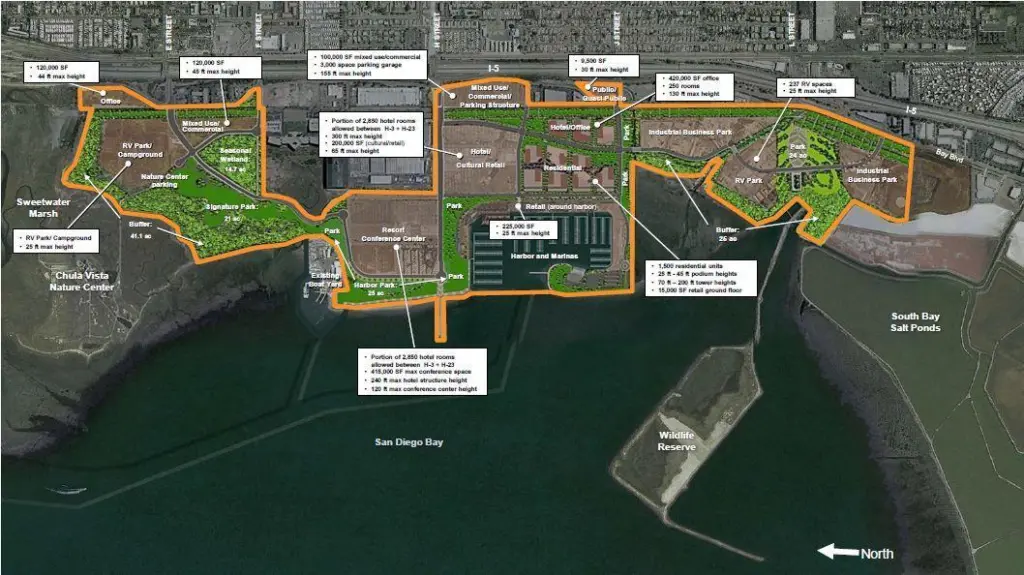
San Diego is changing its operational course and taking a broader view of its role and opportunities, as it realises that the future is as much landside as water borne.
The port’s official term for its new approach is Integrated Planning, but the real thrust of the change in outlook is an acceptance of the industry’s new philosophy worldwide that no longer does a port have to be fixated on cargo beyond all else.
Presenting itself as a four-piece jigsaw puzzle that fits together neatly, San Diego is anchoring its operational viability on being a property owner/landlord, and above all getting support and involvement of the surrounding community.
The main pieces of this Integrated Planning puzzle are the cruise terminal; the two cargo terminals, (10% of imported vehicles in the US go through San Diego); business/tourism such as a convention centre, which is about to get a 100,000 square metre expansion; a 538 acre public area on the Chula Vista Bayfront that will house another convention centre plus hotels; a newly designated wildlife preservation area, and further anti-pollution measures, such as shorepower. Less publicised is the Pentagon’s designation that the terminals can be used by military supply ships in emergencies, one of 17 national locations.
Navy misnomer
San Diego is often mistakenly referred to as a ‘Navy port’, being the home base for one of the biggest fleets. However, as Ann Moore, chair of the governing board of harbour commissioners, notes: “We are completely separate entities. They have jurisdiction over 18 miles (29 km) of waterfront, which is only just over half of our shoreline.”
The composition of the seven-strong harbour board mirrors the new style of thinking. Six commissioners have legal and business/property management backgrounds and only one has maritime experience. Chief executive Wayne Darbeau is an economist and business administrator.
Ms Moore is a lawyer with extensive experience in land management and policy. She sees her main focus during her one-year term as the Integrated Planning programme as the start of development at Chula Vista. “A critical part of Integrated Planning is to make sure we don’t make a decision on one aspect without considering the impact on the other 33 miles of shoreline that we have jurisdiction over.”
Of Chula Vista she says: “This is the first Integrated Planning project to have been adopted by the port. It took about 10 years to come to fruition and has the support of everyone involved.
“It’s an undeveloped area and we’re not really receiving any income. It’s our job to get it going and earn an economic return.” A conference centre and commercial facilities will occupy 40,000 square metres while 240 acres will be public open space. Jones Lang La Salle has been retained as the consultant and a general Request for Qualifications should be finished in autumn.
New taste
While these types of facilities are becoming common among port developments, San Diego is adding a slightly different flavor.
“We are including a recreational vehicle (caravans and mobile homes) park to extend the diversity of the appeal – we don’t want the area to cater only for the usual market mix of business and leisure,” says Ms Moore.
Being a landlord is the port’s financial mainstay. For the financial year that began July 1, property income is forecast to be $85m, more than 60% of total revenue, while maritime income will be $35m. Wharfage income is budgeted at $14m, virtually the same as rent from terminal operators and the like. Revenue from Tenth Avenue Marine Terminal (breakbulk) is $7.2m while the National City Marine Terminal (mostly vehicles) is reckoned to be $13m. Tenth Avenue volume for this financial year is forecast to be 2.1m short tons.
The port is taking a practical view of the size of vessels in the future, with maximum channel draft at 12.8 metres (Tenth Avenue) and 10.66 metres at National City. Says Ms Moore: “Through the cascade effect, we may see larger ships in San Diego, although our infrastructure is not currently configured to handle the largest vessels that have a 50-foot draft (15.2 metres).”
As for the Panama Canal effect on cargo business:”The reality is that we just don’t know yet.”
Related Articles
 CONTAINER & CARGO HANDLING
 CONTAINER & CARGO HANDLING
 BULK HANDLING