![PortStrategy[GreenPort]](https://www.portstrategy.com/wp-content/uploads/2026/09/PortStrategyGreenPort.svg)






Ease of access
Port of Vancouver USA plays the distance card as it looks to bring in Pacific Rim shippers. Martin Rushmere reports
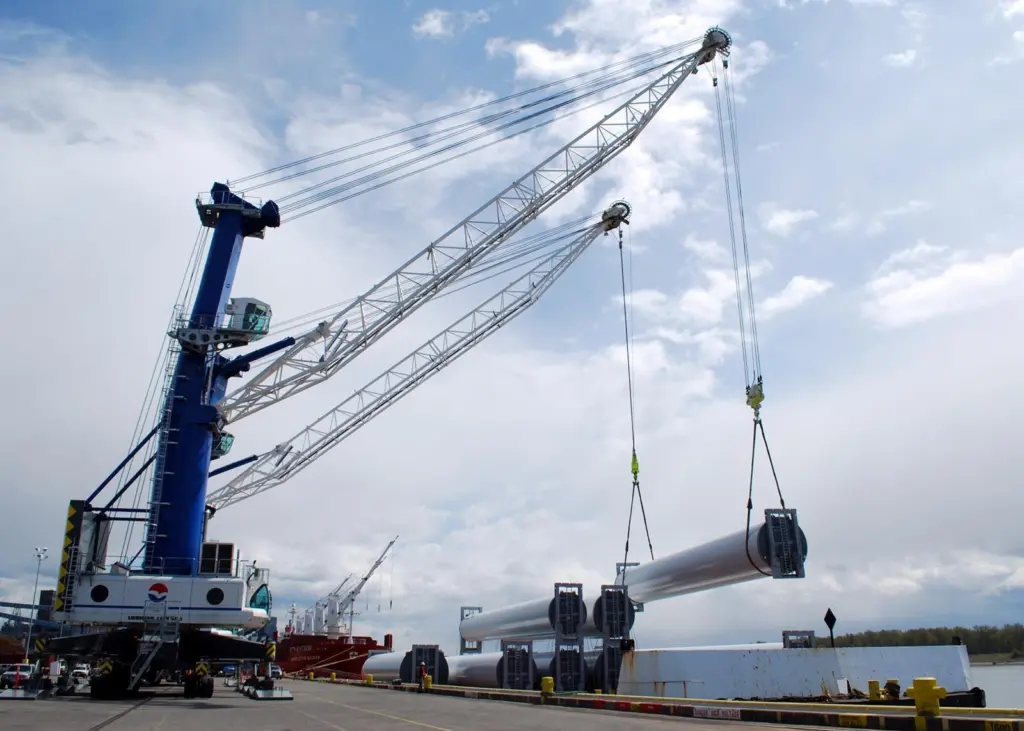
Vancouver is stepping up its marketing drive in the Pacific Rim and promoting its easy access and cheaper routes than other US ports, especially those on the Gulf of Mexico.
Using a base charter rate of $10,000 a day, the average cost from Asia is put at $140,000 compared with $400,000 to Houston. When Panama Canal tolls ($125,000) and fuel ($367,000 versus $675,000) are included, the total comes to $507,000 versus $1.1m to Houston, while the comparable voyage times are 14 and 30 days.
Rail costs from the port are said to be $100,000 cheaper to Williston, North Dakota (a centre for shale oil and grains) than from Houston, based on a 110-car train, with each wagon carrying a 90 tonne load, while the travel time is six versus 10 days.
Curtis Shuck, director of economic development and facilities, says that although the port is not betting its entire future on a Tesoro-Savage oil terminal venture, energy traffic will continue to be very important.
Wind energy project cargo has traditionally been a mainstay of business. But in 2013, volumes dropped by 84% to 7,400 tonnes, largely because of uncertainty over the federal production tax credit scheme. Business is expected to improve this year as companies bring in equipment assembled in 2013 that qualifies for the tax credits.
Net profit for 2013 was down 5% on the year before to $8.7m, with the wind energy slump one of the main factors. Operating income was down 9% to $30m.
Total export volumes were almost the same at 4m tonnes, while imports were down 14% to 580,000 tonnes. Vessel calls were down 4% to 335 and the total number of rail cars going through was up 13% to almost 46,000.
“This year is looking pretty good,” says Mr Shuck, “and our first quarter numbers are the best they have been for nine years. Wind energy is coming back and vehicles are showing strength.”
Rail road
Capital spending over the last 10 years has led to total net assets increasing 260% to $446m. The big factor here has been a totally revamped and expanded rail access link started in 2007, which the port makes a point of emphasising in its marketing, and which is expected to reduce traffic delays. Work is expected to be finished in 2017. BNSF and Union Pacific both have services from the port.
Of the 2,100 acres that the port occupies, 800 are being used for industrial and marine facilities while another 600 are available for development.
A second leg of future expansion is a proposed potash export facility for BHP Billiton at Terminal 5, bringing the material from Saskatchewan, Canada. Discussions have been going on for three years, centred on the lease terms and volume throughput. BHP could send as much as 8m tonnes a year, but fluctuations in the world market and economy have made this uncertain.
If agreed, the terminal will be able to take vessels ranging from 20,000 dwt to 60,000 dwt.
While potash and the Tesoro-Savage projects are getting most of the publicity, a smaller oil expansion is planned. Nustar Energy of San Antonio wants to ship 50,000 barrels a day of crude (compared with the 380,000 barrels a day at Tesoro-Savage) at its bulk liquid and oil storage terminals that have been operating for many years.
Vancouver is part of a seven-state alliance, the Great Northern Corridor Coalition, to improve freight efficiency through the corridor linking the northernmost states in the country. Two hundred million tonnes of freight moves through the corridor, including 30% of North Dakota’s grain, worth more than $2bn.
The public aim is merely to make goods get to market faster and cheaper, but another reason is to wrest market share from California and, to a lesser extent, the Gulf. Agricultural and commodity shippers in the mid-west have long pushed for more convenient routes to Asia, while also avoiding tighter regulations for rail and road transport in California.
Related Articles
 CONTAINER & CARGO HANDLING
 CONTAINER & CARGO HANDLING
 BULK HANDLING