![PortStrategy[GreenPort]](https://www.portstrategy.com/wp-content/uploads/2026/09/PortStrategyGreenPort.svg)






EMERGING FROM COVID MIST
In the second of a two-part series, Andrew Penfold, of Mundy Penfold Ltd, looks at the potential implications following the COVID-19 pandemic crisis for ports and terminals.
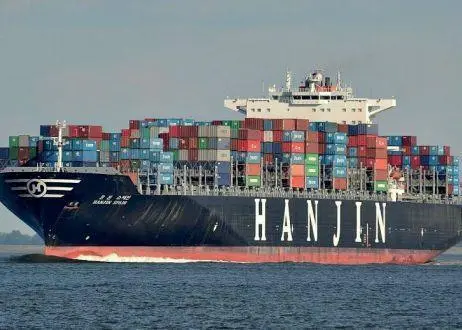
The COVID-19 crisis has seen a complete re-evaluation of supply chain strategies and called into question many of the axioms that have driven container trade since the early 1980s.
What does this mean for container ports and what strategies can be adopted to minimise risk and make the most of (limited) potential upsides? This will always be case-specific, but some general approaches are starting to emerge from the COVID-19 mist.
Of course, strategies for a V-shaped recovery will differ from an L-shape or prolonged dislocation. Its unclear which will be actually realised but the outcome will be determined by:
- The pact of employment and consumer spending recovery;
- Pace of debt management and reduction for countries, companies and individuals;
- Speed of medical response – vaccines and other measures.
In this case let’s assume (and hope) that these issues can be handled and that we see only a relatively limited crisis – in temporal terms at least. If there are renewed infections and lockdowns, then all bets will remain off.
LET’S LOOK AT CONTAINER TERMINALS
Globalisation and scale economies have been the driving forces to date. Handling larger vessels as rapidly as possible with increased consignment sizes have been the priorities. The customer has been the shipping line (both for commonuser and dedicated terminals).
Just-in-time inventory has been at the heart of this strategy. It seems that some of these assumptions must be revisited – especially as the sustainability agenda was already questioning some of this structure of globalisation.
There will be a different outlook for line-owned and common-user terminals. At first glance, the former may seem to have greater security of supply. Where a line or lines are the owners it seems certain that they will seek to route their containers via their own assets.
However, many lines are under severe (and worsening) financial pressure and it seems likely that some asset disposal will be called for. Terminal assets remain desirable and have a significant value. The line-owned sector also has much less flexibility to remodel its activities.
In contrast, a common-user terminal serving several different lines and alliances has greater scope to offer added value – a warehousing role, greater involvement in the logistics chain, closer links to the cargo owner, etc. There is some untapped potential here.
One thing is also clear, the largest ports are likely to be the worst affected as lines seek to get closer to their customers and a more fragmented trade structure – perhaps favouring smaller ships – is a possible outcome.
CHANGES IN THE SUPPLY CHAIN
The chain has been proved to be highly vulnerable to sudden and localised disruption. This was always understood but the scale of impact has been thrown into stark relief in the current crisis.
This has seen severe shortages of components and raw materials which have been accompanied by price gouging in some instances. These problems have been exacerbated by supply variability, with void sailings seeing longer transit times and cancellations.
Inventory policies are being closely examined. In the short term, this will mean greater stockpiling of key components and consumer goods, with this placing great pressure on storage capacity. This is a potential revenue source for container terminals. Major shippers simply don’t have the required capacity in-house and will pay for this service.
With revenues falling off a cliff in some sectors and rapidly increasing elsewhere a reformatting of the chain is unavoidable. Another unlooked-for outcome has been port congestion as a result of uncertain vessel arrivals and increased dwell time, together with shorter term issues such as truck driver shortfalls.
QUESTIONS TO ANSWER…
Uncertainties are at an unprecedented level for terminal operating companies. These include:
- Is the investment in 18,000TEU and larger vessels correct for future trades? Will near-sourcing and political pressure count against the current China-centric model?
- What happens if a line goes bust? The disruption from Hanjin could be only a foretaste of potential deepsea reorganisation to come.
- Will the alliance structure survive the crisis and what will any change mean for terminal ownership?
- If this turns out to be a long-term problem, how do I restructure my business?
These questions cannot be answered yet, but it is clear that efforts can be made to minimise risk.
OPTIMUM TERMINAL RESPONSES
Customers (lines and shippers) will seek to simplify supply chains and increase stocks. The terminal must get closer to the ultimate customer. This means joint digitisation – the terminal must become an active link in the chain and provide a storage safety valve. This will be more beneficial for the cargo owner than for the line, so closer direct liaison with large shippers will be vital. The common-user terminal will once again become a warehouse.
Industry will seek to diversify geographical dependency. China’s share will fall, and other sources increase. The terminal has a role here to coordinate services and offer overall packages to the cargo owners.
Joint ventures with shipping lines have long been a feature of the terminal sector. Partnerships should be offered with major cargo owners – the international stevedores are well placed to offer these.
Successful development will reduce volume risk and limit exposure to particular (increasingly vulnerable) lines. As well as developing these additional marketing approaches, increased focus on current liner-based deals will require a reduced spread in tariff levels to reduce revenue risk and also a focusing on string incentives.
It is usually possible for a common-user terminal to deploy a lower cost structure than a line-owned facility. This will be even more attractive as lines come under severe pressure to contain costs.
WHERE ARE THE REAL RISKS AND OPPORTUNITIES?
By far the greatest risk will be from lower growth and volumes – the jury is still out on this fundamental question. If demand is displaced to other non-Chinese suppliers then the impact on containers will be limited, unless near-sourcing allows trucked or ro-ro alternatives. If this does accelerate (perhaps encouraged by ‘green’ priorities), then there will be severe disruption for large container terminals.
There is real scope for the container terminal to become a more active link in the chain. As well as providing increased buffer stock capacity the terminal can offer increased chain visibility and the potential to increase associated activities – e.g. limited product adjustments for local markets.
POTENTIAL CHANGES FOR ROLE OF PORTS?
The container terminal could be a different product if these limited advantages are maximised. Up to now, the emphasis has been on ever greater volumes moving through the terminal at greater speeds. This emphasis on velocity may change, with a partnership between major suppliers and a more intimate role in their supply chains.
Of course, this can only be achieved with highly flexible assessment of the market and its potential (especially in the next six months). Different scenarios must be modelled, and management focused on maintaining the required flexibility to meet these changes as they are manifested. Such a development with a further focusing on the containment of costs seems like to only realistic approach to the crisis that is being faced.
Read the first part of Andrew Penfold’s analysis here.
Related Articles
 CONTAINER & CARGO HANDLING
 CONTAINER & CARGO HANDLING
 BULK HANDLING