![PortStrategy[GreenPort]](https://www.portstrategy.com/wp-content/uploads/2026/09/PortStrategyGreenPort.svg)





Gloves are off
Colombo prepares to fight off nearby transhipment challenges. Wing Kah-goh outlines the main contender
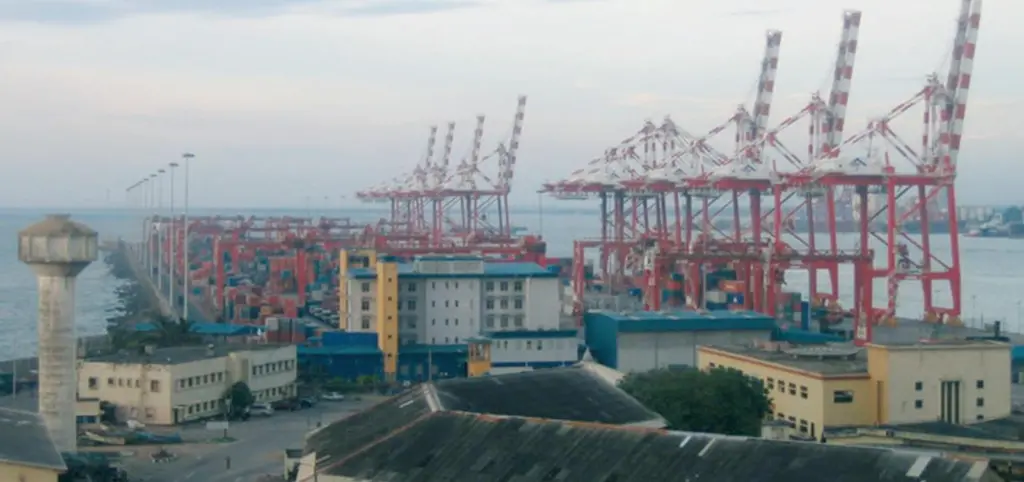
Three hundred and sixty-nine. That’s the meagre distance in nautical miles between two ports shaping up as transhipment destinations, each with their own weakness but hefty war chests. Chennai, formerly Madras, is trying to take Colombo’s battered crown as the regional transhipment hub. However, neither destination exactly fills shipping lines with joy.
In August, controversy erupted over alleged tender manipulation for the Colombo South Container Terminal. The over $500m project to build and operate a three-berth terminal capable of handling 2.4m teu drew five key bidders.
Among the five bidders are PSA International with local partner Aitken Spence; Hutchison Port Holdings; Hanjin Shipping; CMA-CGM along with Hayleys- Carsons; and John Keells Holdings-South Asia Gateway Terminals in partnership with Pembinan Ridzai Berhad, the company which owns Malaysia’s Westport.
Sri Lanka’s Sunday Times newspaper quoted unnamed sources as saying the tender process had been manipulated to favour the international bidders over the local players.
The whole South harbour project will eventually have four terminals in total with 12 berths handling a combined 9.6m teu when completed by 2020. Last year, Colombo port handled 3m teu at its three container terminals, the state-run Jaya Container Terminal and Unity Container Terminal, along with the former P&O Ports’ South Asia Gateway Terminal, now operated by Dubai Ports World.
Colombo’s current capacity of 3.7m teu will be reached by 2010, and expansion cannot come soon enough according to those who use the facilities regularly.
Shippers are increasingly frustrated with the congestion at Colombo with reports cropping up of some companies switching shipments to the west coast of India to avoid congestion – in some cases even de-stuffing containers and flying them to the west coast, although that option has proved extremely expensive.
The proposed $1.2bn Colombo Port Expansion Project will be designed to accommodate vessels with an overall length of 400 metre, beam of 55 metres and draft of 16 metres. Each of the four terminals will have a capacity to handle 2.4m teu per annum. As they did at Gwadar in Pakistan, the Chinese have plonked a large amount of money down for a strategic, Greenfield site to the south of the island away from the congestion of Colombo.
The construction of a $360m port in Hambantota, on the country’s south-western coast, with $300m of Chinese money, kicked off this March.
Beijing-based China Harbour Engineering Co has been contracted to build a 300 m berth and oil terminal in the first phase. The full 15-year project is earmarked to give a sensational box capacity of 15m teu. Across the waters, though, in India, privatisation, dredging and automation are finally giving Sri Lanka a run for its transhipment money.
The Chennai Port Trust revealed plans this April to invest Rs1,500 crore ($350m) in a number of port improvement projects over the next three years. These would include modernisation of the port, realignment of road and rail network within the premises and the construction of a dedicated elevated expressway connecting the port to the National Highway.
The port is also considering a proposal to expand its annual container handling capacity to 5m teu as well as constructing an additional terminal dedicated to car transportation. Chennai has set its eyes on Colombo and Maersk is likely to be a key player here.
Related Articles
 CONTAINER & CARGO HANDLING
 CONTAINER & CARGO HANDLING
 BULK HANDLING