![PortStrategy[GreenPort]](https://www.portstrategy.com/wp-content/uploads/2026/09/PortStrategyGreenPort.svg)




Going against the grain
Cereals are packed in boxes for the world’s breakfast tables – can port operators do the same? Stuart Pearcey reports.
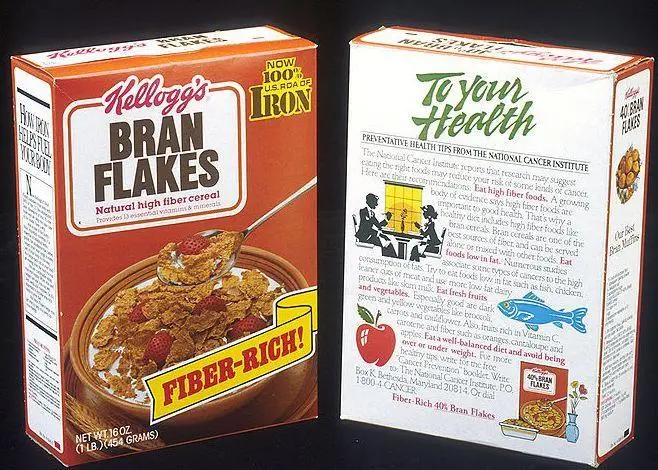
When I was a small child, my great uncle used to tease me with a riddle I didn’t understand at the time. He’d ask me when a door wasn’t a door, and chortle when I didn’t understand the answer “when it’s ajar”. I thought ajar was what jam came in – I had no idea it had an entirely different meaning when related to doors.
In itself, that’s not much of a lesson for business life, but it has its parallels in encouraging us to view things differently; to stand conventional wisdom on its head; to think outside the box.
Or inside it, as far as a group of about 200 wheat growers on Australia’s southern shore are concerned, with their first tentative steps towards exporting grain in containers.
For almost two decades the South East Premium Wheat Growers’ Association (SEPWA) has been working to address the perception that its members’ products were somehow inferior to those from other regions.
What binds them as a group – apart from their extreme geographical isolation at the southern end of Western Australia – is the port at Esperance. Opened to deliver goods to support a mining boom in the 1890s, it has been exporting grain since the early part of the 20th century.
Sure, the quantities in the early days were miniscule; 1925 saw less than 1,500 tonnes leave the port, and it all did so in sacks. But the weight’s not important in this context. What should capture the attention is that a port created for a mining boom had become a servant to agriculture – and that little bit of history may well be poised to repeat itself.
Today Esperance, primarily a handler of bulk cargoes, is the deepest port in southern Australia, expected to export up to 8m tonnes of iron ore this year, comfortably accommodating capesize vessels up to 200,000 tonnes and fully-laden panamax ones up to 75,000 tonnes.
It had also been the site for exports of nickel from a now defunct project run by mineral giant BHP. And therein lies the green shoot of a new agricultural exporting opportunity, presented by the serendipitous juxtaposition of a newly deregulated grain market and the redundant container crane built to serve that nickel project.
This month the farmers of the SEPWA will begin a feasibility study, funded by a grant of more than Au$50,000 ($44,000). By the year’s end, they want to establish whether they can capitalise on the flexibility of containers and the availability of the crane.
“This study will provide grain growers with a valuable insight into the logistics of exporting grain in containers,” says the association’s president, Lyndon Mickel. “It will also help growers to understand the costs involved, which, under the single desk marketing system, growers weren’t privy to,” he adds.
But that’s only part of the story. SEPWA project officer Nigel Metz says containers present an opportunity for exports of niche grades of grain, which could return premiums above the traditional “bulk single destination” cargoes.
“It currently appears that the main container trade will be supported by the region’s mineral exports. With this underpinning the container shipping services in the near future, it makes sense to look into developing supporting trade from the region’s grain production,” he says.
The study will examine what is needed to underpin a containerised grain trade, and compare its costs and returns with those achievable through bulk services. If containers appear to be economically viable, the study will progress to the second stage – assembling relevant information for industry stakeholders to get the trade started.
“We have no plans to become heavily involved in grain marketing but we are undertaking the project to help further develop the grains industry in the Esperance Port Zone,” says Mr Mickel. “We just want to facilitate the marketing of grain to end users and promote Esperance grain for the benefit of grain growers in the region.”
Mr Metz is clear that the development of the “grain in containers” concept is dependent as much on the costs involved, in comparison to more conventional bulk shipment, as the practicalities. Acknowledging that it would be unrealistic to think of switching to containers for all of the 1.5m tonnes shipped through Esperance each year, he says: “A realistic start may be 10,000 to 20,000 tonnes of grain of more speciality types such field peas, fava beans, lupins or canola.”
That said, more common grains like wheat or barley may have become a high-value crop over recent weeks, with Russia’s prolonged lack of rainfall having severely damaged the harvest and the subsequent announcement, early in August, of the largest single month’s wheat price increase for 50 years.
Also important in growth of the concept in Western Australia are the same factors that affect its take-up elsewhere; the availability of containers and, perhaps more importantly, the willingness of end users to take their shipments in smaller parcels rather than conventional bulk cargoes of up to 50,000 tonnes.
The other Australian issue is quarantine; the containers would have to be filled at facilities approved by officials of Australia’s Quarantine and Inspection Service. However, if all these issues stack up, Mr Metz believes there’s no reason why “in-box” tonnages shouldn’t increase over time.
As far as Esperance Port Authority is concerned, it’s a good development, because it offers greater use for its container infrastructure. Bulk handling at the port is done by a grower cooperative called the CBH group. CBH enjoys a virtual monopoly of bulk grain storage and exporting in Western Australia and operates on land it leases from the port, where it has its own ship-loading facilities. “But this environment is now changing and there many possible bulk export competition in WA in the near future,” says Mr Metz.
Agriculture is undeniably a global industry. That it can be is a result of the work of port authorities around the globe. The long-term future of grain in containers or in bulk should be a symbiotic relationship because it means there is an opportunity for port operators to offer diversity of services, which brings with it another opportunity to add value and satisfaction for more customers in the supply chain.
The work being done by SEPWA could provide a blueprint for exploring the feasibility of such a development anywhere in the world.
Related Articles
 CONTAINER & CARGO HANDLING
 CONTAINER & CARGO HANDLING
 BULK HANDLING