![PortStrategy[GreenPort]](https://www.portstrategy.com/wp-content/uploads/2026/09/PortStrategyGreenPort.svg)





Going with the grain
Bulk handlers have to strike a fine balance between over and under utilisation of port assets. John Bensalhia reports
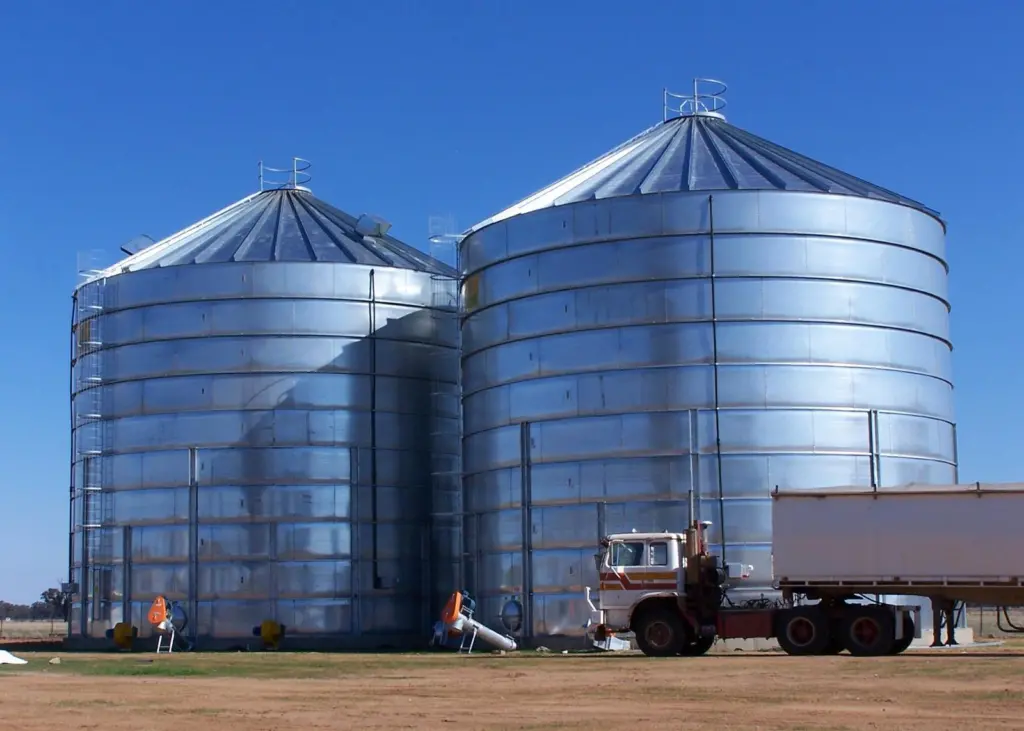
“The thing about bulk handling of grain is that it is what it says – bulk!” says Nigel Metz, projects officer at South East Premium Wheat Growers’ Association (SEPWA).
“You must keep your tonnages up, otherwise you end up with underutilised assets: for example, a silo or bunker that’s half full cost the same to build, but your revenue is entirely dependent on the number of tons put through the system.”
However, there are two risks with maintaining asset utilisation – the first is the market risk: “If someone else steals your market share, your throughput drops,” says Mr Metz. The other problem is that of seasonal risk. “Grain tonnages, unlike coal or iron ore go up and down with the season. In one year in Western Australia, we may export seven million tonnes and in another, almost 12. This is almost double throughput, which can make infrastructure planning and investment a difficult path to negotiate.”
Because grain is essentially a basic commodity, bulk handling lends itself to keeping costs low with regards to shifting large volumes and tonnages. Local grain value is often tempered by competing supplies – hence the cost of freight to deliver a product to a competing position. “Western Australia has a highly efficient bulk handling and exporting system and close bulk freight proximity to SE Asia,” says Mr Metz. “Hence, it has an ability to service this market at a freight advantage to many other grain exporters from around the world.”
Christian Lozano, head of the Manila International Container Terminal’s Anchorage operations at International Container Terminal Services Inc. (ICTSI), adds that there are other issues to be taken into account – investment is a key factor. “One issue would be the quality of cargo handling. In addition to better productivity, modern bulk handling units preserve the quality of the product: from vessel, to storage and to delivery to consignee, while maintaining minimal losses/spillage. However, modern bulk handling units require substantial capital investments.
“Also, every market has to find its optimal trade-off when evolving from the basic to the modern and capital-intensive systems. In Manila, ICTSI’s bulk handling operations are still fairly basic, but new facilities have recently been put up, and are doing very well.”
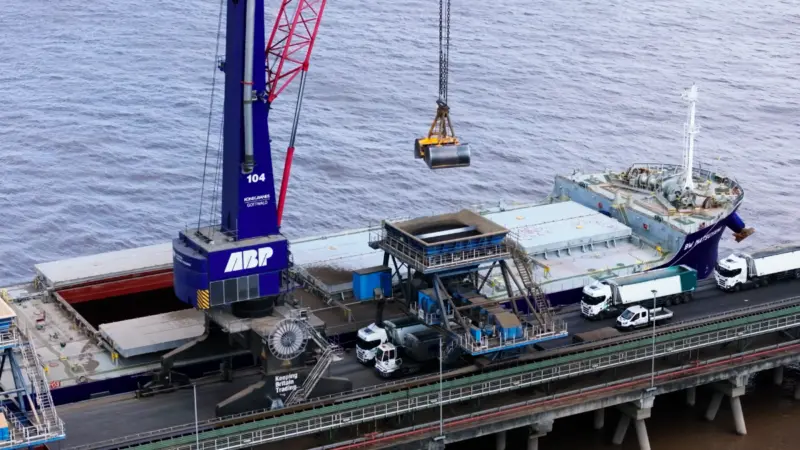
For bulk handling, MICT’s Anchorage Group uses barges, clamshells or vacuators, depending on the type of cargo and client being serviced. Mr Lozano says that developments in technology make the bulk handling process easier. “Modern terminals with state of the art equipment and storage facilities allow for high productivity and low operating costs. However, to make the investment on new technology worthwhile, there should be sufficient, steady volume.”
Automation is an important part of grain handling, owing to a number of important benefits. Mr Lozano comments: “Automation leads to high productivity, lower operating costs, savings on fuel, less manpower costs, reduced spillage and lower cost for shipping and handling on the part of the consignee.”
Mr Metz agrees that automation is important for the speedy handling of large tonnages. Grain harvesters and trucks are larger than ever before: Mr Metz says that some trucks in Western Australia have legal pay loads of 86 tonnes of grain. “As a result, you need grids and conveyors which can shift 500 t/hr+ to keep the grain moving, otherwise your bulk handling system will soon lose favours with industry users and they will go elsewhere or build their own.”
Large storages with fully integrated grain movement have become the norm for Western Australia: the difference between iron and coal, however, is that grain degrades in quality and loses its value if left unharvested. As a result, farmers need to reap their crops rapidly to make sure that they protect their income.
This aspect is also highlighted by James Luther of the Nectar Group Ltd. “The quality of the grains handled is an important factor. End users in different countries have preferences as to the origin and characteristics of the grains they consume. There are still numerous occasions where the cargo arrives at the port of discharge where the specification differs from what has been agreed between the parties under sale and purchase agreements.
“The problem is usually worse if the cargo is exchanged as a gift rather than under a commercial transaction where the responsibilities in terms of quality of the product may have been eroded even further. This causes delays and even rejection of the cargo at times leading to significant costs for the parties involved in the chain.”
Ports also need to take the financial aspects of bulk grain handling into account. Mr Lozano says that both the consignee and the terminal operator have to take financial issues into account. “On the part of the consignee, one major issue would be the freight or vessel charter cost and storage charges. On the part of the handler/terminal operator, we have to consider whether the current technology needs to be improved, and if the market can afford the capital investment required.
“At any level of technology however, we deal with unstable fuel prices, increasing operating costs, additional capital expenditure, and regulated/low tariff rates.”
With regards to the future, the right facilities and equipment are key to efficient bulk grain handling, according to Mr Lozano. “What’s ideal for Manila would be a bulk handling facility that can accommodate panamax type vessels complete with loading/unloading equipment and a bulk storage facility. However, we still need to study whether large grabs, a floating crane, high performance discharge mobile unloaders or a fixed facility are needed at the MICT.
“A modern bulk facility would be practically weather proof with segregation capabilities in multiple silos using screw type or pneumatic unloaders for delivery. The ideal set up would be a single facility with industry stakeholders and players doing their fair share to attain sufficient volume.
“Containerisation may take a piece of the pie, but if the economies of scale are right, bulk handling should prevail.”
Related Articles
 CONTAINER & CARGO HANDLING
 CONTAINER & CARGO HANDLING
 BULK HANDLING