![PortStrategy[GreenPort]](https://www.portstrategy.com/wp-content/uploads/2026/09/PortStrategyGreenPort.svg)





Logic of mega-containerships questioned
A top shipping line executive questioned whether 22,000 teu ships are “really the right way to go” at TOC Asia’s Container Supply Chain Conference.
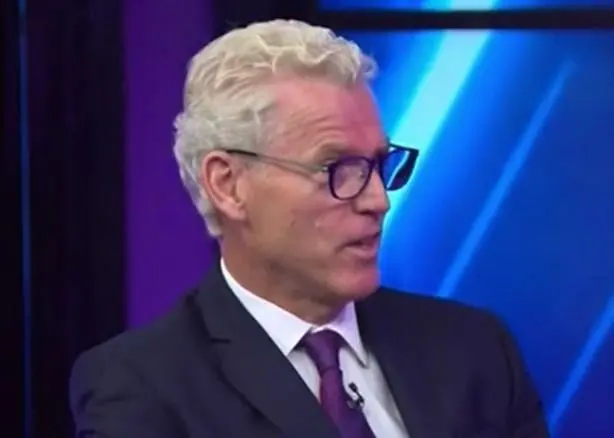
Jeremy Nixon, chief executive of Ocean Network Express (ONE), said there exists a valid argument that the container fleet is skewed towards the bigger sizes at the moment.
Mr Nixon also revealed that the line is “taking a bit of a breather” to see how the market plays out to 2020 on the back of the entry into force of International Maritime Organization (IMO) regulations on January 1, 2020 to limit the amount of sulphur content in marine fuel (IMO 2020).
ONE will not take vessels out of operation to fit the limited amount of scrubbers that the line has agreed. Instead, retrofitting will take place when the vessels drydock.
The majority of ONE’s fleet will make use of low-sulphur fuel oil to meet the pending regulations.
Mr Nixon also said that while ONE needs to add to its fleet for organic replacement, it is doing so keeping the longer-term future for those ships in mind.
“If you are designing ships for today, those ships will still be active in the 2040s — you need to think about that,” he said.
Areas of uncertainty
Delivering the keynote speech at the TOC Asia conference, Mr Nixon included IMO 2020 in his list of three “potential areas of uncertainty”. The other two were global economic growth and the US–China trade war.
However, he said that he considers the supply/demand for 2019 to be “reasonably balanced”.
“Relatively-steady demand growth is expected for years to come,” he said.
“We are facing a slowdown in economic activity, but I don’t believe it is a slump.”
Meanwhile, on the demand side, while there is much discussion on the China–US trade war, Mr Nixon reminded delegates that North America also includes Canada and that Asia is more than China.
“The real reality is that [the trade war] has not had much of an impact on cargo flows from China to the US,” he said.
“The one downside is exports from the US back to China, where there has been a slowdown.”
ONE is also keen to make better use of artificial intelligence to be more responsive and to address the estimated $1bn lost in moving empty equipment around.
Here, Mr Nixon called on the industry to get its house in order on standards and protocols for digitalisation to “give security to software development”.
Related Articles
 CONTAINER & CARGO HANDLING
 CONTAINER & CARGO HANDLING
 BULK HANDLING