![PortStrategy[GreenPort]](https://www.portstrategy.com/wp-content/uploads/2026/09/PortStrategyGreenPort.svg)






Londons water world
Richard Everitt reflects on his nine years as chief executive of the PLA with Felicity Landon
To start out with some cargo statistics seems somewhat unjust when looking back at Richard Everitt’s nine years at the helm of the UK’s second largest port.
But to get them out of the way, in rough terms the collective throughput of the Port of London has fallen from a peak of over 50m tonnes to a figure around 10m tonnes lower.
That reflects something Mr Everitt once pointed out: that ports are in the ‘fallout business’ and have to take the consequences of shifting trends and trades, both negative and positive.
Among the consequences have been the closure of the Coryton refinery, which was processing 172,000 barrels per day of crude oil and up to 70,000 bpd of other feedstocks imported from all over the world. Then there was the disappointment over Tilbury Power Station, which used to import 2.5m tonnes of coal a year, was converted to use imported biomass, but then closed altogether.
“On the other side of the equation, we have seen significant investment in London Gateway and in the Shell facility there, and we have the redevelopment of the Coryton site into a new fuel import and storage facility by Vopak, Shell and Greenergy,” says Mr Everitt.
Golden era
The highlight of his time at the PLA is easy to remember – it was the central part that the Thames and Port of London played in the Queen’s Diamond Jubilee river pageant and the Olympic Games. He sees the 2012 spotlight on the river as a significant turning point, and Boris Johnson’s vision of doubling the number of passengers using the river is another positive.
“London is turning to the river again, whereas for a long time it had its back to the river both in passenger and freight terms,” says Mr Everitt. “To see the Thames used more and more by a greater variety of users is very encouraging.”
The freight side has been challenging, he says – but London is in the same position as everyone else. “No doubt being diversified as a port as a whole has been pretty useful.”
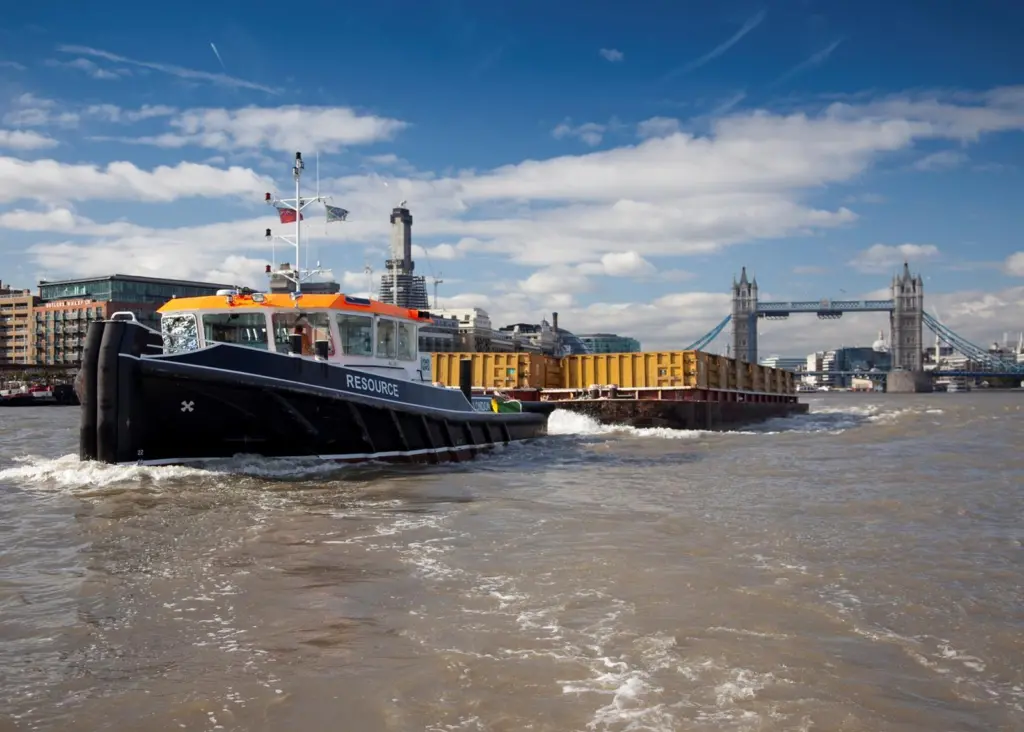
Where London has seen a dramatic upturn is in barge and vessel traffic on the river. In the past two years, intra-port freight has increased from 2m to 3.3m tonnes, and this figure is expected to increase further. That’s based in particular on some huge engineering projects under way, including Network Rail’s Crossrail, the London Underground’s Northern Line extension and Thames Water’s Tideway Tunnel sewer project.
The river is playing a vital role for moving tunnelling spoil out and bringing tunnelling equipment, tunnel sections and a wide variety of construction materials in. Given the huge volumes involved, the alternative would be truck gridlock on London’s roads.
“For every 500 tonne barge that goes by, you have 25 fewer lorries on the roads of London. These projects will encourage investment in both people and equipment, which will serve the river long-term – and the more people see that this works, the better,” he says.
Protection rights
The Mayor of London’s ‘safeguarding’ policy protects 50 wharves along the tidal Thames for freight operations, stopping them from being used for fancy riverside apartments.
That policy, championed by the PLA, is really important in maintaining the use of the river, says Richard Everitt. However, it doesn’t force owners to use the wharves for freight, and the PLA has now forced the issue in the case of Peruvian Wharf in Newham, which it has compulsorily purchased – it will be used by aggregates company Bretts.
Richard Everitt says a key highlight for him has been building ‘a great team’ at the PLA.
“I would also like to think – though it is for others to judge – that the PLA is easier to do business with. We are not perfect but we have introduced public meetings, which certainly focuses the minds of management. If we are more open and responsive to ideas, if we have achieved that, I am pretty pleased.”
And then it’s back to figures. “From 2008 onwards it was a thoroughly hard slog. Riding the sort of downturn we have seen has not been easy – but we have remained in the black right through that period. We have done a lot to adjust our cost base, looking carefully at head count and making pension changes, and despite the slings and arrows of outrageous fortune, we have stayed on the right side of the line.”
Related Articles
 CONTAINER & CARGO HANDLING
 CONTAINER & CARGO HANDLING
 BULK HANDLING