![PortStrategy[GreenPort]](https://www.portstrategy.com/wp-content/uploads/2026/09/PortStrategyGreenPort.svg)





MAKING A CONNECTION
For freight to achieve predictability of movement, port and terminal development has to rise to the challenge of achieving efficient, congestion free, connectivity with hinterland markets. Mike Mundy assesses the road ahead.
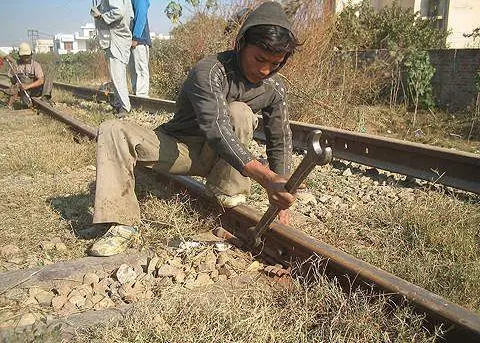
Once upon a time hinterland connectivity was hardly thought of or only addressed in a cursory way but now, in both established and developing markets, it is an integral, and absolutely fundamental, component of modern port development.
It is difficult, of course, when the port concerned has been in place for many decades if not centuries. Invariably the port will be located in close proximity to its host city and at the time of its birth there will have been minimal understanding of how matters would unfold over time and the much increased capacity requirement that this would entail.
Equally, brand new port development must address hinterland connectivity as part of the ‘life blood’ of making the core port development a success and sitting in the context of a regional or national plan is undoubtedly a plus factor.
Today, it has also taken on a new level of importance in that it exerts a great influence over achieving eco-friendly operations and the general drive to reduce carbon emissions. The level of challenge can also be escalated by the fact that hinterland reach can, and frequently does, entail serving cross green border markets and in certain cases designated transport corridors serving landlocked countries.
HIGHER UP THE AGENDA
Essentially, the task of confirming free-flowing hinterland connectivity has risen up the development agenda as port traffic, and especially unitised traffic, has climbed to higher and higher peaks. For some ports this represents an ironic situation – specifically those that a few decades ago ripped up rail track stating at the time that it was not necessary.
Now a number, such as Melbourne with its proposed rail Freight Link into its Webb Dock, are actively planning to reinstate rail service as a path to helping alleviate heavy road congestion which only promises to get worse in line with planned increases in terminal capacity.
For this type of urban port – located close to the host city – there is invariably a big challenge in reconciling commercial objectives with efficiently and sustainably managing landside traffic flow to avoid congestion and all the interrelated problems that this brings.
Not least of these is the substantial added cost that this imposes upon import and export operations, a cost that will ultimately pass to business or the consumer if free flowing hinterland connections are not established.
Within this development equation there is also the reality that more and more port bodies today base their approach on achieving full cost recovery. There is reduced scope today for the traditional cost-benefit approach from a port managing body, although the assistance of government can be enlisted as well as that of regional bodies such as the European Union given the right project justification.
ADAPTING TO THE CHALLENGE
Recent experience shows, however, that ports and terminals are adapting to this area of challenge, and sometimes with government/third part agency assistance have between them originated a menu of helpful solutions, which if not a total cure can play a part in promoting efficient landside traffic flow. Table 1 provides a snapshot of these solutions and how they can be applied.
The measures shown in Table 1 highlight the recognition that a controlled freight environment can help freight get to its destination with greater predictability. As a rule, reliability and predictability of movement are more important to freight than actual journey time.
The highlighted measures also signal recognition of the fact that “no terminal or port is an island” and that coordinated action looking beyond the terminal gate is an essential ingredient in achieving efficient and sustainable traffic flow.
OPTIMISING INFRASTRUCTURE INVESTMENT
There is a need for good, uncongested, connectivity between ports/terminals and their respective hinterlands and making sure the right infrastructure is in place is key to this. Infrastructure development, however, takes time and has to be undertaken in a structured and coordinated planning environment.
In the developed world, there is a broad-based acceptance of the process but even so problems can arise due to coordination or funding issues. It is important to have a planning environment that can get beyond these issues.
In the developing world there is an ongoing need to ‘spread the word’ about the advantages of integrated planning – between ports/terminals, road and rail entities etc. – but clearly the main problem is funding. Limited government funds are a traditional problem and many developing nations struggle to achieve a satisfactory level of infrastructure investment from the public purse.
One estimate suggests that over the next decade and beyond developing countries will require in excess of US$2 trillion a year to build essential infrastructure, but this is beyond the capability of the public sector.
This, in turn, dictates the need for the greater input of private finance and it is refreshing to note that there is greater attention now being paid to how to unlock this – i.e. to create the right conditions where it can be constructively deployed.
One path suggested by the banking fraternity to achieving this objective is a three-step process, namely:
1. Increase the availability of funds (liquidity) from both domestic and international providers of capital.
2. Escalate the scale of investment by bundling together individual projects and providing a portfolio of products in which providers of capital can invest.
3. Address the governance and capability gaps that often hinder private-sector investment.
Steps have to be taken to achieve efficient connectivity between ports and terminals and the hinterland markets they serve. Container traffic will only grow, thus placing further pressure on the need to act positively in this respect. Doing nothing or too little is not an option – the price will be too high to pay.
One indicator of this is the current situation around the port of Apapa, Nigeria’s main port. The port suffers from regular and severe gridlock and the economic cost of this has recently been estimated to be US$55 million daily. This is a very high price to pay when even for Apapa, based on an island location, effective solutions can be implemented to reduce the severity of the problems.
Table 1
CORE FACTORS
Concessions
Some recent concession agreements have clauses relating to modal split guarantees, the emphasis being on shifting traffic off road onto rail.
Gate Hours
Extended gate hours can serve to redistribute the arrival times of trucks to port terminals throughout a typical day. Providing incentives to use off-peak hours will scale down congestion at terminals, as well as associated roadways.
Truck appointment systems
By offering specific terminal arrival times or windows, truck appointment systems seek to bring order to truck processing through terminals and thereby deliver important benefits such as reduced queuing. Many appointment systems today are compulsory but they can also operate on a voluntary basis.
Automated Gate Systems
An RFID-based automated gate management system – facilitating automated truck access/checking and offering faster processing – is one example.
Rail
Offers its own ‘highway’ for freight movement with the ability to manage cargo operations alongside passenger train requirements able to be undertaken in a much more structured way than on road systems. Under certain conditions there is also the potential for dedicated rail freight movements – one prominent example is the Betuwelijn line, a dedicated double track freight railway that runs from Rotterdam to Germany. Around the globe, there are now significant efforts underway to push container traffic from road to rail.
Waterway
Container barge transport on the Rhine is a prime example of what can be achieved by exploiting the use of inland waterways. Intra port movements are also an area of opportunity – as epitomised in Cartagena, Colombia where a barge service provides container movement between terminals and by ICTSI between Cavite and other Luzon ports in the Philippines.
Roads
The potential also exists with truck freight traffic for dedicated roads and/or priority lanes including on-terminal specialist lanes for specific commodities, e.g. reefer traffic. Both priority and specialist lanes can operate 24/7 or within designated hours.
Road trains
As an example: In New Zealand you can have tractor and trailer combinations on public roads of up to 22m. In Australia Triple and ABB or BAB-quad road trains can have a dimension up to 53.5m, and there are various records of tractor units pulling greater than 100m of trailers. Extended tractor trailer trains are also used in certain ports for container transport between different terminals.
Time restrictions
A simple measure is to limit road truck movement between certain hours to reduce congestion but drawbacks have been shown with such restrictions, notably the creation of traffic peaks outside the hours of access.
The role of IT
The greater role of IT in traffic management and right through to infrastructure planning is set for wide adoption with diverse benefits expected. The introduction of autonomous road vehicles, including freight units, is expected to provide a major catalyst towards highly guided transport systems. Rail and barge systems can be seen to have already moved strongly in this direction. At a lower level there are simple steps that can be taken and play a helpful role, such as receiving traffic alerts and other information via Smartphone.
ICDs
Inland Container Depots or Distribution Hubs can play an important part in staging road traffic movement and evening out flow. Rail shuttles can also be organised between ports and key inland hubs with onward distribution via road.
Related Articles
 CONTAINER & CARGO HANDLING
 CONTAINER & CARGO HANDLING
 BULK HANDLING