![PortStrategy[GreenPort]](https://www.portstrategy.com/wp-content/uploads/2026/09/PortStrategyGreenPort.svg)
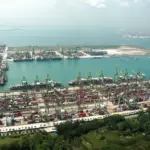





Nagoya and Guangzhou top riskiest port ranking
RMS has analysed the catastrophe risk of the world’s ports and ranked the top ten for greatest potential loss.
The analysis has revealed that Nagoya, Japan and Guangzhou, China, are the two ‘riskiest’ ports which both have an estimated marine cargo loss of over US$2bn.
Chris Folkman, director, Product Management at RMS, said: “Surprisingly, a port’s size and its catastrophe loss potential are not strongly correlated. For example, while China may be king for volume of container traffic, our study found that many smaller US ports rank more highly for risk — largely due to hurricanes.”
He added: “Our analysis proves what we’ve long suspected — that outdated techniques and incomplete data have obscured many high-risk locations. The industry needs to cease its guessing game when determining catastrophe risk and port accumulations.”
Out of the other top 10 riskiest ports, six are in the US and the remaining two are in Europe.
It is not just the biggest container hubs that have a high risk of loss, with smaller ports in the US and Bremerhaven in Germany featuring in the ranking due to their cargo type and the natural hazards they face.
The findings will cause concern among marine insurers and reinsurers following four years of marine catastrophes which have generated billions of dollars in marine insurance losses. Such as Tianjin explosion in 2015 and Superstorm Sandy in 2012.
To conduct the analysis RMS marine risk experts used the new RMS Marine Cargo Model, the insurance industry’s first marine cargo and specie risk tool, to calculate the 1-in-500-year loss for each port.
“The value of global catastrophe-exposed cargo is huge and is expected to continue growing,” continued Mr Folkman.
He concluded: “After so much catastrophe loss to the cargo line since 2011, it is clear that ‘good enough’ modelling techniques are no longer fit for purpose. Better data and modelling will enable more effective portfolio management and underwriting for this dynamic line of business.”
Related Articles
 CONTAINER & CARGO HANDLING
 CONTAINER & CARGO HANDLING
 BULK HANDLING