![PortStrategy[GreenPort]](https://www.portstrategy.com/wp-content/uploads/2026/09/PortStrategyGreenPort.svg)





NOT A PORT TO OMIT
The good news is that Malaysias premier port, Port Klang, situated on the countrys west coast midway along the Straits of Malacca, was not badly affected by the recent tsunami that caused so much devastation in the region, reports Gavin van Marle.
And the bad news? Well, the bad news is that the port has still to realise its ambition of becoming the regional megahub. It wants a large slice of Singapore’s transhipment business but that may take some time to come, especially with the Port of Tanjung Pelepas contesting Singapore on just that.
Perhaps the forthcoming merger of Malaysia’s local port authorities into one central Malaysian Port Commission, as promised by Malaysian transport minister Datuk Seri Chan Kong Choy, may result in a more coordinated port development policy for the country.
The simple fact is that rather than focusing their efforts on competing with Singapore, for some time Malaysia’s ports have been stepping on each other’s toes. Yet while there is hope of more focused policy, operators have also voiced concerns that there will be an adjacent rise in red tape. This year will see which of these prospects is borne out.
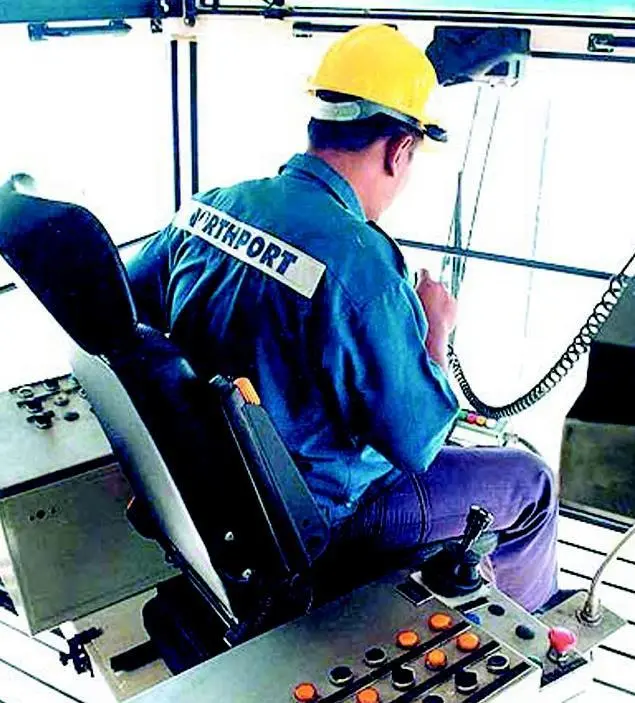
In the meantime, Port Klang’s operators are optimistic about 2005. Although the final throughput figures for 2004 have yet to be released, both Westport and Northport expect there to be year-end double-digit increases on 2003. Combined, the two operators handled 4.8mTEUs in 2003, with Westport handling 2.54mTEUs, and Northport 2.3mTEUs. Preliminary figures suggest that overall Klang will see a throughput of 5.2mTEUs for 2004, with Westport announcing at its 10th anniversary party in December it had already handled 2.6mTEUs and expected to see revenues of over US$131m for the year. Following a similar trend in growth, Northport has revealed that traffic for the first nine months of 2004 grew by 8.8% compared to the same period in 2003 to reach 2.064mTEUs.
Northport has also become the leading container terminal in Malaysia for import-export cargo, and with the country firmly back on track after the 1997 financial crisis, analysts concur that another good year lies ahead. In the first 10 months of 2004 Malaysia’s exports rose by 22% and the government forecasts that the economy will expand by a further 7% this year. With GDP growth inextricably linked to trade volumes, Chris Eng, analyst at OSK Research says: “Northport is still the main port for local cargo in Malaysia and its outlook is tied to [Malaysia’s] economic growth.”
Altogether it expects to record a throughput of 2.8mTEUs for 2004, and is looking at achieving a further 10% growth in volumes in 2005, with the forthcoming launch of operations at Terminal 3 and the coversion of its Berth 14 from a general cargo to container facility. According to md and ceo Datuk Basheer, the new terminal is due to be completed in March. “This will give additional quay length of 178 metres bringing our capacity up to 4mTEUs.” To handle the new volumes, Northport has ordered three super post-panamax quayside gantries and four RTGs which are due to be delivered in October.
However, that has not dented fears in the shipping community of Klang’s overall productivity, and it often finds itself omitted from schedules if there are delays elsewhere. “It is unfortunate that Port Klang has been labeled traditionally as a convenient port for omission;
we want lines to know that Port Klang is capable of schedule recovery.”
A similar sentiment was voiced by Westport’s chairman Tan Sri Gnanalingam who claimed that the operator is now targetting 35 moves per crane per hour (mph). “PSA rose to fame with 25 mph and today Westport staff can do 30mph. The Malaysian port industry is probably the only industry which can give the Singaporeans a run for their money.”
If Port Klang – particularly Westport, which targets the transhipment business more earnestly than Northport – is to succeed in establishing itself as the premier southeast Asian port, it will have to continue to beat Singapore at its own game.
Related Articles
 CONTAINER & CARGO HANDLING
 CONTAINER & CARGO HANDLING
 BULK HANDLING