![PortStrategy[GreenPort]](https://www.portstrategy.com/wp-content/uploads/2026/09/PortStrategyGreenPort.svg)






Ongoing growth for Brisbane
Brisbane celebrates that rarest of things: increased profit in a recession. Iain MacIntyre finds out how its done
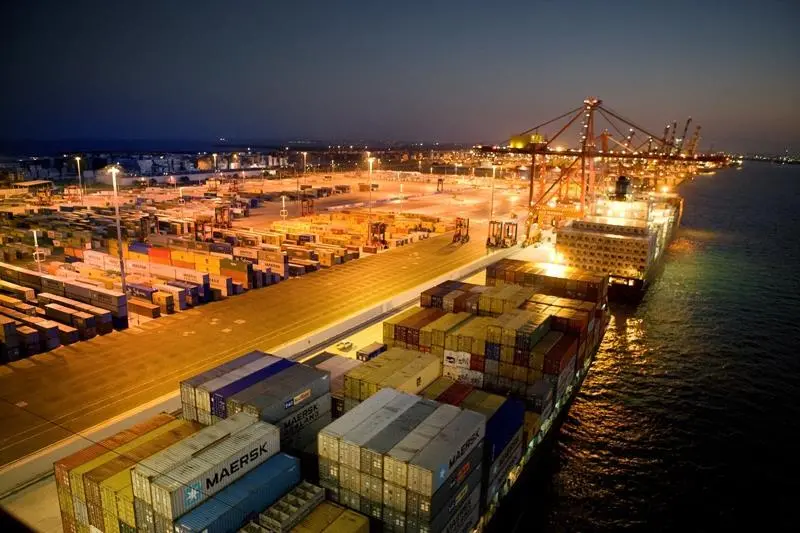
Port of Brisbane Corporation has defied the global recession to deliver a 4% increase in net profit to A$456m (US$421m), 12% rise in revenue to A$677m (US$625m) and 5.6% lift in throughput to a record 31.9m tonnes during the 2008-2009 financial year.
While strong performances in agricultural and coal exports might have contributed to that particular result, PBC chief executive Jeff Coleman says a combination of factors underline his port’s ongoing development.
“PBC is one of Australia’s fastest-growing [state] capital city ports and the closest major container port to the largest export markets in the Asia Pacific Rim … we are up to five sailing days closer to Asia than Sydney and Melbourne,” he says.
“The port has world-class cargo-handling and warehousing facilities. It also provides an interface between rail, road and sea transport at the Brisbane Multimodal Terminal.
“We manage and lease an extensive array of strategic and non-strategic landholdings and operate a fleet of dredgers which fulfill the needs of the port and contracts for other Queensland ports.
“PBC offers customers and tenants a strategic location with ample room for future growth. Unlike southern ports, we are unencumbered by urban encroachment and have more than 400 hectares to develop over the next decade.”
Comprising 6.5 km of quayline, 1047 hectares of land holdings and 999 hectares of wet land, PBC has undertaken over A$1.5bn (US$1.4bn) in infrastructure and asset investment over the past 20 years.
“In the five-year period to 2009 PBC has spent over A$724m (US$669m) in the development of port infrastructure and is planning further investment of A$950m (US$878m) for new infrastructure in the five-year period to 2014.
“Major projects finalised in 2009 include the commissioning of Container Berth 10 and the General Purpose Berth for bulk and project cargoes – we invested A$156m (US$144m) in new capital projects last financial year.
“Work continues on the award-winning Future Port Expansion area, which will provide a further 235 hectares of port land and increased quayline.”
Furthermore, when work currently under way on Berths 11 and 12 is completed in 2012 and 2014 respectively, an agreement-for-lease signed with Hutchinson Port Holdings will see BPC become the first major port in Australia to introduce a third container stevedore.
“Despite any short-term economic conditions, our focus on the long-term growth and development of the port will not change.
“However, provision of new infrastructure will not in itself lead to a more productive and efficient port – we must continue working towards port-wide productivity improvements.”
During 2010 itself, PBC expects agricultural trades to again perform strongly as key growing regions continue to recover from drought conditions. The port has announced a “stronger than ever” focus on productivity, as it works towards gaining a greater depth of understanding across the entire supply chain.
Predicting trade growth in some areas will start recovering towards the end of the year, PBC is striving to ensure it is ready to handle increased volumes as required. Aligned with this goal, the port is intending to progress developments to improve its road access.
However, despite PBC’s ongoing strong financial performance, the Queensland Government announced a restructure of its asset portfolio on June 2 last year, which will include a sale of the port within a year.
Preparing the business for this sale is expected to be one of the most significant tasks facing PBC during 2010 and a dedicated internal team has been established to undertake this work.
Nonetheless, Mr Coleman says it remains “business as usual” for PBC, with a continued focus on growing trade, developing the port’s substantial land resources and investing in new facilities.
“We have continued to deliver record financial results over the last decade, driven by port efficiency, trade growth and our extensive property portfolio.
“Our business goes well beyond the basic functions of a port and our diverse array of services means we have the resilience to meet the challenges of today and tomorrow.
“Furthermore, we understand the impact of climate change at the port is vital to its sustainable operation and we are determined to grow our business and the port, in the most sustainable way possible.”
Related Articles
 CONTAINER & CARGO HANDLING
 CONTAINER & CARGO HANDLING
 BULK HANDLING