![PortStrategy[GreenPort]](https://www.portstrategy.com/wp-content/uploads/2026/09/PortStrategyGreenPort.svg)






Playing the long game
AJ Keyes asks if container ports plan properly, or do they simply steam ahead, regardless?
Proper planning for a competitive container port or terminal in any region is a no-brainer. If done well, it allows a port to successfully execute infrastructure development and optimise performance levels to keep pace with anticipated demand. But does that mean that ports are only planned for and developed when there is sufficient cargo, or are they simply constructed with the ‘build it and they will come’ mentality?
Before this ‘proper planning’ can take place, it is necessary to take stock of the key items that remain in the control of a port and terminal operator and other factors that neither can control. Key matters that can be influenced include number of crane, length of quay, operation systems used and terminal design. Matters that cannot be changed, amended or in any way influenced include geographic location, cargo stowage, and unionisation rules.
While this list is not exhaustive, it is highly important as it highlights the key areas/items of planning (and, therefore, investment) that can be undertaken by a port or terminal to improve overall competitiveness and volume growth. Conversely it also reflects where no amount of planning will make any difference.
Quite simply, a port with deep water and modern equipment is still not going to handle cargo if it has no hinterland to serve or there is a comparable modern facility closer to the areas of consumption and demand that will be served more quickly and at a lower cost.
Pushing ahead
While these are typical factors for ports and terminals, there is another distinction that needs to be made here. Just because there is an existing port in operation does not automatically stop the development of a new facility.
A good example of this position can be noted in the UK.
While Felixstowe and Southampton (and to some extent Thamesport, Tilbury and Liverpool) have always catered for deep-sea container demand, it did not stop DP World committing to the development of its large-scale London Gateway project.
In 2007, utilisation at the UK’s existing ports was high, although there were confirmed plans for additional capacity at Felixstowe, Southampton and Liverpool to come into service by 2012. So the existing ports were catering to the then-current demand for containers, though, of course, there was still a need for availability of space, longer term. London Gateway had been through a long and arduous planning and public inquiry process and it gained approval, unlike the Dibden Bay option which did not gain governmental endorsement.
Andrew Penfold, project director at Ocean Shipping Consultants, part of Royal HaskoningDHV, makes the good point that planning remains an art, not a science: “Since London Gateway was introduced, we have seen the global financial crisis and the subsequent rebasing of forecasts and these are things that simply cannot be planned for easily in advance.
“Port developments are about planning for the long-term and it is clear that in 2016 there is a current lack of access to deep water capacity at some periods, such as the Maersk Line overflow calls utilising London Gateway.” During adverse weather conditions in the UK in late 2015 and early 2016, London Gateway’s automated stacking cranes ability to withstand wind speeds of up to gale force meant that vessels diverted to it from other weather-affected UK ports. Every eventuality, it seems, cannot be catered for.
Europe’s challenge
Looking further afield there are similar trends to the UK. For example, the Hamburg-Le Havre port range remains a large and competitive port range with a number of established container ports, many with expansion plans. Yet that has not stopped other new container capacity being planned for and developed, such as JadeWeser Terminal at Wilhelmshaven.
Notwithstanding a slow start and limited hinterland connectivity, JadeWeser has now secured a new 2M alliance string to and from India and to the Middle East. Low volumes may finally be a thing of the past.
Outside of Europe, the same principles apply. The Pacific Northwest region in North America remains an established gateway entry point for Asian cargo into Canada and the US, with ports here also competing with the largescale facilities in Southern California too.
However, despite the existing terminal facilities in Vancouver, British Columbia, an ongoing expansion programme at Deltaport, plus available capacity at the likes of Seattle and Tacoma, the development and subsequent opening of Prince Rupert in 2007 offered another option for serving more distant North American hinterlands. This development was irrespective of the existing ports in the Pacific North West region and those Southern California ports already handling substantial volumes of intermodal traffic beyond their local markets.
With a single railroad and customer utilising the port’s geographic location to help get containers on the rails quicker, Prince Rupert opened and immediately started competing for traffic. While the technical planning for Prince Rupert was, of course, appropriately addressed, commercially the facility entered as an alternative option in a mature market in defiance of the fact that there were other ports that could be used.
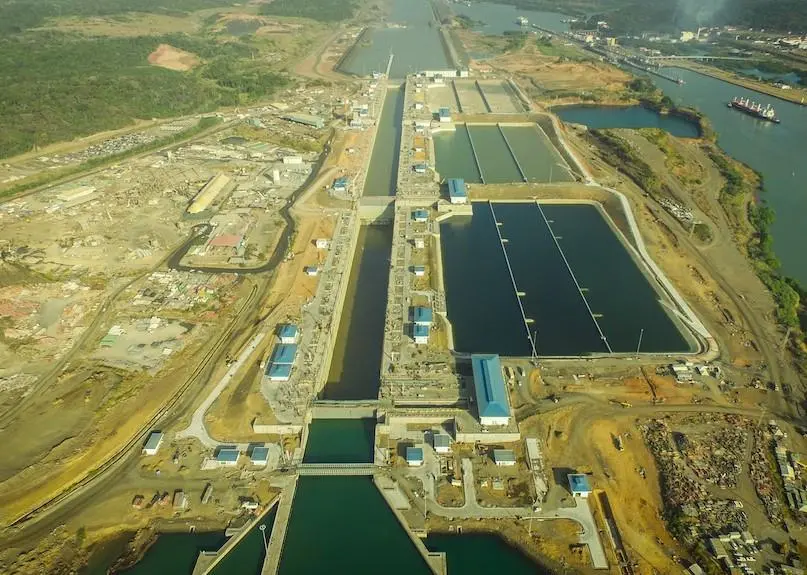
In terms of planning and infrastructure, an expanded Panama Canal throws another ingredient into the mix. Once the new locks finally open by the start of the second half of 2016, larger containerships of up to 12,500 teu will be able to transit.
Canal conundrum
But there are already questions about whether these new locks will be sufficient in size. In recognition of this, the Panama Canal Authority is already known to be considering a larger set, as Jorge Quijano, administrator for the authority, stated in 2015. “Looking at our geology and the experience we gained with this current expansion, we estimate it’s a project that could cost between $16bn and $17bn and could be completed 15 years, if it goes ahead.”
This next expansion would cater for 20,000 teu ships; the authority is likely already considering financing options for the project. Although the project is not confirmed at present, it is a clear indication of the transit waterway acknowledging that it has to continue to plan for the future, especially as the Nicaragua Canal might still come to fruition.
The fact is that a port is a very long-term development and when considering an expansion or, especially, a new facility, market demand and the competitive landscape 50+ years into the future need to be considered.
Of course, in almost all geographic locations the make-up of the industry is highly relevant and a driving factor. For example, a shipping line could want to gain its own access, and control, over terminal capacity in key regions. The ability to do this will always see additional facilities planned and developed, irrespective of whether the facility is required on a regional supply-demand basis.
So while adequate port planning is comparatively easy to undertake from a technical perspective, commercially there needs to be consideration of a range of different stakeholders, each with individual objectives. A competitive free market and different terminal operators and shipping lines will almost always override whether a port will be ‘needed’ on the basis of a supply-demand planning assessment.
Related Articles
 CONTAINER & CARGO HANDLING
 CONTAINER & CARGO HANDLING
 BULK HANDLING