![PortStrategy[GreenPort]](https://www.portstrategy.com/wp-content/uploads/2026/09/PortStrategyGreenPort.svg)






Port Louis
Port Louis is making sure that it secures a long term future to evade the threat of extinction. Stevie Knight reports
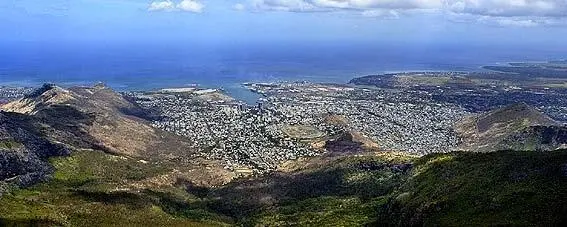
Mauritius has that most famous Mauritian victim of a free-market economy, the Dodo, to remind them what happens if they don’t fly with the times. And so when the bottom dropped out of their sugar and textile markets and the economy faced a crisis, the country poured money into the revamping of Port Louis, which handles 99% of the island’s shipping, reinventing it as a modern terminal with links between the major and developing markets, including China, Africa, Brazil and India as well at its more traditional shipping partners in Europe and the US.
The plan envisaged turning the island-nation into a ‘regional hub’ in order to tap a sizeable portion of the growing sea trade – and it seems to be succeeding.
Dredging increased the draught from 13.1m to 14.5m, making it the only other container terminal capable of handling the new fifth generation container ships – after Cape Town – in sub-Saharan Africa. After a patch of congestion, two new quayside cranes started operating on the recently extended container terminal, making a total of five cranes handling a throughput of 550,000 teu between them – a growth of 21.5% over the previous year, with bulk accounting for another 3.4m tonnes. ‘We have reached records levels and a total growth of 9%,’ says the harbour master, Shekur Suntah.
However, although usually seen as a way-port for container vessels, transhipment accounts for only half the containers, and the ports ambitions don’t stop there. Plans also include creating a 30 hectare seafood hub: fish is a growing and lucrative market (although requiring special handling) with 127,000 tonnes at present passing through the port. A cruise jetty, high-tech harbour tower and ambitious IT project are also on the cards.
But it is fuel which has really grabbed the attention of the Mauritius Port Authority (MPA) and the Mauritian government – the prime minister, Dr Navin Ramgoolam turned up to the opening of a new fuel depot in the port area to make the point that Mauritius’ growth depends on its energy strategy. Not surprising for an economy that depends almost entirely on imports to meet its fuel needs.
The Indian Oil Corp, who has had an interest in the port for the last few years, has recently put in a half a billion dollar investment. Especially constructed for volatile liquids, the newly completed oil jetty is 200 metres in length, taking 55,000gt tankers with draft of 14.5 metres. It has been a necessity – the domestic fuel market has increased sharply, along with a construction growth-spurt that has taken hold of the island. And as a luxury tourist resort steadily climbs the highlands, bulk cement imports have gone up with it, rising from 600,000 to 1m tonnes last year alone.
However, as the cost of oil has rocketed, the Mauritian government has decided to throw itself into converting its power stations to run on coal, a less volatile material in this present climate.
So, the obvious question hangs over the new oil jetty – but Mr Suntah says that despite the shift over to coal and green energy, the oil traffic is still actually expected to increase. UK firm Halcrow, who are behind the studies for the port, have forecasted a rise to 1.02m tonnes in 2010, 1.4m tonnes in 2020 and 1.8m tonnes in 2030.
And although the new fuel depot came about from internal consumption pressures, bunkerage figures for 2007/08 also rose to 202,000 tonnes, an increase of around 25% over the previous year, a gain that the port is eager to consolidate. While dues remain the lowest in the region, rising fuel costs have spurred the MPA to come up with a competitive package and an ‘inclusive’ price structure to make sure Port Louis stays ahead of the game.
Following all this reconstruction, it may be that the island is, to an extent, the victim of its own success. Inflation once again jumped to 9.1% this summer.
However, Mr Suntah doesn’t think that this will impact significantly on Port Louis – despite the large projected investment totalling some $350m, he thinks that market viability (and foreign investment in Mauritius as a whole) is high enough to fly St Louis above the reach of inflationary pressure.
The signs are hopeful, and Mauritius size may well work for them in the future as it seems to be an economy that can construct it’s own wings as it flies – unlike the Dodo.
Related Articles
 CONTAINER & CARGO HANDLING
 CONTAINER & CARGO HANDLING
 BULK HANDLING