![PortStrategy[GreenPort]](https://www.portstrategy.com/wp-content/uploads/2026/09/PortStrategyGreenPort.svg)






Prime position
Carly Fields talks with Brazil’s Itaqui about its ambitious plans for accommodating across-the-board cargo growth
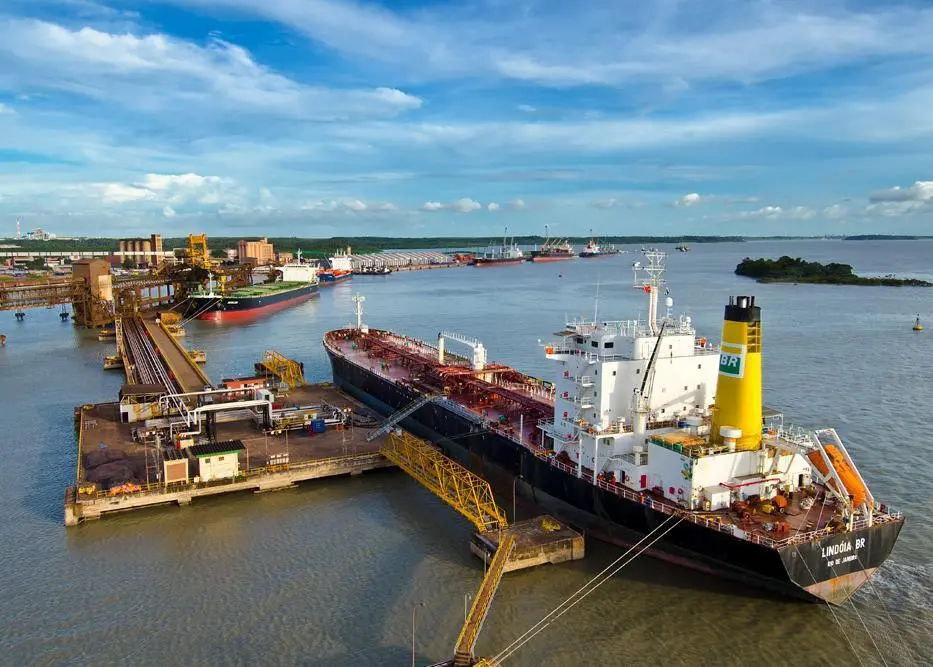
Cutting berth waiting times in half, doubling container volumes and tripling overall tonnes handled, Itaqui has cemented its position as one of Brazil’s most important cargo handling hubs.
Average waiting times for berths reduced from 89 hours to 48 hours from 2013 to 2014, while total throughput jumped from 5.7m tonnes in 2012, to 15.3m tonnes in 2013 and this year is on target for 17m tonnes.
But 2014’s 17m tonnes target is just a drop in the ocean when it comes to longer term goals: the port is working towards 150m tonnes per year by 2035. “We have to move forward. We are currently the 5th largest public port in Brazil, but I would like us to be the fourth and then third within the next three years,” says Itaqui’s Empresa Maranhense de Administração Portuária’s (EMAP) Luiz Carlos Fossati.
Rising container capacity – up from 10,000 teu in 2013 to 20,000 teu in 2014 – will support that goal. If things keep moving in that direction, Mr Fossati expects that the port will need a dedicated container terminal by 2019.
In fact, there are a number of sizable projects already in the pipeline. In December 2012, the federal government invested R170m for the recovery of two berths which will increase oil capacity by 40%. Private company Tegram has also invested R600m in a grain terminal for soya beans with the first warehouse starting operations in July. And in March the port started to move pulp, a new cargo for it.
On the oil side, Petrobras has a development project where it is keen to use Itaqui to move oil products. “Initially, they thought they would have their own terminal but to save costs they are going to do it with us,” explains Mr Fossati. “It may take a bit longer, but it will come; I have no doubt of that.”
As soya exports and fertiliser imports increase, construction of berths 98 & 99 is planned and a dedicated fertiliser facility is under consideration, potentially within four to five years. “As our throughput is increasing, our storage capacity is decreasing so we have already applied for and obtained the environmental permits needed to infill to allow us to create more storage.”
Outside of the port gate, the government is doubling the size of access road, a project which will be finished by 2015. The port is also connected to the north-south rail road and further roads are under construction.
Access rights
Situated in the north of Brazil, Itaqui belongs to the federal government who awarded a concession to EMAP to manage it. Mr Fossati describes it as a “public port with the rights and autonomy of a private company”.
“We see the port as a pillar of social and economic development and as a results-orientated organisation we have goals and incentives and we spend money on training.”
Profits are being ploughed back in the port, with R120m-R150m already spent on improvements and expansion. Last year R1.2m was spent on training alone.
“Two years ago, we looked at the priorities of our customers to set our agenda to make ourselves more efficient and effective going forward. From this we created our strategic plan.
“However,” he concedes, “planning alone does not solve anything; you have to be able to execute that plan if you want to be competitive and make the difference.”
In terms of the environment, the operator is working on equipment that injects air into the fuel tank to keep it pressurised and reduce fuel use.
“We put a lot of effort into environmental and health and safety,” says Mr Fossati. “We want to be the number 1 in Brazil for the environment and we have a good safety record and people dedicated to reducing incidents.”
The port is also working on the technology side and last year saved R1m alone by simply removing some of the paper trail. And while waiting times have been slashed, Mr Fossati wants to further improve on this. “More automation will help to reduce this,” he says. “Automation is the key, otherwise you lose competitiveness.”
Related Articles
 CONTAINER & CARGO HANDLING
 CONTAINER & CARGO HANDLING
 BULK HANDLING