![PortStrategy[GreenPort]](https://www.portstrategy.com/wp-content/uploads/2026/09/PortStrategyGreenPort.svg)






Repairing past neglect
Shifting port responsibilities have opened up fresh opportunities for equipment maintenance, as Alex Hughes discovers
The all-important lifecycle costs of equipment can be directly impacted by the amount of time and money a terminal is prepared to put aside for maintenance provision. But who does this work best – the terminal’s own engineers or outside specialist contractors? It’s a debate that continues to rage in the industry.
In France, the debate is of particular interest now that radical changes are taking place within the structures of most ports. Previously, the port authority owned and operated the quay cranes, leaving private stevedoring companies to manage all other activities. This dichotomy effectively meant that potentially more dynamic private operators could often be stymied in their approach to improving terminal productivity, given that the interface between the terminal and the vessel was in the hands of an effective monopoly provider, which had little real incentive to operate at maximum efficiency.
That has now ended, with port authorities all over the country ceding equipment and quayside operations to new companies, many of which were put together by existing stevedoring groups, which now offer shipping lines a complete package of services. The hope and expectation is that this will reduce costs as well as boosting efficiency.
In the Port of Marseilles, two operators are now providing services in Fos, while the former short sea stevedoring company, Intramar, has been rebranded as Med-Europe Terminal (MET) and is responsible for container handling on routes in and around the Mediterranean from its base in Marseilles old port.
Prior to the organisational revamp, Intramar did lose several shipping line clients. Africa Container Line, went bankrupt; MSC and Turkon went to Fos; and Medcar to Sète. In part, they were frustrated by a number of strikes sweeping the entire ports industry in France, which MET management could do little about. However, senior managers also acknowledge that they have to do something about the overall image of the terminal, which they concede must become more efficient.
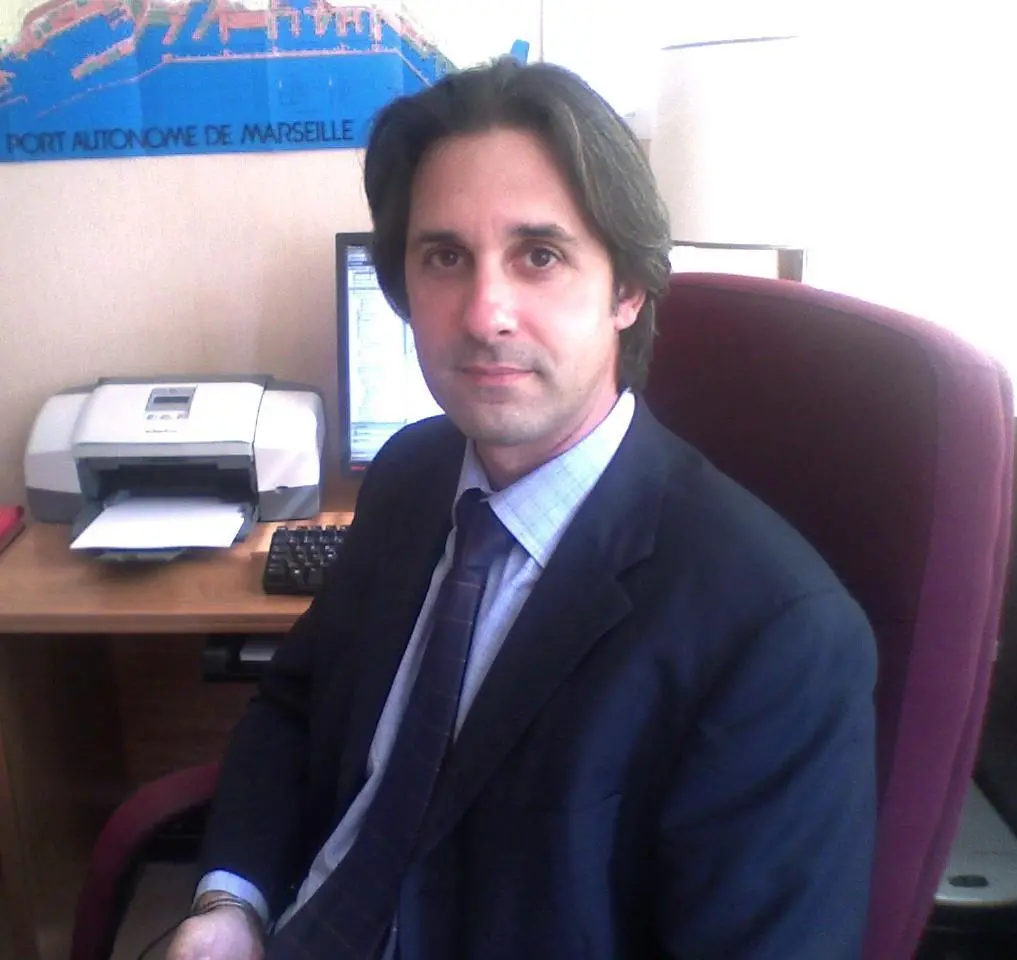
Luc Bernardini, the terminal’s technical director and purchasing manager, notes that improved maintenance is going to play a part in this revamp.
“Many changes are to be introduced in the maintenance of equipment,” he says.
Now that MET is in sole charge of everything, equipment must be maintained in line with the best industrial practices, he stresses. Sixty percent of the terminal’s current staff were recruited from a variety of different companies, bringing with them different skills in the expectation that this will help to change the culture inherent in the terminal.
“Our purchasing process is simpler, more reactive and often more economic than was the case under the previous government contracts,” says Mr Bernardini .
The terminal has four quayside gantry cranes, all of which were in good working order, although one of the four is currently undergoing a major overhaul and refurbishment courtesy of TEREX.
“In respect of general equipment maintenance, I’m not sure that this was always given priority when undertaken by the port authority; nor was it done especially efficiently. Now that it is our responsibility, we insist on preventive maintenance being carried out. This has resulted in us passing from a 4% break down KPI in June 2011 to less than 1% in December 2011,” says Mr Bernardini.
Most maintenance is kept in house, although outside contractors are brought in for very specific jobs, such as overhauling the structure of a crane, which has to meet certain statutory requirements.
“For the moment, we are not analysing the possibility of bringing in third party providers to either reduce costs or improve maintenance provision. If we do outsource, it’s not a question of reducing costs, but rather because a particular contractor will have a certain skill that we value.”
Asked whether specialist, third party maintenance providers might be able to generally offer such as service cheaper than the terminal could do it itself, Mr Bernardini is adamant: no, they couldn’t. Only in certain areas are outside companies price competitive, he argues.
“At the beginning, we tried working with big maintenance companies such as CEGELEC and SNEF, both of which have bases in the Marseilles area. However, quay cranes are very specific pieces of equipment, even if they do incorporate classic technologies, such as electric motors, hydraulic and mechanical elements and PLCs, putting them outside the comfort zone of some maintenance providers. In the end, because we are familiar with the technology, it made sense maintaining them ourselves,” he says.
Nevertheless, if an electrical motor needs repairing, MET engineers won’t have either the tools or the know-how to do this, so it will automatically be sent to a specialist. Brakes are another area identified by Mr Bernardini where overhaul and repair are best done by the supplier.
As to the thorny question of whether a loss of traffic might result in less maintenance being undertaken on terminal equipment, he says that, in part, maintenance is proportional to the length of operations anyway.
“But we took over responsibility for the entire terminal as of June 2011. Since then, there has been a lot to do and for the last six months we have been striving to improve MET’s overall service to its customers. Clearly, that has included providing the best possible maintenance in order to keep as much equipment in operation as we possibly can to ensure optimum efficiency.”
Related Articles
 CONTAINER & CARGO HANDLING
 CONTAINER & CARGO HANDLING
 BULK HANDLING