![PortStrategy[GreenPort]](https://www.portstrategy.com/wp-content/uploads/2026/09/PortStrategyGreenPort.svg)





Ro-ro row ramifications
OSCs Dean Davison asks how ro-ro sector upheavals will impact Eastern European trade
The Egyptian government’s decision not to renew an agreement with Turkey from April 2015 for Turkish ro-ro goods moving to Egypt will impact a total route estimated to be worth around $4.2bn, according to the Egyptian-Turkish Business Council. Of this total, Turkish exports to Egypt are a dominant $3.9bn.
The council has also publicly stated that there are substantial Turkish investments in Egypt that could be impacted, especially in the garment industry where 300 factories and companies employ 54,000 Egyptian workers. To date, local Egyptian press sources have confirmed that only three Turkish companies have suspended operations, although without a feasible longer-term routing alternative it is reasonable to expect more will close.
In response to the decision of the Egyptian government, Turkey is currently subsidising use of the Suez Canal to allow ro-ro trade to continue. “In order to prevent exports from halting and to enable access to those [Middle Eastern] markets, we will use the Suez Canal. We will give the necessary [financial] support,” Turkish economy minister Zafer Çağlayan told Turkish daily newspaper, Hürriyet.
However, this is a short term option; the ultimate aim of the Turkish government is to preserve Egyptian trade links, as Fatih Şener, executive board chairman of the Istanbul-based International Transporters Association noted. “The government wants to keep trade with Egypt going and according to the current scheme, 10% of goods carried stay in the country. When the Suez Canal will be used, ships won’t call at Egyptian ports,” he said.
In fact the cancelling of the ro-ro agreement might not significantly impact specialist ro-ro operators: Turkish foreign ministry spokesperson, Tanju Bilgic, claimed that the current Turkish agreements with Egypt “only held a small place in Turkey’s trade”.
Partner value
There is some truth in this statement, when looking at the leading import and export partners for Turkey in terms of value of current trade per annum. The leading trading partners for Turkish imports are Russia ($25.1bn), China ($24.7bn) and Germany ($24.2), with trade from Asia growing rapidly. For exports, the dominance of EU countries is reflected by four of the top six being Germany ($13.7bn), UK ($8.8bn), Russia ($7bn) and France ($6.4bn) and as already noted cars and vehicles are an integral part of this export trade.
Nevertheless, the cancelling of the ro-ro trade deal with Egypt comes at a time when there has been renewed hope for greater stability in the Turkish economy. To put the economic development of country, and the backdrop faced by ro-ro operators into perspective, it is important to better understand how the economy itself has developed in recent years.
Reforms in the 1980s to create a market-based model saw high public sector deficits, high inflation rates and high growth volatility. Then, a weak banking sector in the 1990s, major economic and financial problems in 2001 – involving rapid inflation – and a crisis for the value of the Turkish Lira before the New Turkish Lira came in 2005 prove that Turkey is a country of economic volatility. This has been further impacted by the 2009 flobal financial crisis.
EU boost
It is widely accepted that Turkey’s potential European Union accession could see significant increases in trade volumes for Turkey, covering all forms of cargo movement. In fact, ro-ro vehicle activity is already a prime example of the country’s trade potential with the EU where trade barriers are more flexible.
The customs agreement signed between Turkey and the EU in 1995, allows customs free export to EU countries. Currently some 70% of the total automotive production of Turkey is exported to an EU country, with the majority of the 200 foreign manufacturers’ operations in Turkey having strong EU country links.
A key established routing that will be impacted involves ro-ro vessels with larger-volume transportation vehicles departing from Iskenderun and sailing to Port Said before driving 180 km cross country to Egypt’s southern shore to be reloaded on to a second ro-ro service and carried to their final destination in the Middle East in less than four days. The route also allowed access to African markets.
On this basis, the cancellation of the ro-ro trade deal with Egypt means existing and traditional European and Mediterranean markets will remain the primary focus.
Business as usual
In fact, for two of the major operators serving Turkey, UN Ro Ro and the Grimaldi Group, it is expected to be business as usual. UN Ro-Ro utilises a fleet of 12 vessels through four key ports, linking Istanbul and Mersin with Mediterranean locations of Trieste and Toulon, with some interest in adjacent markets. As chief executive Sedat Gumusoglu has previously stated. “Europe is our core target market, but we are also looking to expand service into strategically and logistically close countries.”
For its part, the Grimaldi Group operates its dedicated Euro-Med Network linking Turkey with a wide-range of locations throughout northern Europe and the Mediterranean, using 35 ships calling to 40 different ports. Interestingly, this operator has also commenced a new Mediterranean service to/from Baltimore in the US and Halifax in Canada to support the movement of Fiat Chrysler cars from Italy to North America. This schedule is also calling at Gemlik in Turkey and therefore provides Turkey with a direct ro-ro connection to the North American East Coast and also Bar (Montenegro), Civitavecchia (Italy) and Antwerp (Belgium).
Clearly, ro-ro shipping activity in and out of Turkey remains an integral part of the country’s trade. Short term, the Turkish-Egyptian ro-ro trade deal cancellation can be replaced by subsidised use of the Suez Canal and continued strong trade demand with the EU will underpin the activities of the specialist operators, while car-carrying shipping lines will also continue to facilitate Turkey’s important role in vehicle exports.
However, a long term solution for Turkish trade to access Egypt and, moving forward, higher-growth Middle East markets and the potential offered by Africa must be found. It is imperative that a feasible routing is offered, even if these are not the largest trades to Turkey.
Dean Davison is principal consultant for Ocean Shipping Consultants, a company of Royal HaskoningDHV.
Kicking out cars in favour of containers
In terms of vehicle ro-ro potential, Turkey remains a key location for operators in the industry. Currently, Turkish-based manufacturers export around 475,000 passenger cars per annum and over 350,000 light commercial vehicles and also some limited bus and truck units.
By way of comparison around 520,000 passenger cars and 90,000 light commercial vehicles make up the domestic market. As a result, there is a growing ro-ro market to be served, making Turkey an integral car location along with Germany, the UK, Benelux region and Spain.
Yet despite this obvious demand, there are noted issued at several key ports. In addition to space being at a premium, the supporting vehicle-handling and support services are limited and a need for investment in IT has been mooted.
The Marmara region offers a number of key ports in strategic locations, such as Derince and Yenikoy which are located on the north-east coast near Istanbul. This is an area that is home to a number of passenger and commercial vehicle manufacturers and where investment continues, such as the relatively recent opening of a terminal for VW imports at the port of Efesan to complement existing Fiat imports.
At more than 500,000 units per annum the port of Derince continues to handle more than double the volumes of any other facility in the country and major vehicle manufacturers shipping include Toyota, Honda and Hyundai.
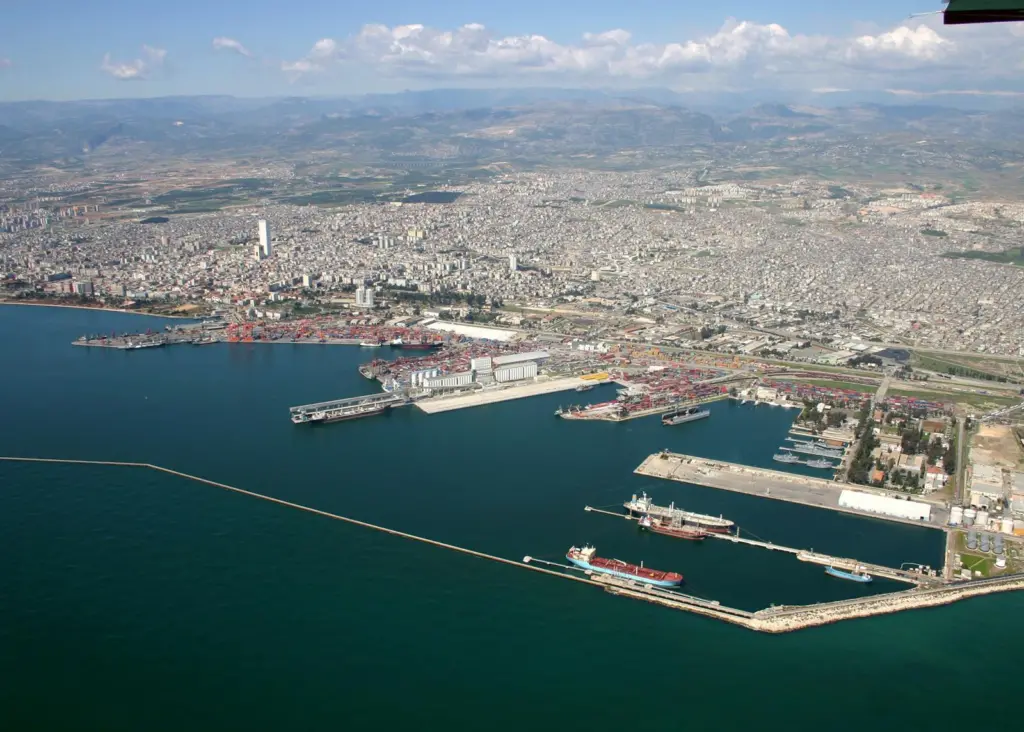
However, it is at Mersin and Iskenderun where operating issues have been noted with Wallenius Wilhelmsen Logistics reporting in 2014 that these ports had capacity issues. The company stated there was port congestion because the operations were placing a “greater emphasis on containers” compared with the focus of other ro-ro facilities in the country.
Therein remains the potential issue for ro-ro operators serving Turkey. In addition to recent economic volatility, the focus by ports towards container operations could impact operations of the more land-intensive and specialist vehicle and ro-ro trades. It was a comment further noted by WWL when it noted improvements in the past two to three years at Derince leading to fewer operating delays because the port’s “main cargo is cars”.
Related Articles
 CONTAINER & CARGO HANDLING
 CONTAINER & CARGO HANDLING
 BULK HANDLING