![PortStrategy[GreenPort]](https://www.portstrategy.com/wp-content/uploads/2026/09/PortStrategyGreenPort.svg)






Russian connections
Russias sights are on plans for $13.3bn of port investment by 2012. Since the downturn, Russias dependence on energy exports has increased, (20% of its coal goes abroad), so its ports are a necessary part of the supply chain.
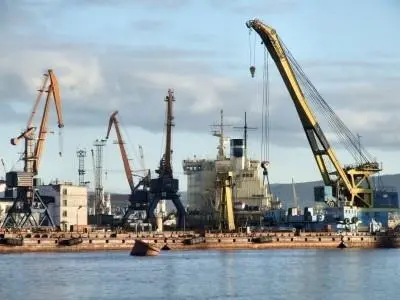
However, only one quarter of the investment is to come from the government, the rest from a state-interest sell off. These plans include the port of Murmansk, the region’s biggest coal facility.
Currently, the Murmansk authority and exporter Kuzbassrazrezugol have joint plans to build a new coal terminal on the western shore of the Gulf of Kola, opposite the existing terminal on the eastern bank. This will be capable of handling 12 to 18mta, prospectively pushing Murmansk’s capacity up to 30 mta. However, the port director has said that overall cost hinges on the railway connections and government investment – a traditional problem for Russia who suffers from a state-owned rail monopoly.
There are other issues in the area. Alexander Ignatov of Ignatov & Company says that there is an imbalance between western and eastern coal handling, with the west suffering from overcapacity while the east is stretched even more by Asia’s needs and can’t guarantee sufficient loading to coal miners.
Mr Ignatov also points out that after SUEK launched its Muchka terminal in Vanino, Mechel declared it would launch a new terminal in Vanino, and SibUgleMet plans to launch a terminal in Vladivostok area – all of which may well find themselves in competition with each other at some point.
Further, Russia’s pervasive problem is a bottleneck where port meets rail; Russian Railways (RZD) has its own plans for rail network development but “such plans do not always fit the plans of seaport developers”, says Mr Ignatov. He adds that most of the logistic problems come about because though the seaports are ready to process more coal, RZD either has no rail cars, or its railway passes to seaports are overloaded.
Mr Ignatov goes on to say that though “the investors may finance seaports – they can’t finance rails leading to these seaports as RZD still holds the monopoly”.
Related Articles
 CONTAINER & CARGO HANDLING
 CONTAINER & CARGO HANDLING
 BULK HANDLING