![PortStrategy[GreenPort]](https://www.portstrategy.com/wp-content/uploads/2026/09/PortStrategyGreenPort.svg)





Setting Saudi standards
The Red Sea Gateway Terminals has an eye for efficiency improvements, finds Carly Fields
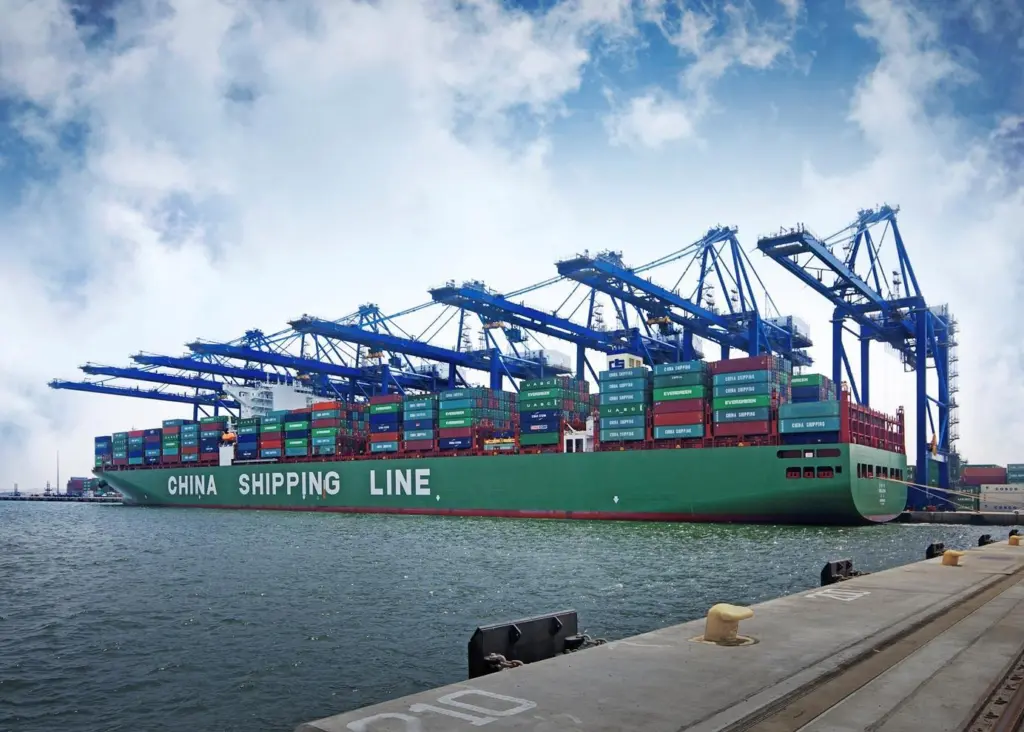
Saudi Arabia has hit a rich seam of port development as it strives to meet the import needs of its growing population. On the Red Sea coast, international port operators DP World and Gulftainer vie for business in Jeddah International Port while keeping a weather eye on the success of the government funded King Abdullah economic city and associated port 180 km to the north of Jeddah.
In this competitive environment, another operator has been steadily making its own mark in Jeddah Islamic Port preferring a concentration on productivity rather than constant comparison with the ‘neighbours’.
Constructed under a build, operate and transfer agreement with the Saudi Sea Port Authority, the Red Sea Gateway Terminal is a Saudi-Malaysia partnership that started operations in 2009.
Since then throughput has steadily grown from 500,000 teu in its first full year of operation to 1.4m teu in 2013. This year throughput is expected to creep up to 1.5m teu and RSGT plans to boost efficiency and current capacity of 1.8m teu with the addition of four rubber-tyred gantry cranes and one ship-to-shore crane.
“We have a dedicated approach channel and 24 outreach cranes. With our current handling rate at the quay and the berth we have earned the right to serve these ships,” chief operating officer Soren Hansen tells Port Strategy. “We can go out with credibility to the shipping lines and say here’s what we can do.
“We’re part of setting the standard of port development in Saudi Arabia. We’ve had a very strong start up base and we believe over the lifetime of the investment that we will continue to deliver an attractive investment for our shareholders. “
Striking out
RSGT head of business development and marketing Jang Kwan Young explains that everything on the terminal is a first for Jeddah port. “We are very proud of these initiatives. We have two mobile x-ray scanners so we provide faster customs inspections; all import containers are inspected in Saudi so we needed a very sophisticated process.”
He adds that while RSGT is the only terminal that can handle the 18,000 teu ships in Jeddah, it is looking to improve productivity further. “Crane productivity is above 30 moves per hour which is the highest among those in Jeddah port. Now we are in a different stage of operations where we are focusing on efficiency and the quality of service and not only volume.”
Mr Hansen explains that there are, in his view, a number of different elements that impact RSGT’s productivity.
“We have invested time in testing our dual cycling. Dual cycling is heavily dependent on our customers and the way in which they load. So, the real quantum leap that we achieved in 2013 is that we engaged far more actively with our customers, the shipping lines.”
Over the fourth quarter of 2013 RSGT recorded a 10% increase on crane productivity from around 30 moves per hour consistently to around 32-34 on average. “That of course impacts the berth productivity,” says Mr Hansen.
“We consider our process to be one of our strongest assets. Everyone can buy a new crane or a new tandem lift but what sets us apart is our process and the reliability of our process.”
Growth plan
RSGT routinely monitors its handling process and all deviations and is in the process of setting up a new process engineering team. The concentration on process will ultimately help to further optimise operations.
There are also additional investments planned to expand current facilities. “We would like to make some more investments to serve three ‘mega size’ ships at the same time first,” says Mr Hansen. “The size of our feeder berth inhibits our ability to cope with the trends of upsizing ships and cascading bigger sizes. We also need to right size our fleet of yard equipment. We do not yet have efficient yard equipment to reach 1.8m teu.”
RSGT has already placed an order for additional yard equipment and is considering the award of the tender for the civil contract on the extension of the feeder berth.
While the extension is designed to boost capacity, Mr Hansen explains that it is not all about size. “Capacity in my view is a moving target and hugely dependent on dwell time. Because of inspections we have a high dwell time of 9-11 days. If we could get the dwell time right we could deliver 1.8m teu.”
Further throughput growth is certainly anticipated. Saudi Arabia is one of the fastest growing economies with more than 5% growth in GDP expected for 2013. Local gateway traffic needs to keep up with this rise.
Love thy neighbour
RSGT doesn’t flinch at the hardy competition vying for this increased traffic within Jeddah port: DP World operates Jeddah’s South Container Terminal and Gulftainer operates its North Container Terminal.
A common user channel and restricted draft in comparison with RSGT’s dedicated 16.5 metre channel gives RSGT, Mr Hansen believes, the competitive edge.
“Ownership is one thing but it doesn’t change the physical dimensions. Just because a global terminal operator is in [Jeddah] doesn’t make the terminal more or less competitive. From my experience, shipping lines do not choose an operator based on the brand name or global presence, but the fact that there are two big operators in there certainly sharpens the focus of what we as operators have to offer.”
Indeed, making its own mark remains the backbone of RSGT’s business plan. “We’re refining standards,” says Mr Hansen. “The competitive landscape is changing, and our customers are changing and realigning themselves. We’re still a very young company but we are delivering operational standards that are perhaps the best in the region.
“We understand that we need to continue to invest in ourselves to make sure that we can earn the right to serve the best possible customers and we are here for the long run, for at least the next 30 years.”
Related Articles
 CONTAINER & CARGO HANDLING
 CONTAINER & CARGO HANDLING
 BULK HANDLING