![PortStrategy[GreenPort]](https://www.portstrategy.com/wp-content/uploads/2026/09/PortStrategyGreenPort.svg)






Silver lining
Spains doldrums have given Valencia reasons to be cheerful on exports. Alex Hughes reports
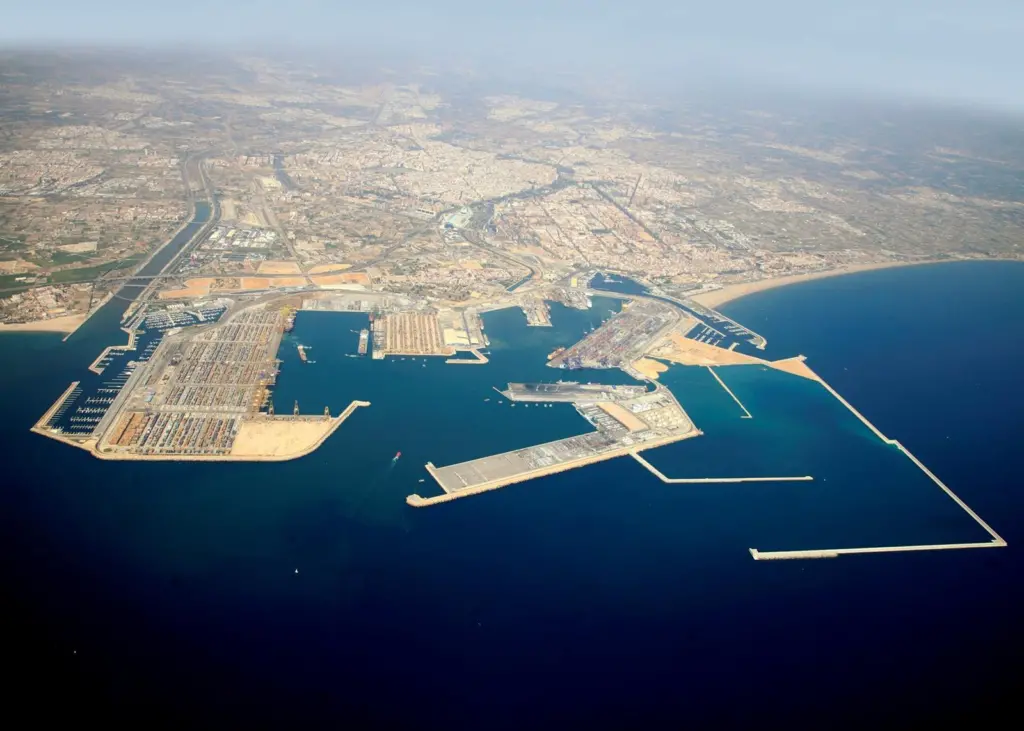
It may be semantics to some but to Valencia a truly mixed cargo portfolio allows it to claim a top slot in Spainish port ranking, ahead of rival Algeciras.
In 2012, the Port of Valencia handled around 66m tons of cargo, an increase of 0.65% over 2011. While Algeciras’ overall throughput – at 88m tons – was higher, 22m tons of this was in the form of liquid bulk, leaving Valencia to claim the position as the country’s leading mixed traffic port. For the current year, the forecast is to reach an overall figure of 69m tons.
Commenting on last year’s performance, Juan Antonio Delgado, deputy director for strategic planning at the port authority (APV), notes that figures are “indicative of a sluggish domestic economy”. For 2012, liquid bulk is expected to increase slightly to 4.5m tons, due to the capture of some transhipped natural gas; dry bulk will continue to be constrained by a weakened construction sector; while box traffic is expected to increase slightly to 4.6m teu and the number of passengers on cruise vessels to go up marginally to 500,000.
Valencia handles a variety of dry bulk commodities, including cement, clinker, cereals, phosphate, potash and fertiliser, although traffic fell 31% in 2012 to 1.4m tons. Nevertheless, at the nearby port of Sagunto, which is also administered by APV, there was a more than 100% rise to nearly 800,000 tons. Mr Delgado says that both ports have contrasting facilities and that traffic in certain segments is growing.
Breakbulk traffic also remains relatively healthy, with both Valencia (1.1%) and Sagunto (3.18%) posting increases.
Unintended consequences
“In Spain, as a consequence of the weakness in the construction sector, and therefore in overall domestic consumption, all types of products are being exported. This is particularly true of bulk solids, leaving us with the potential to capture more of this export traffic, either in big bags or as more traditional bulk. As long as the Spanish economy remains in the doldrums, companies using Valencia will continue to look for markets abroad, especially in North Africa,” says Mr Delgado.
Sagunto and Valencia are also important centres for new vehicles traffic. Last year, for example, Sagunto registered a 110% increase, handling nearly 78,000 units, while Valencia posted a 21% decrease, although still accounted for 265,000 units.
“APV is expecting to end 2013 with a figure of around 450,000 units, compared to 413,000 in 2012, as several manufacturers, particularly Toyota, commit to Sagunto. We are also expecting the Ford plant at to produce more units for export.”
As for box traffic, this grew by 3.29% to 4.5m teu last year, consolidating Valencia as Spain’s leading container port. According to Mr Delgado: “This dominant position has come about because Valencia has a good supply chain able to serve the companies situated in its hinterland, whilst also having both infrastructure and competitive costs to attract transit cargo. As long as we can do this, we won’t see our current position threatened.”
Nowadays, around 50% of total box traffic is transhipment, although both this market segment and import-export boxes are being targeted as justification for having built the new northern extension of the port, where one or two new box terminals will be built.
“It is important to maintain a good mix of the two to allow us to offer competitive prices for transit traffic,” he says.
Money men
All new infrastructure has been financed by a combination of external and internal investment, with the Official Credit Institute (ICO), in Spain, and the European Investment Bank both offering long terms loans at very competitive rates.
“Spanish law requires the ports sector to generate a minimum return on investment of 2.5%, which clearly APV has to take in account when assessing its projects,” says Mr Delgado.
Valencia is one of Spain’s few ports that has rail connections to all its terminals, several of them electrified. This investment has been particularly useful given the deregulation of rail freight in Spain, which has seen new operators, such as LOGITREN and CONTINENTAL, start operations at the port.
“We believe that, in the medium term, there will be a gradual shift of consignments from road to rail,” says Mr Delgado, who adds that around 25% of the freight currently moved between Valencia and Madrid goes by rail, which highlights the importance of the investment made in the intermodal sector by APV.
Related Articles
 CONTAINER & CARGO HANDLING
 CONTAINER & CARGO HANDLING
 BULK HANDLING