![PortStrategy[GreenPort]](https://www.portstrategy.com/wp-content/uploads/2026/09/PortStrategyGreenPort.svg)






The heart of the matter
The demands of mega-container ships are heralding a “New Era” of challenge for box hub ports.
For container terminal managers, struggling with the mismatch of long planning lead times for port infrastructure and short lead times for the introduction of bigger ships, it seems the gauntlet of further challenge has been thrown down.
The prospect of global port container throughput, currently around 600m teu, doubling within 15 years, and the aggressive investment on the part of shipping lines in vessels of 10,000 teu capacity and over, means port and terminal operations face having to provide berth space, improved cranes with longer reach and also juggle the needs of mainline vessels and feeders.
The size of that pending challenge has been described by APM Terminals vice president Christian Moller Laursen as the advent of a “new era in ports”.
In a keynote speech to the recent Port Finance International Conference in London, Mr Laursen said significantly-larger container volumes will have to be handled from individual vessels, plus cargoes will have to be moved off terminal quickly in time for the next scheduled vessel call.
“The port industry does not have the luxury of being able to react to changes in the market environment; we must be able to anticipate and be able to deliver the terminal capacity and productivity that our customers will require,” said Mr Laursen. “That’s what the New Era is all about.”
From the viewpoint of a port customer, Maersk Line is one of the main reasons why hub ports are having to move into the new era, with its Triple E 18,000-teu vessels coming on stream in the next two years.
The line’s vice president, Centre Operations, Søren Toft says the company wants to see a quantum leap in productivity at the berth and in handling the vessel from pilot to pilot with the maximum speed, with due regard for safety.
Ports that rise to the challenges suggested by Mr Laursen will face not just operational issues but also major capital expenditure, which will have its own set of restraints. In November, delegates at the Annual Med Freight Conference heard that insurance underwriters are preparing for a rise in the demand for construction risk cover. The probability is that that banks and financiers will require significant guarantees from ports before agreeing to extend cash.
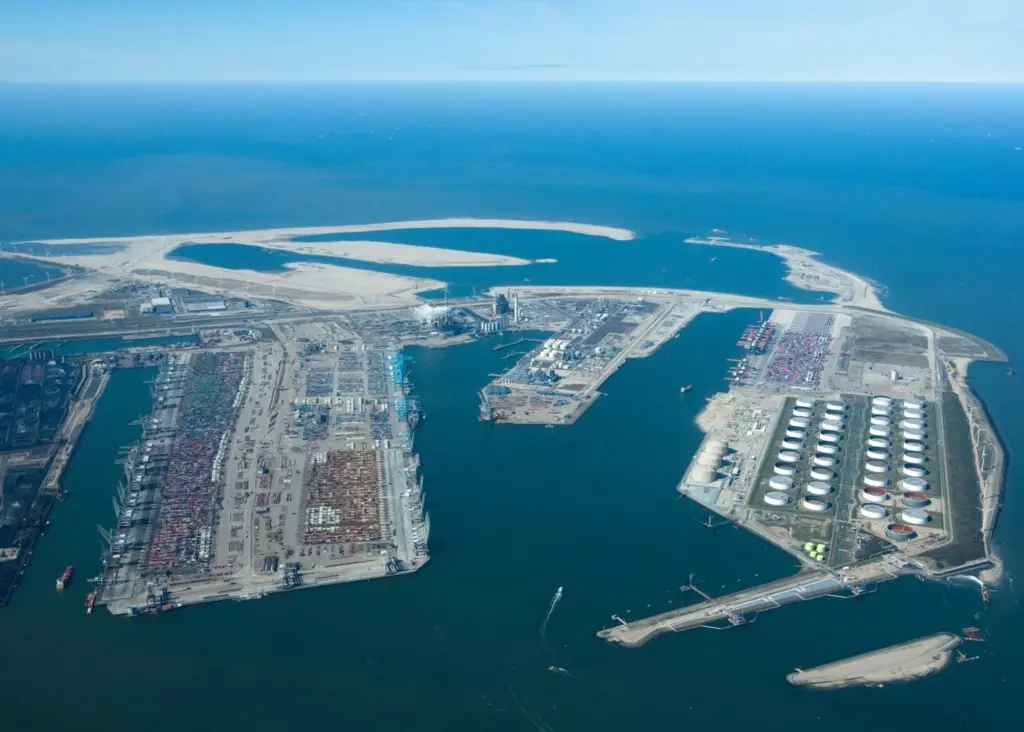
An example of the growth in hubbing is the Port of Rotterdam, which is planning for increasing transhipment volumes and an expectation that vessel size will soon pass 20,000 teu.
Further factors in Rotterdam’s expansion are the growth of the Baltic market and the growth of UK feeders where transhipment for the Midlands and the North will grow instead of being serviced via southern British ports.
In the first nine months of 2011, Rotterdam’s container throughput increased, both incoming (+13%) and outgoing (+8%).
The planning response of the port includes Maasvlakte 2, the port extension into the North Sea where hundreds of hectares of land and terminal space will be made available for container vessels up to 24,000 teu. Maasvlakte 2 represents a 20% increase in the port footprint.
Asked what are the most important requirements of a successful hub, a Rotterdam spokesperson told Port Strategy that sufficient berthing space and cranes are essential — “both dedicated to guarantee slots, fast handling, reasonable tariffs, low bunker costs and fast refuelling”.
Emphasis is put on the reference to “reasonable tariffs” as opposed to purely “hard” infrastructure. The port has announced that its dues will, by and large, stay the same as this year, including retention of a 3% discount that will apply to most cargo.
For the transfer of a transhipment container, the deep-sea shipping company receives a discount of €1 ($1.27) per teu and the feeder shipping company a discount of €1.50 ($1.90). This amounts to an average discount of 12% on the net port dues on transhipment containers for deep-sea, and 32% on the net port dues on transhipment containers for feeders.
The agreement is worked out in consultation with customers and Port Authority chief executive Hans Smits said the discounts were to stimulate volumes in a period of economic uncertainty.
Looking ahead, how will hub ports meet these challenges?
From the APM Terminals perspective, it is developing new facilties to handle the largest containerships currently on order, and beyond, including its 4.5m teu annual capacity facility under construction at Maasvlakte II and a terminal concession in Moin, Costa Rica, which is being prepared for the arrival of “post-Panamax” vessels via the widened Panama Canal in 2014.
APMT is also working on its FastNet container terminal concept, which will enable gantry cranes to work adjacent bays of a large container ship, effectively doubling crane productivity.
FastNet minimises space taken up by the crane legs by suspending multiple cranes from horizontal girders raised 50 meters above wharf level. As a result, the cranes are as narrow as a 40ft container and can work adjacent hatches.
However, not all established hub ports have a smooth growth passage ahead. Hamburg, for example, has had its position as a gateway for Baltic cargoes challenged.
Boris Wenzel, chief executive of Polish container terminal operator DCT Gdansk, has called for Polish shippers to use direct calls to Poland instead of going via Hamburg as a transhipment hub.
Adding pressure on Hamburg is the requirement to dredge the River Elbe. The tidal window creates a restriction on operations and the deployment of ever-larger vessels will necessarily bring further restrictions unless the Elbe is deepened.
Another consideration is the restriction on sizes of vessels which can navigate the Kiel Canal, linking Hamburg with the Baltic.
The action of Maersk, in dropping Hamburg from its Far East to Europe service AE-10, in favour of directly servicing the Baltic, was seen as a possible pointer to future trends.
On the other hand, major volumes are necessary to induce direct port calls, so Hamburg retains a strong case as a hub for cargo to further destinations such as Finland or Russia for example. However, the long-term ability of Gdansk to improve its intermodal connections to serve more Baltic destinations will be a significant factor.
And what of the development of new hub ports? Indian maritime consultant Surendra Sharma says the country is well placed to develop a new hub in South Gujarat.
He says that any successful hub has to have a “coverage multiplier effect”, ensuring that multi-port destinations and countries are connected from the hub.
South Gujarat, says Mr Sharma, would appeal as a new development, as opposed to an older port revamping its lay out to accommodate transhipment volumes.
“Revamping of existing ports has its limitations especially when you have available draught of less than 12 metres and require 17 metres to handle the mega-container ships. A quay line of 5km-8km would be required for a global scale hub port which is another limitation with the existing ports.
“Hinterland connectivity is very important for India as a large quantity of cargo is for inland destinations, which requires speedy evacuation from the ports. Increasing volumes also support new capacity development especially when the ports on the west coast have to cover a vast hinterland beyond 1,500km.”
Related Articles
 CONTAINER & CARGO HANDLING
 CONTAINER & CARGO HANDLING
 BULK HANDLING