![PortStrategy[GreenPort]](https://www.portstrategy.com/wp-content/uploads/2026/09/PortStrategyGreenPort.svg)


Coatings battle CO2 and corrosion
Steady Progress is being made in the evolution of sustainable and durable coatings for application on port structures – inffrastructure and equipment
Sector analysis: Greater emphasis on coatings to cut emissions and extend the lifetime of port structures
The importance of coatings for port cargo handling equipment has ramped up, on the back of the need to protect against extreme conditions in marine environments and to reduce CO2 emissions.
Lowering emissions is a huge focus of maritime regulations, and yet steel corrosion is contributing to global CO2. Germany-based corrosion specialist Steelpaint is calling for urgent action on this – warning that inadequate corrosion protection is contributing more to global CO2 emissions than the entire aviation industry.
Steel production remains one of the most carbon-intensive industrial processes. With the maritime industries consuming an estimated 100 million tonnes of steel annually, premature corrosion and subsequent steel renewal work is increasing carbon emissions “dramatically”, says Klaus Müller, Managing Director, Steelpaint. This needs to be addressed through adequate steel protection.
A joint research study carried out by Curtin University and Ohio State University, published in 2022, estimates that 25% of global steel production is lost to corrosion, with replacement and renewal accounting for 4 to 9% of total emissions globally.
Emissions can be reduced by using coatings technology to extend the lifespan of steel structures, leading to a substantial decrease in greenhouse gas emissions. Global CO₂ emissions from steel production could be reduced up to 1.6 gigatons annually.
The company reviews below for coatings suppliers demonstrate a gowing focus on increasing durability and longevity of port structures.
DATA ANALYSIS, DURABILITY, LONGEVITY, EMISSIONS REDUCTION
Hempel: Hempel has launched Avantguard 750 Pro which it says sets new standards for corrosion protection. The company underlines it offers an improved durability significantly reducing CO2 emissions over the lifetime of steel assets. Introduced this year, and building upon Hempel’s patented Avantguard technology, it is designed to exceed the current standards of corrosion resistance and is recommended for structures to achieve corrosion protection beyond 35 years. “We are excited to introduce a product that significantly increases the longevity of steel structures,” says Steen Niemann Madsen, Executive Vice President and Head of Energy and Infrastructure, Hempel. “Globally, steel production generates approximately 2.8 gigatonnes of CO2 annually, accounting for 7-9 per cent of total energy emissions. By improving steel durability, we can help the construction industry address critical environmental and economic challenges.” Designed for new build, repairs and maintenance, including for ports, Avantguard 750 Pro is a zinc-rich, high-solids primer (with solids volume at 76 per cent) and what Hempel claims is the lowest VOC content (244 g/L) available. The Denmark-headquartered company says that the formula cures at temperatures as low as -10°C [14°F] while also providing tolerance to high humidity. In addition, it provides strong crack resistance, minimising the need for rework and repairs.
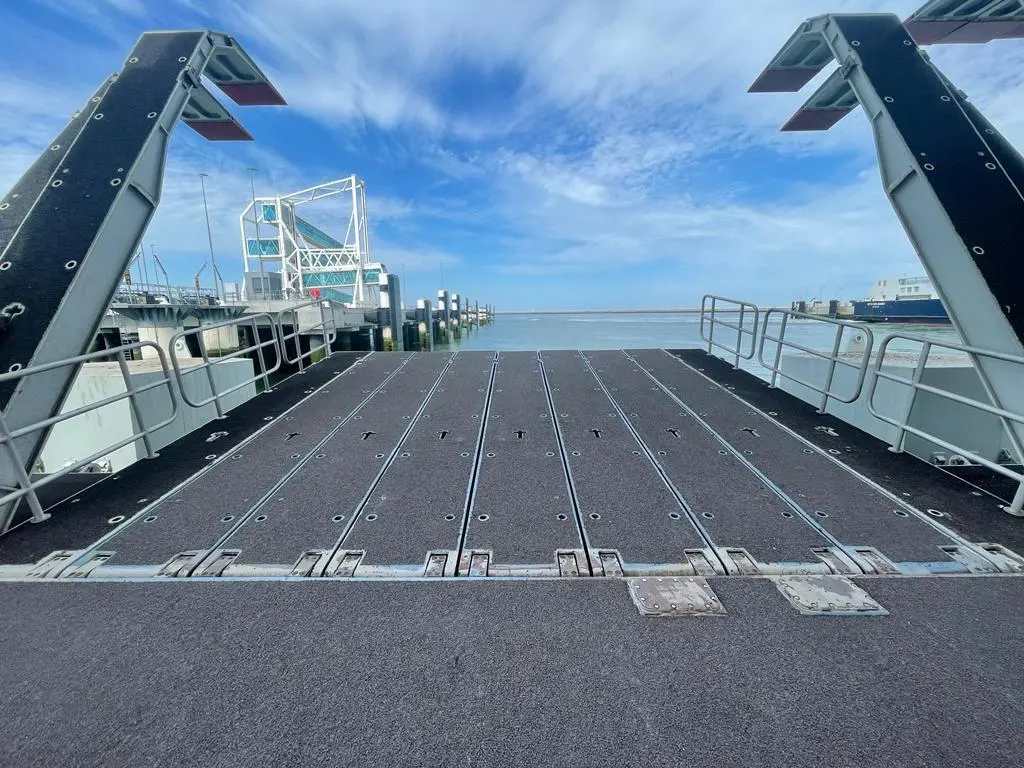
JMS Anti-Skid Solutions: JMS provides anti-skid application systems for all crucial areas across ports, and has recently unveiled a new terminal contract. The UK headquartered company explains that port surfaces become worn over time and underlines that “the risks associated with such wear and tear are highly dangerous. Our team,” it elaborates, “work closely with port facilities to review surfaces to support safe loading and to protect assets over the long-term. When loss of traction, such as skidding or slipping is a threat to health and safety or operations, JMS’ anti-skid systems will provide durability and longevity. The company says that it will provide advanced resin systems that are guaranteed to reduce stopping distances by at least 30%. Recent uptake: JMS carried out a resurfacing project at Calais Port. The project spanned three busy steel linkspans. JMS notes that the mission was threefold: Firstly, to resurface an expansive 4000m² area due to issues associated with the existing anti-skid system. Secondly, the project needed to be executed to ensure that the port’s operations remained uninterrupted. Lastly, JMS “aimed to implement a robust and long-lasting solution, ensuring safety and preventing future operational challenges”. The JMS team applied a combined waterproofing and anti-skid system, choosing the Emery 3-5mm aggregate for its efficacy. JMS sums up: “With the project’s completion, the port now boasts a durable and efficient linkspan surface, poised to serve efficiently for years to come.”
Jotun: This Norwegian company has started using DNV GL’s Veracity platform to combine external and proprietary data to optimise the delivery of its maritime coatings at port. Veracity creates an ecosystem where users can safely share data and link it to other datasets to extract value. In this case Jotun is using the Estimated Time of Arrival (ETA) dataset to ensure it has the right amount of product in the right place. “Veracity is making paint digital. Jotun has recognised that even products that seem as analogue as paint can benefit from digital solutions and this is an example of how Veracity is not simply a platform for data but also a place for collaboration,” Bjørn Tore Markussen, Managing Director of the Veracity platform unit in DNV GL notes. Ships have for some time reported their positions through Automatic Identification System (AIS) transponders but a team from DNV GL have cleaned the data and then developed an algorithm that accurately predicts arrivals at ports. Jotun joined the Veracity pilot program to verify its benefit to the market and it became apparent that an early approximation for vessels future port visits could provide value to Jotun’s supply chain. A more comprehensive understanding of the movements of the global fleet allows Jotun to optimise stock and delivery planning. Jotun offers specific solutions for ports and harbours – its Jotatemp range of heat resistant coatings which are designed to deliver corrosion protection in extreme operational conditions. Tankguard is a range of tank coatings that ensure safe and efficient handling, storage and the transportation of vital products.
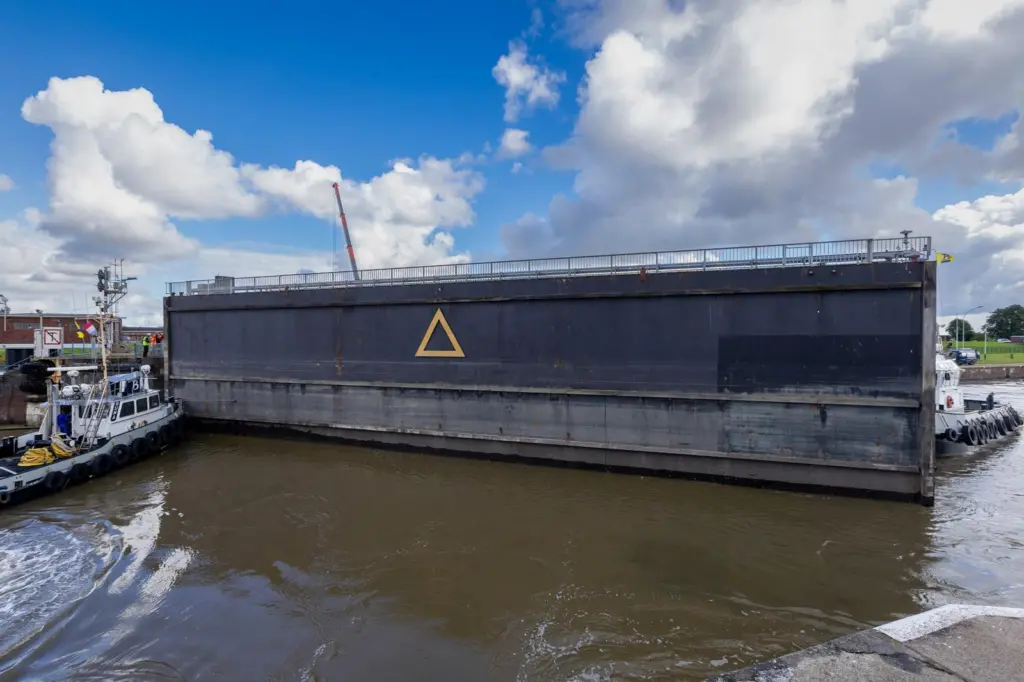
Steelpaint: German container terminals are applying Steelpaint’s corrosion protection system, Stelcatec, to repair existing paintwork on ship-to-shore cranes. Stelcatec, which claims to be the world’s first low-VOC, isocyanate-free polyurethane coating system, is being used to repair damaged original coatings on ZPMC cranes operated at container terminals in Hamburg, Bremerhaven and Wilhelmshaven. “Taking a ship-to-shore crane out of commission costs the terminal money, delaying container loading/unloading operations. The operators wanted a ZPMC-approved one-component system that would obviate mixing errors, reduce material waste, speed up the drying process and reduce the time cranes are out of service,” says Frank Müller, Sales Director, Steel Paint. “With Stelcatec-L, the coating can be applied and cured within a working day,” he underlines. Founded on four years of research and development, Stelcatec is a single-pack moisture-curing paint based on a polyurethane free of Isocyanates. With a very low solvent content, the new coating can be applied by brush, roller or spray in temperatures ranging from -5°C to 50°C and environments where relative humidity is as high as 98%. Operators of terminals in Asia are currently patch testing the Stelcatec technology, with Steelpaint expecting orders for full coat applications to follow. Elsewhere, Lower Saxony Port Authority (Niedersachsen Ports) has awarded Steelpaint with a contract to provide its coating system on Emden’s Great Sea Lock as part of a refurbish and renewal project. Steelpaint will supply a coating system for a surface area of approximately 50,000m2. This includes a 75µm zinc-rich primer coat, forming a sacrificial barrier to shield the underlying steel from the harsh saltwater conditions. On top of this, two to three coats of Steelpaint’s proprietary Stelpant-PU-Combination 300 polyurethane coating will be applied with a 150 µm to 225µm dry film thickness. Some areas will also be coated with an additional UV-resistant semi-gloss topcoat of 80µm. In addition to the Emden lock, Steelpaint is also in discussions with the port authority to provide protective coatings to the Cuxhaven container terminal, which is undergoing expansion. The Kitzingen-based coatings specialist is also involved in the refurbishment of the Hooksiel sluice gate in Wilhelmshaven.
Tech Coatings: A rapidly growing trend when it comes to coatings for port cargo handling equipment is the deployment of ultra-high-pressure water blasting to prepare surfaces for new painting systems. Tech Coatings notes that it is, “cleaner, more environmentally friendly and has good results on taking off old coatings on cranes, passenger walkways, fenders, ro-ro loading platforms and fuel tanks”. The UK based company uses Cherry Pickers and Scissor Lifts to work from the quayside or dockside so that cranes and docking equipment can be prepared and painted in situ, as this causes less disruption and less time out of service. Its Ultra High-Pressure Water Blasting (UHP) runs up to 40,000 psi and uses just water – no abrasive materials or chemicals – making it safer and more cost-effective. It can be used on external or internal areas leaving the steel surface clean and profiled ready for fresh coatings. The company states that it is a “much cleaner process” than grit, sand or abrasive blasting because it only uses freshwater, and so leaves less waste to be disposed of. This keeps disposal costs lower and hence a lower risk of contaminating the site or area.
Related Articles
 GREENPORT CONGRESS
 DECARBONISATION & SHOREPOWER
 PRODUCTS & SERVICES