![PortStrategy[GreenPort]](https://www.portstrategy.com/wp-content/uploads/2026/09/PortStrategyGreenPort.svg)

Green energy powered
Irelands Port of Cork says its now powered by 100% green energy after teaming up with energy giant Energia.
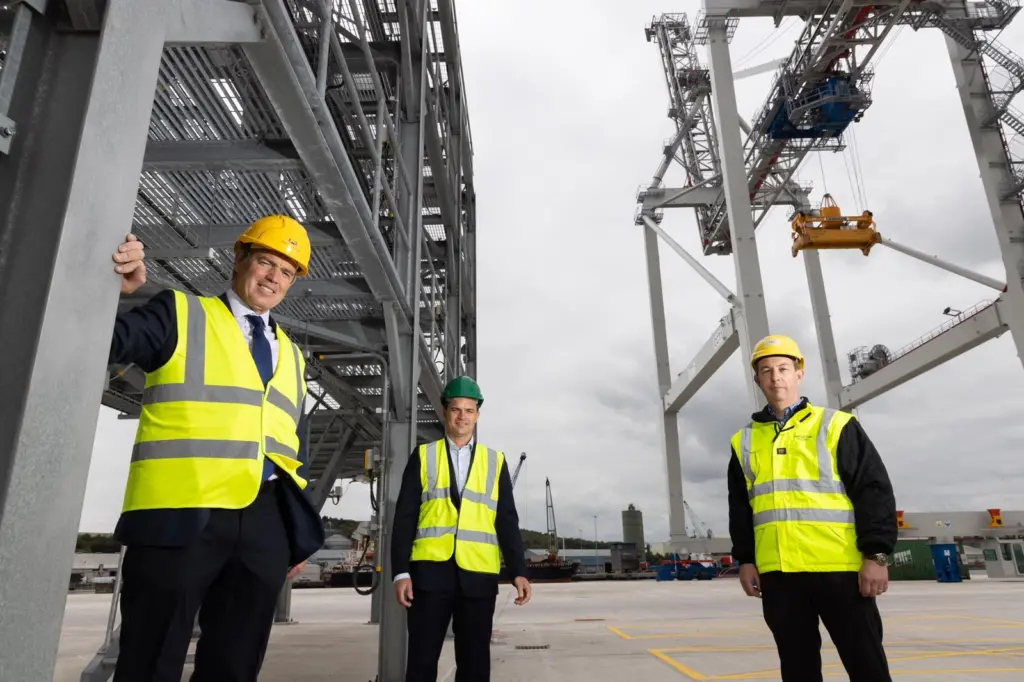
The green electricity will power several facilities at Cork City Quays, Tivoli Container Terminal, Ringaskiddy Deepwater Berth and Ro-Ro berth, Cobh Deepwater Quay and Cork Container Terminal and is due to come online soon.
“The Port of Cork is committed to leading the wider port community through coordinated safety, environmental and energy initiatives, as well as reducing CO2 emissions and respecting the principles of environmental sustainability,” said Henry Kingston, port engineering manager, Port of Cork.
“Our partnership with Energia will see the port using 100% green energy which will positively influence the port’s carbon footprint going forward.’
Energy focus
Mr Kingston said that the agreement with Energia was signed by the port as part of its commitment to lead the wider port community in minimising environmental impacts, reducing CO2 emissions and conserving natural resources.
The Port of Cork is the first port in Ireland to achieve the ISO 50001 standard (2019) certification for its energy management system.
And the port is taking other significant actions that will help it reduce its greenhouse emissions even further in the near future.
The Cork Container Terminal (CCT) development due to open soon at Ringaskiddy has been developed with sustainability in mind. Its infrastructure facilitates a plug-in shore facility for visiting vessels to connect to the onshore electricity supply allow vessels to shut down much of their machinery.
In partnership with the Sustainable Energy Authority of Ireland (SEAI), the port has also implemented an energy action plan which contributed to ‘The National Energy Efficiency Action Plan 2009-2020’, reaching a 33% reduction in energy use over the period.
And this year, the port has expanded its 100% electric vehicle fleet to further reduce GHG emissions.
The Port of Cork is the second largest port in Ireland. Its capacity to carry export goods estimated to value in the region €20 billion and imports to the value of €10 billion, underpin the importance of the port’s contribution to the national economy.
Related Articles
 ALTERNATIVE FUELS GREENPORT
 ENERGY & TECHNOLOGY GREENPORT
 ENERGY & TECHNOLOGY GREENPORT