![PortStrategy[GreenPort]](https://www.portstrategy.com/wp-content/uploads/2026/09/PortStrategyGreenPort.svg)


A wealth of golden opportunities
Intermodal has an important role to play in reducing the environmental impact of freight transport. But a level playing field is needed, writes Peter Wolters deputy secretary-general of the European Intermodal Association
Successful, sustainable and often – by extension -intermodal transport operations are by nature multifaceted. Logistics networks cover wide areas and the degree of involvement of the different players (waterborne, rail, road, air) varies equally widely. Therefore, the recipe for ‘green’ savings consists basically of streamlining individual industrial processes, collaborative partnerships, greater transparency within information flows and, above all, a change of mindset, starting at the base.
Profits arise from consensus, which can often be achieved by the simple expedient of actually listening to what the other partners have to say, and by having the confidence to let them or even your competitors have a glimpse of your own inner workings and you of theirs. Trust is trade. It is as simple as that.
There is ample room for improvement. According to a recent study by the World Economic Forum (Feb 09), an astonishing 24 percent of freight vehicles in the EU run empty, the average load factor of the rest is 57 percent, giving an overall (in)efficiency of just 43 percent. The estimated recoverable loss for EU 27 is €22 billion, i.e., 1.2 percent GDP. Currently, fair conditions to give all modes the same chance to prove their best ‘comodal’ system advantages do not really exist. More polluting modes are exempt from the ETS (Emissions Trading Scheme), enjoy low taxation, while others are exempt from VAT and kerosene duty.
From a hardware perspective, what is missing is successful multimodal EU freight policy as a counterweight to passenger transport. An unbiased policy of internalisation of external costs is somewhere on the shelves in Brussels waiting hopefully to be enforced sometime soon. Furthermore, the availability of terminal infrastructure to enable a shift from congested and expensive modes towards sustainable and reliable modes sometimes falters because of small missing links in the infrastructure chain. Transport policy is infrastructure policy. The latter seems to have been forgotten in this digital and technological era. But, at the end of the day, the carriers have to make things work at grassroots level, using steel, concrete, asphalt or waterways to achieve their goal. Not withstanding the results of the Copenhagen Summit, we are all agreed that substantially lowering carbon reduction is vital. Modern industrial companies have understood this need, conscious that citizens are anxious to ensure that future generations will also be able to enjoy the luxuries of a consumer paradise. Apparently we now have to be patient with the politicians still desperately searching for a replacement for the old cash cows of an ancient fossil era. So how is the modern market reacting? Where are the best practices and who are the frontrunners in finding sustainable yet profitable solutions?
Inland waterway shipping, as the oldest mode of transport, is targeting carbon neutrality by 2030. According to a statement by INE, projects are already in existence such as electric ships, clean fuel cells and using liquefied biogas, all of which can be accelerated. The technology and techniques exist to allow the inland waterways to achieve a 30 percent reduction in carbon emissions today. A fuel performance project in the Netherlands has already achieved these savings thanks to on-board fuel-saving equipment and this can be applied across the entire European fleet. This, in combination with RIS (River Information Services – an intelligent transport system that connects ship-to-shore) means that ship operators can apply optimum cruising speeds and optimum vessel operation in relation to river conditions, as long as navigable waterways are well maintained.
Short-sea shipping also claims to be the transport mode with the lowest environmental and external cost impact – with the exception of certain localised atmospheric emissions (S, SOX, particulates, and to a lesser extent NOX).
However, according to Walter Vassallo, project coordinator Realise (www.realisesss. org), the results of this EU-funded project show major problems of quantification and comparison in relation to assessing and evaluating the impacts of the various surface transport modes. Therefore, three integrative studies (statistics, environmental impact, and multimodal pricing/economic performance assessment across transport modes) have been done within Realise. One important result was the production of an Intermodal Comparative Framework (ICF), including an Excel-based tool that enables measurement of the environmental and cost performances of different transport solutions along key EU transport corridors.
The railway sector committed itself in 2008 to reducing the specific CO2 emissions of trains by 30 percent between 1990 and 2020. According to the CER, the industry is now developing a long-term sustainability strategy until 2030/2050 with ambitious goals for CO2 reduction, including roadmaps on how to fulfill these goals. It acknowledges that the intermodal sector is the fastest growing freight market for rail. For example, in some countries there is considerable potential for rail in the retail and supermarket sectors. Traffic management in the rail industry is provided by the European Rail Traffic Management System (ERTMS) which increases capacity but, by reducing the need to decelerate and accelerate trains, also reduces CO2 emissions.
Other ‘best in class’ are the combined trans-port rail/road operators, a modest but hardworking sustainable mode. They invest in hubs and terminals in truly Pan EU networks from the Rhine Delta to the Alps, from port to hinterland, from China to our western ports. Their quality differs from corridor to corridor, while they depend much on infrastructure managers and railways as traction providers. Recently, the Swiss combined transport operator HUPAC, a true believer in green logistics, invested heavily in a brand new terminal in Antwerp, paving the way for the coming ‘post-crisis’ era, when we will all be crying out for more capacity. Twelve 620m long trains can be handled daily, which corresponds to a loading capacity of 600 road consignments per day. Swiss environmental ‘white’ Alps transport policy is increasingly taken as example for the ‘green’ industrial policymakers in Brussels. But there are more intermodal players (eg, Ambrogio, BLS Cargo, DB Intermodal, Polzug Intermodal, Transfracht International, etc.) and other EIA members with more than 40 years of experience.
The high-speed rail and airline (integrator) industry have apparently come together in a new intermodal air-rail express and parcels business. Germany’s notoriously clogged motorways are especially problematic for express courier businesses, while night flying restrictions in various EU member states limit the option of using airfreight instead. To quote Christian Messerschmidt, logistics manager at UPS (Der Speigel, Feb 2008): “We want nothing more than a reliable German rail system, because we all know that roads are becoming less reliable.” The medium to long term aim is to operate 20 high-speed trains – at speeds of 300 kph equipped with nine simple wagons designed to carry standard airfreight containers.
Air sector transport represents only 1 percent of global freight volumes but 30 percent of transport value. Rail can partly replace road and air transport (“Quicker than road, cheaper than air”). The founding father of ‘Carex’ (Cargo Rail Express project) has strong political support in France. More than 50 FedEx cargo planes take off and land at Roissy every night, connecting Paris with faraway continents, as well as domestic French airports. Freight TGV will in the future serve EU freight hubs in London, Amsterdam, Frankfurt and Cologne. In order to raise this initiative to a truly Pan EU level, EIA has been requested to keep open lines of contact with the EU Commission. In an overlapping ‘REX’ initiative (Rail Express), EIA will take care of various interoperability issues that need to be resolved. The partners are the airports of Schiphol, Frankfurt, Charles de Gaulle, ACI-Europe, Lufthansa Cargo and Deutsche Post DHL. Retail and manufacturing industries are progressive and have taken the lead in appointing managers answerable to the Board for ‘green accounting’ using their carbon footprint calculations for their own inventories and advertising. Cargo owners increasingly incorporate sustainability into their products, packaging and operations. According to Procter & Gamble (a member of EIA), sustainable innovation is about considering the full life cycle: manufacturing, packaging, distribution, usage, disposal and materials used. Green savings have been demonstrated by reductions (per unit production) in energy consumption, CO2 emissions, disposed solid waste, water consumption, etc, all leading to a total reduction of at least 40 percent of various footprints of P&G’s operations over a decade. Currently, they are looking at reducing the overall footprints of all products, including raw materials, product use, disposal. The aim is to have improvements of the Total Life Cycle of 10 percent on P&G’s business by 2012.
Shorter supply chains, production closer to the consumer, compact production units, weeding out waste and unproductive air in packaging are all in the pipeline for further development into golden opportunities for our budgets and environment. Shorter distances covered by smarter vehicles and vehicles that are full; no trade offs in quality or price. P&G has proved that rail can operate on short distances (less than 150km/ Belgium). Deliver reliably and on time – instead of speedy is the new mantra.
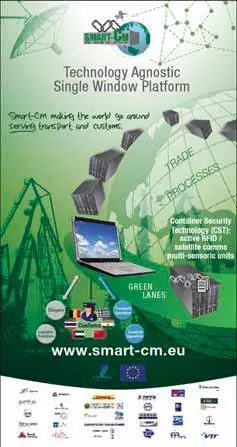
The EIA welcomes project partners willing to be involved in industrial research, e.g., via the EIRAC research platform. One of the most important ‘Green Lane’ intermodal initiatives is SMART-CM www.smartcm. eu. By streamlining customs procedures and container management processes, value is added both for public administrations and private businesses in terms of more accurate and quicker information exchanges, while scarce capacity and connecting transport modes can be better balanced between continents and from port to hinterland. The concept will be developed independently of any CSD technology used for container tracking of the whole global door-to-door global chain. Consequently, there is much to do and many opportunities for EIA and our progressive- thinking members, but it is truly a case of “all hands on deck”! EIA acts as bridge between various modes while seeking to influence EU policy in favour of better sustainable intermodal and logistics policies.
Related Articles
 ALTERNATIVE FUELS GREENPORT
 NEWS
NEWS