![PortStrategy[GreenPort]](https://www.portstrategy.com/wp-content/uploads/2026/09/PortStrategyGreenPort.svg)


Copenhagen wasn’t so disastrous!
The Copenhagen Climate Change Conference was widely viewed as a political failure. However, Jan Prahm, of TuTech Innovation GmbH, argues a number of positives can be drawn from the event
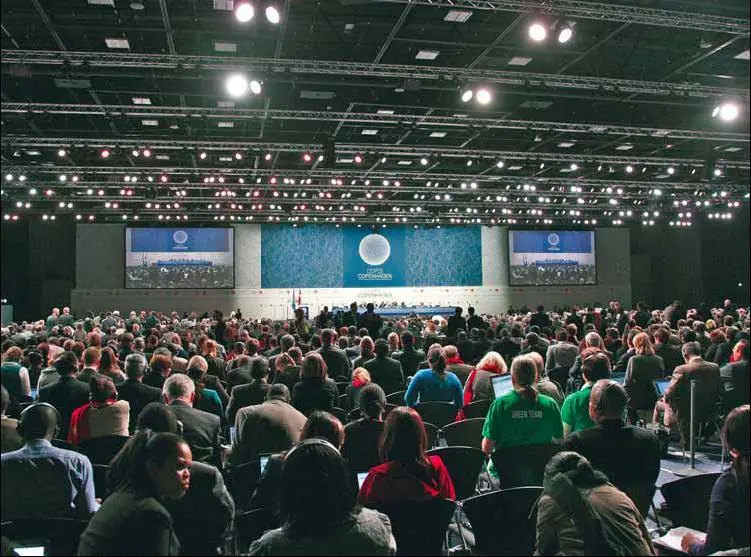
Before it started, the United Nations Climate Change Conference in Copenhagen (UNFCCC) on 7–18 December 2009 was expected to become a historic turning point in climate politics. Over 40,000 delegates, including negotiators, lobbyists, and commentators from all over the world, and from all shades of political and economic backgrounds, were there to achieve a legally binding treaty that every nation would regard as fair.
This was not to be. During the first week of the conference the so-called Danish document was “leaked” to the public and upset the G77 and China group because it was regarded as unfair. Moreover it was negotiated among an exclusive group of developed countries. The effect was that the developing countries’ faith in the honesty of the developed countries was even more undermined than it was anyway.
The second week of the conference saw very tight security measures resulting in drastically reduced access for NGO delegates. On the final two days civil society was almost completely locked out. The main reason stated were concerns about the security of the 120+ heads of state and governments present in the Bella Conference Centre. Whether that was justified or not is difficult to assess, but it shows the nervousness of the UNFCCC Secretariat.
Taking into account the size and ambitions of this unprecedented event, the Copenhagen Accord seems a poor result. In itself, it indeed represents no progress; on the contrary, it is even less than the Kyoto protocol, so mankind seems to be back to square one.
But on the other hand the whole conference showed how much progress has been made since 1997, when the Kyoto protocol was decided. And not only the huge number of participants, which shows that they had the feeling they need to be part of the process, no matter what interests they are trying to defend. Never before have over 120 heads of state and governments been gathered in one place. So climate change and climate protection have arrived at the top of the agenda of any reasonable person. Compared to 1997 this is a really dramatic change when hardly anyone talked about these issues besides climate scientists.
And not only is everyone talking about it, indeed real actions are underway. Even the biggest polluter in historic terms, the USA is now considering legislation to facilitate emissions reductions on their territory.
The Governor of California, Arnold Schwarzenegger, pointed out in his speech at the Copenhagen summit that according to UN’s own numbers 80% of greenhouse gas mitigation will be done at the subnational level. He could show many good examples of private enterprises running climate friendly activities such as the world’s largest wind farm in Texas; the replacement of paraffin and kerosene lanterns in India by solar lamps for 400 million rural people; that with the help of Greenpeace, four of the world’s largest meat producers have agreed not to buy cattle from newly deforested areas of the Amazon; and cited the head of a Chinese energy company who recently said of renewable and efficient energy use that it is a new business to them, not a burden and did not forget to mention private persons in the US who are seeking a greener lifestyle on their own already.
So the Governor concluded that what is decided by the national governments or at the supra national level of the UN is less important; cities, regions, states and provinces are the true driving forces of the movement towards a low-carbon economy.
A new era for climate politics
The assessment that our leaders failed to lead the world into a better future could have the effect that people realise more and more that it is up to them to bring about the necessary change. It has become quite obvious that the UN process is at best a very cumbersome way to achieve these changes, so other means have to be considered. The effect should not be underestimated of over 40,000 people having gathered to discuss actions for climate protection and the great media and internet coverage. All this educated the entire world on a new scale. There were a remarkable number of young people present who will be in leading positions in 20–30 years. They will certainly remember their experiences of this conference and will then take decisions with a completely different mindset then we do today.
So the weak outcome of Copenhagen is not the end of global climate politics but the beginning of a new era of climate politics.
As it can be seen in Fig.1, greenhouse gas (GHG) emissions directly attributable to transport in the EU 27 have been steadily rising since 1990. All other sectors managed to reduce their emissions. So there is going to be ever-increasing pressure on the transport industry to reduce its CO2-footprint. What are the options to reduce the CO2 footprint of transport? The technical and organisational measures – such as more fuel efficient vehicles, slow steaming, less empty transports, more rail and ship transport – have been widely discussed elsewhere.
The challenge is to find some means to incentivise an accelerated shift in practices. Therefore the instrument of emissions trading shall be discussed as a market-based instrument to provide an environmentally effective and economically efficient framework to achieve a low carbon economy including transport.
At COP15, Prof. Dr. Ottmar Edenhofer of the Potsdam Institute for Climate Impact Research presented his research on emissions trading systems (ETS), some of which include, or will include, transport. It showed that in almost all OECD countries, except for Mexico and Turkey, a GHG emissions trading system (ETS) is either already in place or under planning for implementation within the next four years. The EU was the first to start such a system in 2005. Currently, the EU ETS only covers power stations and other large fixed installations. But from 2012 aviation will be included for all intra EU flights and those starting or ending in the EU. So this is the first step to include transport in the EU emissions trading scheme.
In the USA there are three different regions working on an ETS. The West Coast Initiative (WCI), which encompasses the western states of the USA and Canada, will also cover transport. Among these states is California which is the seventh largest economy in the world. So this is a considerable area.
The other two systems in the US are the Midwestern GHG Accord, covering states in the Midwest, and the Regional Greenhouse Gas Initiative (RGGI), which covers the New England states and three eastern Canadian provinces. Canada itself is considering implementing its own ETS. Schemes are in place in Switzerland and New Zealand and Japan, South Korea and Australia are planning to start sometime between 2011 and 2013. The above mentioned countries and regions account together for 68% of the global gross domestic product (GDP). This means that the majority of the global economy will sooner or later be covered by an ETS, and sooner or later transport will come under GHG emissions trading. So it is time for the transport sector to prepare for this challenge and to contribute to a really low carbon transport, not just by offsetting. For the maritime sector such a scheme is already among the measures under discussion. At its 59th session in July 2009, the Marine Environment Protection Committee (MEPC) of the IMO agreed a work plan for further consideration and development of suitable market-based instruments for international shipping. Among the proposals submitted is one for a Global Emissions Trading Scheme for Shipping by France, Germany and Norway. The MEPC will discuss the consequences of the outcome of the Copenhagen Climate Conference for its work to tackle the climate effect of international shipping at its next meeting in March 2010. At this meeting it will also propose to make the Energy Efficiency Design Index (EEDI) and the Energy Efficiency Operational Indicator (EEOI) mandatory. Those measures could then become mandatory at the October 2010 meeting, depending on the positions of countries like China and Brazil.
The transport sector should proactively make suggestions on how to extend the European Emissions Trading System to transport because it will happen anyway and irrespective of the outcome of Copenhagen.
prahm@tutech.de
Related Articles
 ALTERNATIVE FUELS GREENPORT
 NEWS
NEWS