![PortStrategy[GreenPort]](https://www.portstrategy.com/wp-content/uploads/2026/09/PortStrategyGreenPort.svg)


EU ports seek greater legal certainty on environmental issues
Clearer environmental policy from the European Commission is critical, if European ports are to understand European regulations and avoid delays in project development.
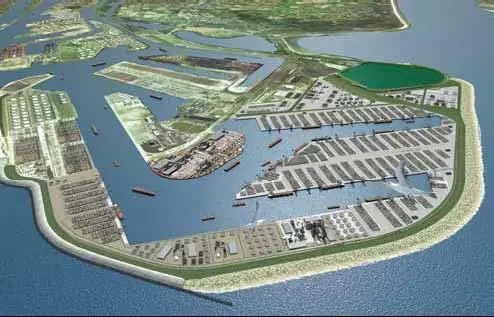
The European Sea Ports Organisation (ESPO) represents the common interest of Port Authorities in Europe. With its membership comprising port authorities, port administrations and port associations of seaports located in the European Union, ESPO represents some 800 ports. Its principal task is to influence public policy in the EU as it affects the port sector, while it also offers networking and information exchange about best practice between member ports One of ESPO’s most important projects at present relates to the new European Ports Policy, published in October last year. For the first time, the European Commission recognised that there was a fundamental problem with the application of EU environmental legislation in the ports sector. “For example,” says Patrick Verhoeven, Secretary-General of ESPO, “we had many problems with the implementation of the Birds and Habitats Directives and other pieces of environmental legislation. Before the European Ports Policy document was published, the usual reply that we were getting was that ‘this is not a problem of the law as such, but it of the member-states who are interpreting the directives in the wrong way’.” According to Verhoeven, there is now recognition that – within the environmental legislation itself – there are fundamental shortcomings leading to different interpretations and project delays. Major projects like the new Maasvlakte terminal in Rotterdam or the Deurganckdok in Antwerp have been affected and delayed by this problem.
Developing guidelines
The European Commission (EC) now officially recognises that something needs to be done. For this reason, it is proposing to develop guidelines, which should simplify the implementation of environmental legislation and reduce confusion for those port developers, port authorities and governments who are involved in the development of major new projects. The development of these guidelines is scheduled to be finalised by the end of this year; but whether they will solve all outstanding legal problems and enhance legal certainty remains to be seen. “The ultimate aim,” says Verhoeven “is to have a simplified planning and consent process. We are aiming for a situation whereby a Port Authority which is starting a new project and goes through the process of planning, requesting all the environmental permissions and all the assessments, will know within a reasonable time frame whether the project can go ahead or not. That is something we don’t have at the moment.” In his opinion, one of the problems is that Port Authorities usually get a ‘yes, but…’ answer – without having any certainty. Interest groups or local stakeholder seem to have endless possibilities of contesting and delaying port development projects, he feels. “This is not the right way to do it,” Verhoeven continues, “and this uncertainty explains why vital projects such as Maasvlakte II are taking such a long time to realise. The original plans for Maasvlakte II were made in the mid-nineties and it is hoped that the first containers will be handled by 2014. Of course, this is not a small project, but it helps to illustrate the problem.” ESPO has expressed its willingness to assist and co-operate with the EC to assist in the process. Last year, it produced its own Code of Practice on the Birds and Habitats Directive, based on the experience of its members. It gathered together the good practices of European ports, as well as a list of outstanding questions which the Commission should now resolve through its guidelines. More from www.espo.be
Related Articles
 ALTERNATIVE FUELS GREENPORT
 NEWS
NEWS